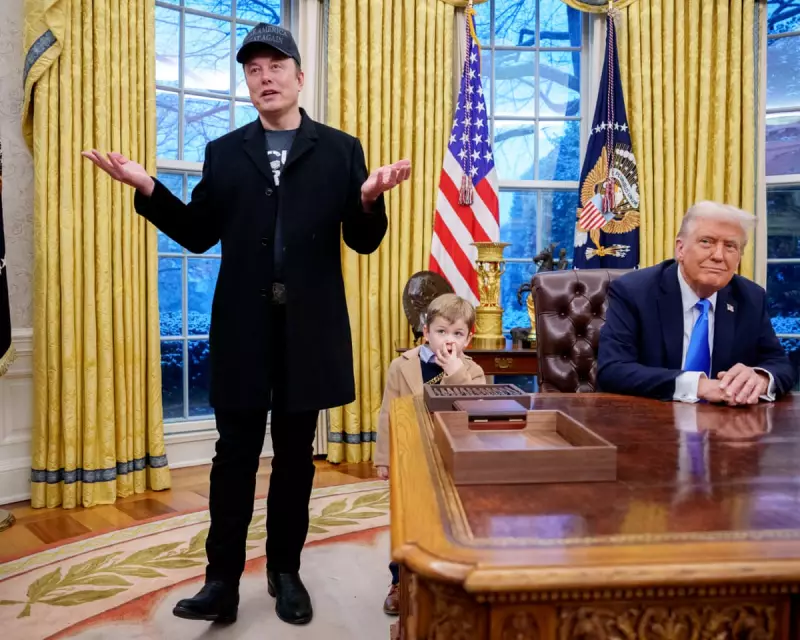
The controversial Department of Government Efficiency (Doge), established by former President Donald Trump and led by tech billionaire Elon Musk, has been quietly disbanded eight months ahead of schedule, according to official statements and documents seen by Reuters.
The Sudden Demise of Doge
Scott Kupor, director of the Office of Personnel Management (OPM), confirmed the department's dissolution when questioned about its status earlier this month. "That doesn't exist," Kupor told Reuters, adding that Doge was no longer operating as a "centralized entity."
The statement confirmed longstanding suspicions that the department, created by an executive order Trump signed on his first day in office with Musk and former Republican presidential candidate Vivek Ramaswamy at the helm, was being phased out ahead of its scheduled end date of 24 July 2026.
Controversial Methods and Massive Layoffs
During its operation, Doge became known for its aggressive approach to government restructuring. More than 200,000 federal workers had been laid off and approximately 75,000 had accepted buyouts by May, according to organisation figures.
While Doge claimed these cuts saved billions in government expenditure, experts found it impossible to verify these assertions due to the department's notorious lack of transparency and public accounting.
Musk had publicly defended the department's transparency in February, stating: "I don't know of a case where an organisation has been more transparent than the Doge organisation." This claim directly contradicted numerous reports of Doge agents refusing to identify themselves, slashing agency spending without consultation, and operating without proper public oversight.
The Unravelling and Aftermath
Suspicions about Doge's impending closure began surfacing earlier this summer. In June, Politico reported that staffers had "packed up their clothes and bedding" at the department's headquarters, where they had been sleeping since February, and were seeking new accommodation.
The department's collapse followed the very public online feud between Trump and Musk, with many former employees reportedly growing concerned that their roles in eliminating government programs and jobs could carry criminal repercussions.
Documents obtained by Reuters show that the OPM, the federal government's human resources office, has since assumed many of Doge's former responsibilities. Trump himself has been heard referring to the department in the past tense, while Musk's official departure from Washington in May further fuelled speculation about Doge's fate.
Most of Doge's key personnel have since transitioned to other government roles. Acting administrator Amy Gleason became an adviser to Health and Human Services Secretary Robert F Kennedy Jr in March, while other senior team members moved to positions at the Department of Health and the Office of Naval Research.
Perhaps the most prominent departure was Joe Gebbia, co-founder of Airbnb, who has been instructed by Trump to focus on beautifying government websites, including launching sites to recruit law enforcement officers and advertise the president's drug pricing programme.