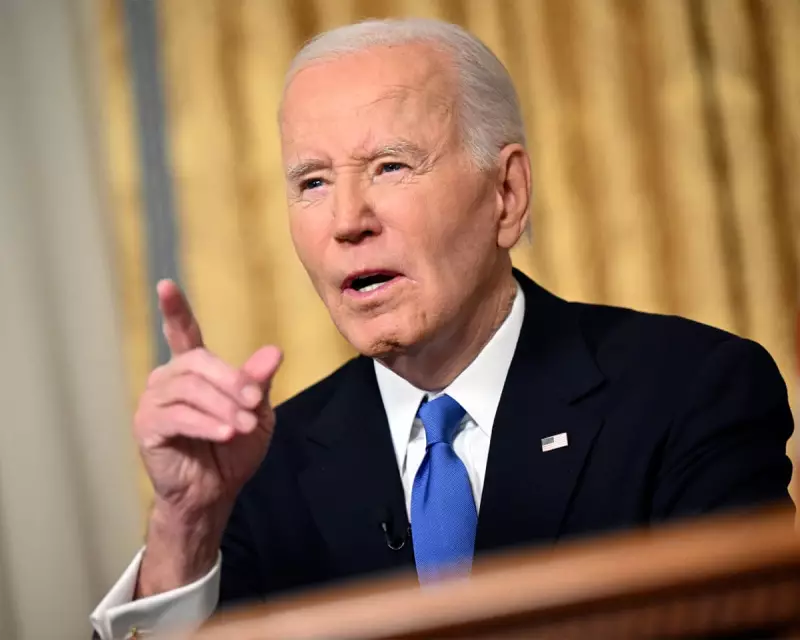
In a dramatic political escalation, former President Donald Trump has declared his intention to dismantle the majority of Joe Biden's executive actions, specifically targeting those signed using an autopen. This robotic signature device, used by presidents for centuries, has become the latest battleground in America's political wars.
What exactly is an autopen?
The autopen represents one of the White House's longest-serving technological tools. Patented in the United States in 1803, this mechanical device replicates a person's signature using genuine ink, primarily employed for signing materials in bulk.
According to a 2005 justice department guidance, the president isn't required to physically sign every document personally. The guidance clearly states that a president 'may sign a bill by directing a subordinate to affix the president's signature to such a bill, for example by autopen.'

A presidential tradition spanning centuries
Contrary to Trump's implications, the autopen boasts an impressive presidential pedigree. Historical records indicate that Thomas Jefferson utilized an early version of the device, while Harry Truman, Gerald Ford, and Lyndon B Johnson all employed the technology during their administrations.
More recently, both Barack Obama and Donald Trump himself have acknowledged using autopens. Obama deployed the device to sign significant legislation including the Patriot Act, while Trump admitted in March that he had used it for what he described as 'very unimportant papers.'
The political battle over Biden's signatures
Trump has repeatedly claimed on his Truth Social platform that the autopen was operated without Biden's direct approval, suggesting this invalidates approximately 92% of his executive orders. However, these allegations lack concrete evidence.
A Republican-led oversight committee released a report in October making sweeping claims about Biden's autopen use, but it failed to provide evidence that aides conspired to enact policies without the president's knowledge. Democratic committee members denounced the investigation as a 'sham'.
Biden has directly addressed these concerns, telling the New York Times in March that 'I made every decision' and authorized autopen use for clemency warrants due to the volume of people involved.
Can Trump actually deliver on his threat?
The legal reality of Trump's proclamation remains uncertain. While presidents traditionally possess the authority to reverse executive orders signed by predecessors, constitutional scholars note that presidents cannot overturn pardons granted by previous administrations.
The autopen controversy has been heavily promoted by the Trump-allied Heritage Foundation's Oversight Project, which claimed earlier this year that 'whoever controlled the autopen controlled the presidency.' Nevertheless, their report similarly lacked evidence that Biden's aides implemented policies without his approval.
Following Trump's Friday announcement, the Oversight Project pledged to 'follow up with relevant authorities to identify what fraudulent documents are still being treated with legal effect,' setting the stage for continued political and legal battles over presidential authority and document authentication.