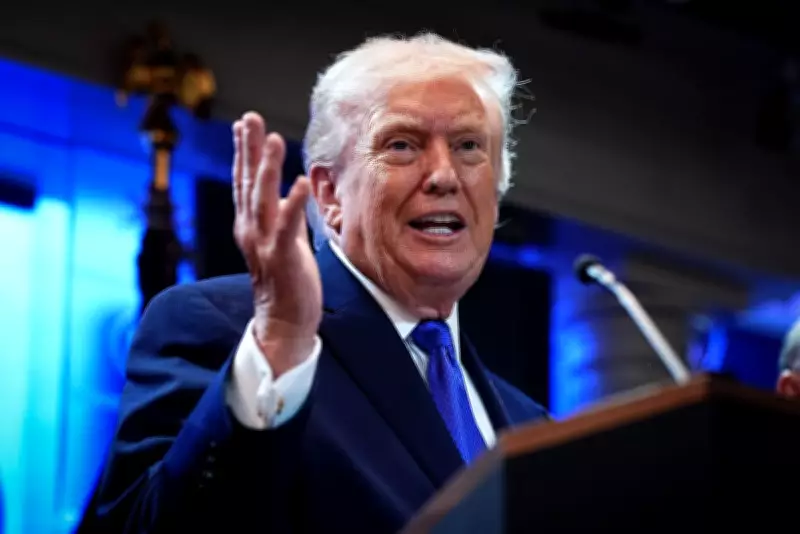
Former U.S. President Donald Trump delivered a fiery response from the White House on Friday after the Supreme Court ruled against his administration's use of emergency powers to implement international trade tariffs. The court's decision struck at the heart of Trump's core economic policy, prompting immediate threats of retaliatory measures.
Supreme Court Rejects Emergency Tariff Authority
In a landmark ruling, the U.S. Supreme Court determined that Trump had illegally used executive power to impose global tariffs through the International Emergency Economic Powers Act. The decision represents a significant legal setback for the former president's trade agenda, which has been a cornerstone of his economic platform.
Trump's Scathing Criticism of Justices
During a press briefing at the White House on February 20, 2026, Trump launched a blistering attack on the justices who formed the majority opinion. "It's a disgrace to the nation," Trump declared, adding that he was "ashamed of certain members of the court" for lacking "the courage to do what's right for our country."

The president specifically targeted two of his own appointees – Justices Amy Coney Barrett and Neil Gorsuch – who joined the majority against him. He described them as "very unpatriotic and disloyal to our constitution" and claimed they were "barely" invited to the upcoming State of the Union address.
Praise for Dissenting Justices
In contrast, Trump warmly praised the three justices who dissented from the majority opinion. Justice Brett Kavanaugh, who wrote the main dissent, received particular commendation along with Justices Clarence Thomas and Samuel Alito. Trump framed their position as the correct constitutional interpretation supporting presidential authority in trade matters.
New Tariff Threats and Alternative Authorities
Undeterred by the court's ruling, Trump announced immediate plans to implement alternative tariff measures. "I will immediately sign an order increasing tariffs globally by 10% under section 122 of the Trade Act of 1974," he stated during the briefing.
The former president outlined a multi-pronged approach to circumvent the Supreme Court's limitations:
- Implementation of 10% global tariffs using different statutory authorities
- Initiation of investigations into unfair trade practices to justify additional tariffs
- Maintenance of existing tariffs under sections 232 and 301 of trade legislation
Claims of Foreign Influence and Political Bias
Trump made extraordinary allegations about the court's decision-making process, suggesting that "the court has been swayed by foreign interests and a political movement." When pressed for evidence of foreign influence, he cryptically responded, "You're going to find out."
The former president framed the disagreement in stark political terms, accusing the majority justices of being "fools and lapdogs for the Rinos [Republicans in name only] and the radical left Democrats." He characterized their ruling as reflecting social and cultural influences rather than constitutional principles.
Legal and Political Implications
This confrontation between the executive and judicial branches highlights ongoing tensions over presidential authority in trade policy. Trump asserted that he maintains sufficient statutory authority to impose additional tariffs without congressional approval, setting the stage for potential future legal challenges.
The former president's remarks revealed his continued commitment to aggressive trade measures, stating that tariffs under existing statutes would remain "in place and in full force and effect." His comments about having shown restraint by being "a good boy" in his previous tariff implementations suggest more aggressive measures may follow.
This development represents a significant moment in U.S. trade policy history, with implications for international economic relations and the balance of power between government branches. The Supreme Court's ruling establishes important limitations on emergency powers usage for trade purposes, while Trump's response indicates his determination to pursue similar objectives through alternative legal pathways.