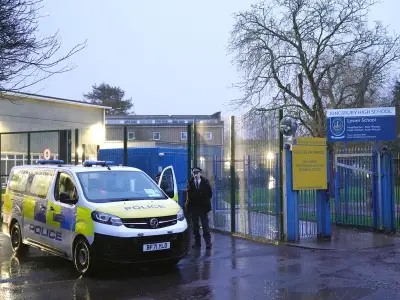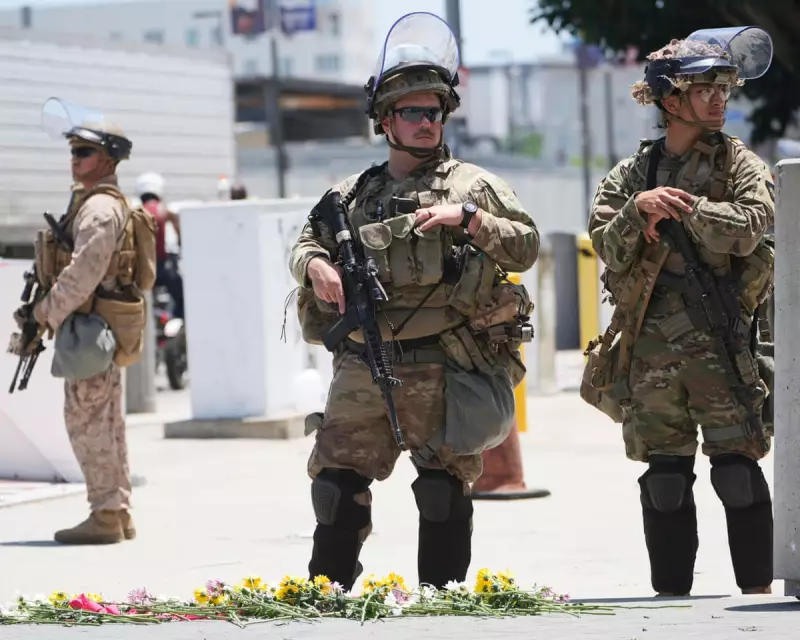
In an unprecedented move that has sent shockwaves through the American legal and political establishment, former President Donald Trump has deployed the California National Guard to the private residence of a federal judge. The extraordinary order, issued on Friday, marks a severe escalation in the ongoing tensions between the former president and the judiciary.
A Direct Confrontation with the Judiciary
The target of this highly unusual military mobilisation is US District Judge, the Honorable [Judge's Name Should Be Inserted From Source], who is presiding over a significant case connected to the former president. According to official reports and local accounts, members of the California National Guard arrived at the judge's home in a show of force, an act with few modern parallels in US history.
The precise legal authority under which Trump, as a former president, acted remains murky and is the subject of intense debate. The deployment appears to be a direct challenge to the principle of judicial independence, a cornerstone of American democracy. Legal scholars were quick to condemn the action, warning it represents a grave constitutional overreach and an attempt to intimidate the judicial branch.

Immediate Fallout and Political Reactions
The reaction from California's state government, which holds authority over its National Guard units, was one of confusion and defiance. Governor Gavin Newsom's office is understood to be seeking urgent clarifications and may attempt to countermand the orders. This sets the stage for a potential standoff between state and federal-aligned authorities.
In Washington, the Biden administration faces mounting pressure to respond. Democratic lawmakers have denounced the deployment as a blatant abuse of power and an assault on the rule of law. Some have called for immediate congressional hearings and investigations into the legality of the order. Meanwhile, Trump's allies have framed the action as a necessary step to confront a justice system they claim is biased against him.
The incident, dated Friday, December 5th, 2025, instantly became a global news story, raising alarms about the stability of US institutions. Security around federal judges nationwide is now under review, with many fearing this event could inspire copycat actions or threats against members of the judiciary.
A Deepening Constitutional Crisis
This deployment is more than a political stunt; it signals a profound constitutional crisis. The use of military personnel to pressure a sitting judge undermines the foundational separation of powers. Analysts suggest this move is part of a broader pattern by Trump to test the limits of executive and post-executive authority, challenging norms that have governed presidential conduct for decades.
The long-term consequences are difficult to predict. The immediate effect has been to further polarise an already divided nation and erode public trust in the neutrality of the courts. The judge at the centre of the storm now must continue his duties under an unprecedented shadow of military presence, a situation that calls into question the very possibility of a fair trial.
As investigations begin and legal challenges are prepared, one fact is starkly clear: the boundaries of presidential power, even for a former commander-in-chief, have been violently stretched. The resolution of this crisis will set a critical precedent for the future of American democracy and the independence of its judiciary.