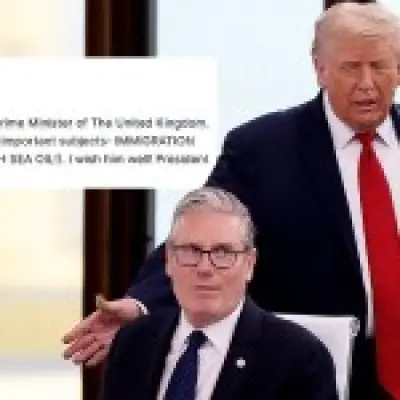
Former US President Donald Trump has publicly addressed recent observations of a noticeable bruise on his left hand, offering an explanation that links it to his long-standing medical habits and a minor accident. The incident came to light during his return flight from the World Economic Forum in Davos, Switzerland, where he was questioned by reporters about the dark-coloured mark.
Trump's Explanation for the Bruise
Trump, aged 79, responded to inquiries by stating, 'I’m very good. I clipped it on the table. So, I put a little – what do they call it? – cream on it. But I clipped it.' He further elaborated that the bruising is a recurring issue, which he attributes to his daily consumption of approximately 325mg of aspirin. According to Trump, he takes this high dose as a preventive measure against heart attacks or strokes, a practice he has maintained for over two decades.
Aspirin Use and Health Implications
In his remarks, Trump emphasised, 'I would say take aspirin if you like your heart. But don’t take aspirin if you don’t want to have a little bruising. I take the big aspirin. And when you take the big aspirin, they tell you you’ll bruise.' This statement highlights his personal belief in the benefits of aspirin, despite medical evidence suggesting that such high doses may offer limited advantages for individuals without a prior history of heart conditions. Trump noted that his doctor had advised against the aspirin, saying, 'You don’t have to take that, sir. You’re very healthy,' to which Trump replied, 'I’m not taking any chances.'

Historical Context and Other Theories
Bruises on Trump's hands are not a new phenomenon; he has previously acknowledged using makeup to conceal them. While he consistently points to aspirin as the cause, the White House has offered alternative explanations, such as 'frequent handshaking.' Observers have speculated about other potential reasons, including:
- IV drips from medical treatments
- Thin skin due to aging
- His status as the oldest president in US history
In July, Trump was diagnosed with chronic venous insufficiency, a condition that impairs blood flow from the veins back to the heart, which had previously led to observations of swollen legs. This diagnosis adds another layer to discussions about his overall health.
Recent Health Speculations and Assessments
Trump's health has been a topic of public interest and speculation. For instance, a few weeks after his diagnosis, a lack of public appearances and social media activity sparked rumours of his death, which were dispelled when he reappeared in September. During that time, he faced questions about potentially suffering a stroke at a 9/11 remembrance ceremony, though no evidence supported this claim.
Despite these concerns, Trump has boasted about his health, claiming to be 'healthier than Obama,' who is 15 years his junior. His most recent annual physical examination, conducted in April and documented by Dr Sean Barbabella, concluded that Trump is 'in excellent health' and 'fully fit to execute the duties' of the presidency. The report did caution about 'well-controlled' high cholesterol and actinic keratosis, which are dry patches of skin.
Broader Implications and Public Perception
This episode underscores the ongoing scrutiny of Trump's health and medical practices, particularly as he remains a prominent figure in US politics. His openness about using aspirin and dealing with bruises reflects a broader narrative of resilience and self-management, even as it raises questions about the appropriateness of high-dose aspirin use without clear medical indications. The mix of personal anecdotes, medical advice, and public speculation continues to fuel discussions about aging, health maintenance, and transparency among political leaders.