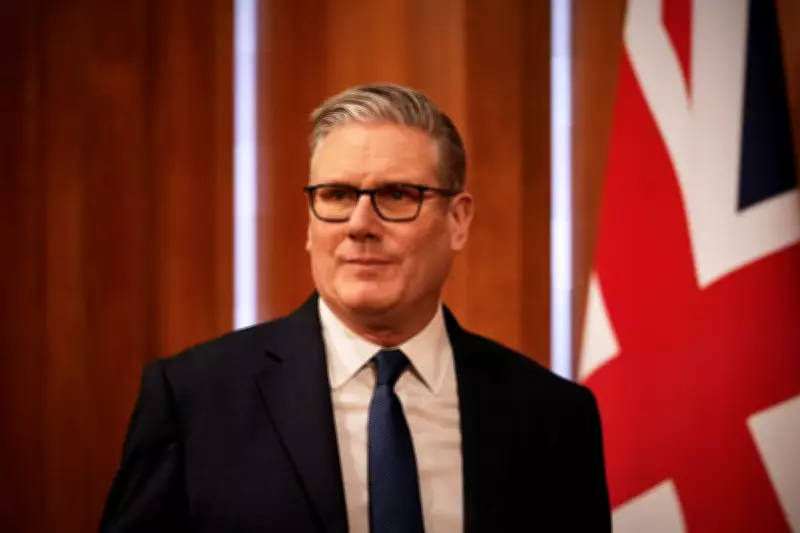
Keir Starmer has faced direct mockery from former US President Donald Trump over his refusal to endorse the recent US-Israel airstrikes targeting Iran. The political confrontation highlights deepening transatlantic tensions on foreign policy approaches.
Trump's Neville Chamberlain Comparison
In a pointed criticism, Trump invoked the historical figure of Neville Chamberlain, the British prime minister infamous for his appeasement policies toward Nazi Germany before World War II. Trump suggested Starmer's reluctance to support military action against Iran represents similar weakness in confronting what he termed "tyrannical regimes."
Letters Reveal Public Reaction
The Guardian's letters section captured diverse public responses to the escalating rhetoric. One correspondent from Sheffield noted the irony that while Trump accuses others of appeasement, Britain's current leadership appears to be taking a firm stance by refusing to back the attacks.

Another letter from Greater Manchester offered a stark reinterpretation of Trump's famous energy slogan, suggesting his approach has shifted from "Drill, baby, drill" to what the writer characterized as "Kill, baby, kill" in foreign policy contexts.
Architectural Obituary Reveals Curious Connection
Separately, readers noted an intriguing example of nominative determinism in an obituary for architect Desmond Williams. The piece revealed that one of Williams' contemporaries at Manchester University was Donald Buttress, who later served as surveyor of Westminster Abbey's fabric - creating what correspondents described as a perfect alignment of name and profession.
The Challenge of Unusual Names
The letters section also featured personal anecdotes about surname difficulties. One contributor from Northern Ireland described receiving suspicious looks from police during security checks when stating his surname was "Bomber" during the Troubles period.
Another correspondent recounted the surreal experience of being asked by a receptionist how to spell "hyphen" after providing a hyphenated name, highlighting the everyday challenges of unconventional nomenclature.
Broader Political Implications
The exchange between Trump and Starmer occurs against a backdrop of increasing global instability and differing international approaches to conflict resolution. While Trump advocates for aggressive military postures, Starmer's position reflects a more cautious diplomatic tradition in British foreign policy.
The public letters reveal how such high-profile political exchanges resonate with ordinary citizens, sparking both serious policy discussions and lighter observations about language and identity in contemporary society.