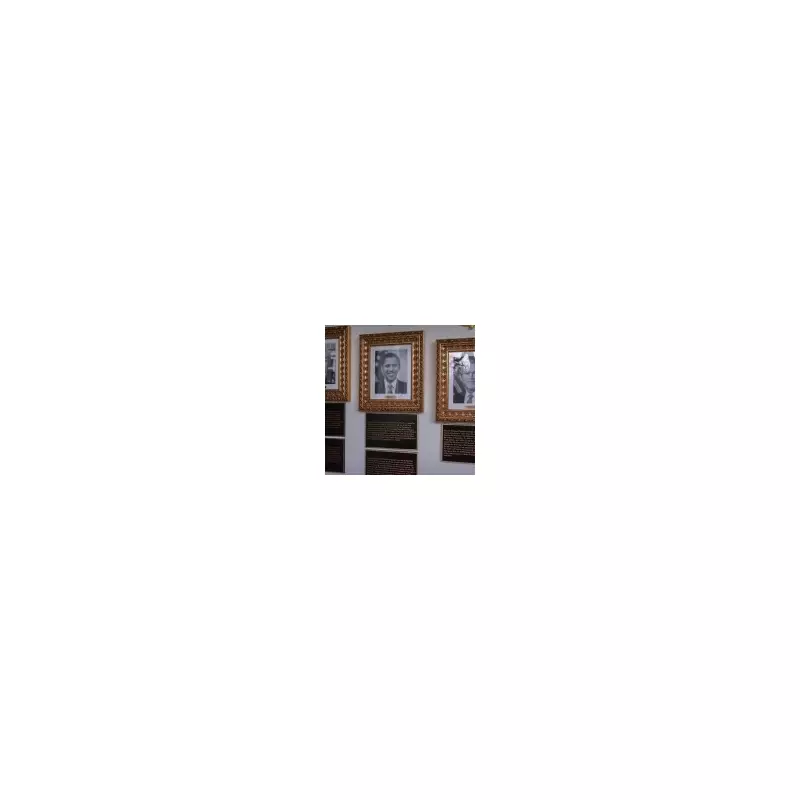
In a move that has ignited controversy, former President Donald Trump has overseen the installation of new, sharply critical plaques beneath the official portraits of his predecessors in the White House's 'hall of fame'. The plaques, which target Joe Biden and Barack Obama, form part of what the Trump administration describes as 'upgrades' to the presidential residence.
The Controversial New Inscriptions
Placed below the portrait of Joe Biden, a plaque dated December 18, 2025, reads: 'Sleepy Joe was, by far, the worst President in American history. Taking office as a result of the most corrupt Election ever seen in the United States.' The language mirrors the style of Trump's frequent posts on his Truth Social platform.
Similarly, the plaque under Barack Obama's portrait offers a pointed critique of his signature policy: 'As President, he passed the highly ineffective 'Unaffordable' Care Act, resulting in his party losing control of both Houses of Congress, and the Election of the largest House Republican majority since 1946.'

White House Press Secretary Karoline Leavitt defended the new additions. She stated: 'The plaques are eloquently written descriptions of each President and the legacy they left behind. As a student of history, many were written directly by the President himself.'
Not All Criticism, and Other White House Changes
Not every new plaque was corrosive. The inscription for Ronald Reagan was notably complimentary, highlighting his communication skills and landslide re-election in 1984. It also noted a mutual admiration between Reagan and Trump.
These plaque changes are among the latest in a series of alterations Trump has made since re-entering office in January 2025. One of the most significant was the decision in October 2025 to demolish the historic East Wing, a move that angered many Americans. The space is being cleared for a proposed 90,000 square foot 'gilded ballroom', designed by the firm Shalom Baranes. If built, this new structure would dwarf the existing 55,000 square foot White House.
Other changes have been more granular. The State Department has abandoned the Calibri font, introduced in 2023 to aid readability for those with disabilities, in favour of Times New Roman. US Secretary of State Marco Rubio called Calibri 'wasteful' and 'informal', stating in a memo that the switch back to Times New Roman was to 'restore decorum and professionalism'.
A Redefinition of Presidential Legacy
These actions represent a concerted effort by the Trump administration to physically imprint its interpretation of history onto the White House itself. By placing his personal, and often partisan, commentary alongside the official portraits of past leaders, Trump is directly challenging established norms of presidential decorum and legacy. The move ensures that the narrative of his predecessors, as presented to visitors and future occupants, is filtered through a distinctly Trumpian lens.
The renovations, from the grand architectural plans to the minute typographic details, signal a comprehensive reshaping of the nation's most symbolic residence, reflecting the current occupant's priorities and his unvarnished view of the recent past.