Scotland's First Minister has broken ranks with the Prime Minister to state that the United States military operation in Venezuela, which led to the capture of President Nicolás Maduro, constituted a breach of international law.
A Stark Contrast in Westminster Response
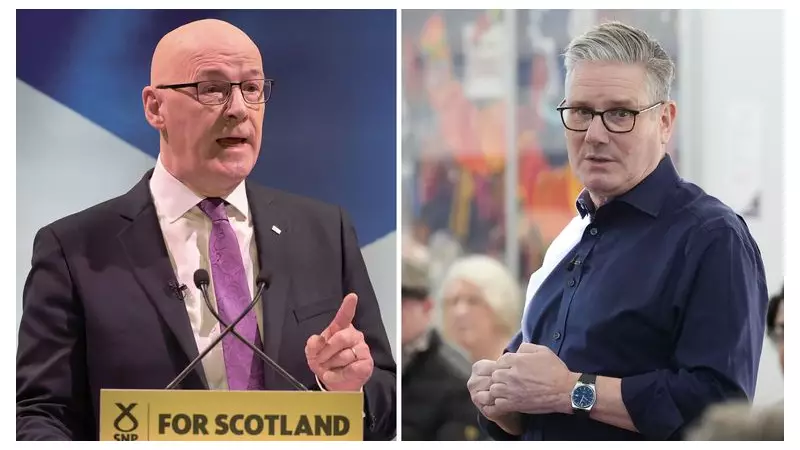
John Swinney, the SNP leader, said he had listened carefully to the Trump administration's statements following the dramatic events over the weekend. While condemning the Maduro regime as "illegitimate and authoritarian," he concluded that he "cannot see how international law has been respected here."
This stands in direct contrast to the more measured response from Prime Minister Sir Keir Starmer. After initially stating he was waiting to establish all the facts, Sir Keir slightly strengthened his position on Monday, telling Sky News: "It's for the US to set out its justifications for the actions that it's taken." He reiterated his lifelong advocacy for international law but stopped short of declaring the raid illegal.

The Operation and Immediate Fallout
In the early hours of Saturday, 3 January 2026, US airstrikes hit targets across Venezuela. During the operation, President Nicolás Maduro and his wife, Cilia Flores, were captured and flown to the United States. They arrived in New York on Sunday, 4 January, where they were charged with narco-terrorism.
Former President Donald Trump stated on Saturday that the US would "run" Venezuela until a "proper transition" could take place. The international reaction was swift and largely critical.
UN Secretary-General Antonio Guterres condemned the action, expressing deep concern that the rules of international law were not respected. Furthermore, all European Union nations except Hungary, joined by Canada and Norway, issued calls for international law to be upheld in the Venezuela situation.
Clarity on Greenland, Caution on Caracas
While cautious on Venezuela, Sir Keir Starmer displayed far more clarity on another of Mr. Trump's stated ambitions. Regarding the former US president's renewed interest in acquiring Greenland for its resources and strategic position, the Prime Minister was unequivocal.
"Let me be really clear about Greenland - the future for Greenland is for Greenland, the Kingdom of Denmark," Sir Keir stated, emphasising Denmark's status as a close European and NATO ally. This firm stance highlights the diplomatic tightrope the UK government is walking, seeking to uphold international norms while managing a complex relationship with a key ally.
The differing tones from London and Edinburgh underscore the political and legal complexities unleashed by the unprecedented US intervention, setting the stage for continued diplomatic tension and debate over the boundaries of sovereign action.