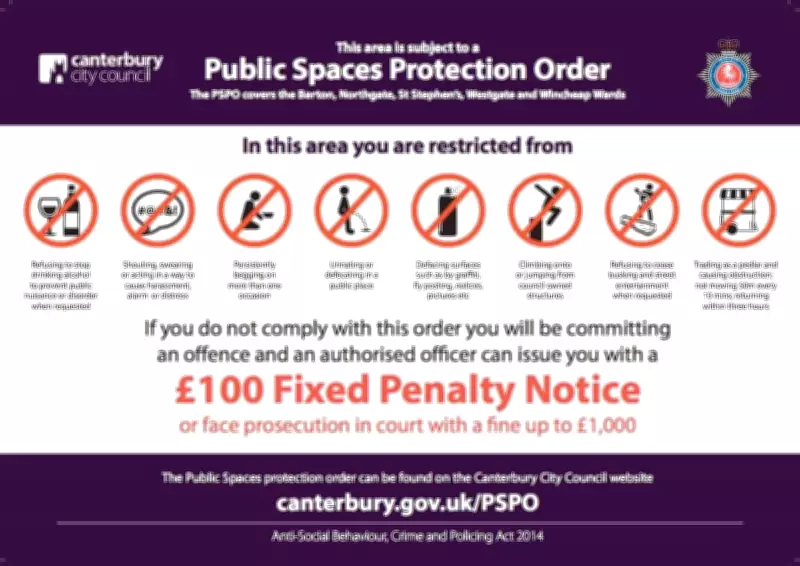
A new report has revealed that one in five local councils in England and Wales have banned swearing under public spaces protection orders (PSPOs), up from one in 20 in 2022. The Campaign for Freedom in Everyday Life found that these orders, originally intended to tackle serious antisocial behaviour, are now being used to criminalise a wide range of everyday activities.
Widespread Use of PSPOs
According to the report, 271 out of 297 councils that responded (91%) had at least one PSPO in place. These orders have introduced over 1,000 new laws, each potentially containing dozens of separate restrictions. Examples include bans on feeding birds, which led to a woman being arrested in Harrow, and prohibitions on picking up stones in areas like Torbay and Richmond upon Thames.
Bizarre Bans and Lack of Scrutiny
Josie Appleton, director of the campaign group, stated: “Councils have introduced a swathe of bizarre bans that will turn ordinary people into unwitting criminals.” She highlighted that PSPOs can be enacted by a single unelected council officer without public consultation or full council assent. Guildford borough council has banned “intentionally shouting or screaming,” while Gosport prohibits sitting or loitering in a manner that causes annoyance.

Penalties and Enforcement
PSPO penalties are at an all-time high, with 25,000 fines issued in 2025. Appleton noted that 75% of these penalties are issued by private enforcement companies paid per fine, creating an incentive to maximise penalties. Fines are set to rise from £100 to £500 under the crime and policing bill, despite government losses in the House of Lords over fining for profit.
Impact on Communities
The report cites cases where PSPOs target activities communities enjoy. In Bury, a 17-year-old Britain’s Got Talent contestant was handcuffed for busking while people gathered to watch. In Leicester, a political campaigner in her 70s faced fines for flying a flag without permission. Appleton criticised the subjective nature of many orders, such as Lancaster city council’s ban on groups of two or more causing annoyance.
A spokesperson for Lancaster city council defended its approach as “always proportionate,” adding that swearing or shouting are not offences in themselves unless they cause annoyance, alarm, or distress.