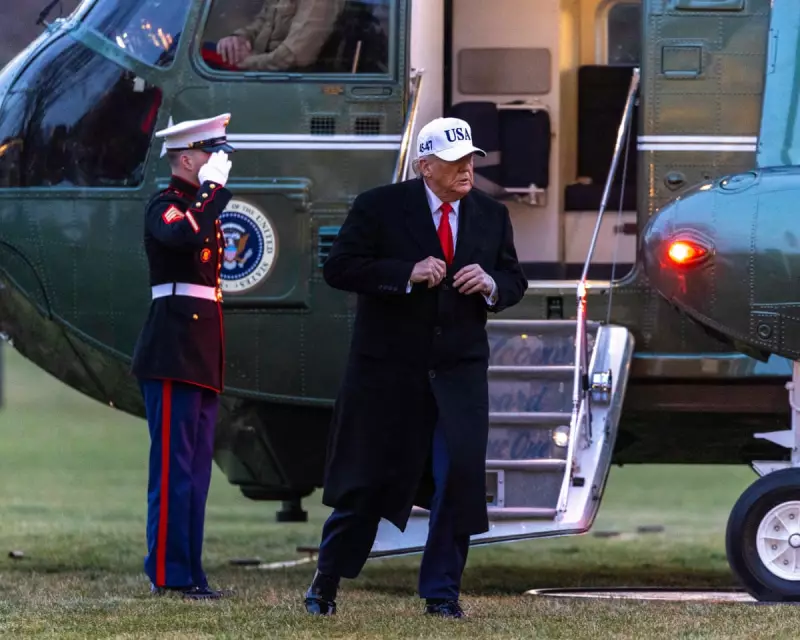
The United States Supreme Court is poised to deliver a potentially seismic ruling on the legality of former President Donald Trump's signature global tariffs. A decision, which could come as soon as today, threatens to dismantle a cornerstone of his trade policy and send fresh shockwaves through the world economy.
Legal Challenge to Presidential Power
At the heart of the case is a fundamental question of executive authority. The legal challenge contests the mechanism Trump used to impose the sweeping tariffs, arguing he overstepped his powers by invoking a law designed for national emergencies. During hearings last year, the court's justices appeared deeply sceptical of the policy's legal footing, casting doubt on its survival.
If the highest court in the US strikes down the tariffs, it would represent a monumental judicial rebuke. It would not only upend a key Trump-era policy but also set a powerful precedent limiting how future presidents can wield trade powers unilaterally. The implications for global trade relations and supply chains are profound.

Minneapolis on Edge After ICE Shooting
Meanwhile, over a thousand miles away, the city of Minneapolis remains tense one week after a federal Immigration and Customs Enforcement (ICE) agent shot and killed Renee Good in her car. The incident has ignited fresh outrage and protests in a community already grappling with issues of policing and federal overreach.
This week, the situation has been exacerbated by the deployment of hundreds of additional federal officers to the city. Their dual mandate is to execute Trump's aggressive immigration deportation agenda and to subdue ongoing demonstrations. Their tactics, however, are under intense scrutiny.
Aggressive Arrests Caught on Camera
Videos emerging from Tuesday painted a disturbing picture of the federal crackdown. One clip showed armed officers dragging a woman from her vehicle as she repeatedly yelled that she was disabled. In another incident, officers were seen smashing a car's windows to forcibly seize a man inside.
These aggressive arrests have further inflamed local tensions, raising serious questions about the conduct and proportionality of the federal response. The events intertwine two major strands of US political conflict: the limits of presidential power on the world stage and the fierce domestic battles over immigration enforcement and civil liberties.
The Supreme Court's impending decision and the unrest in Minneapolis underscore a nation at a political crossroads, where judicial rulings and street-level confrontations continue to define the contentious legacy of recent years.