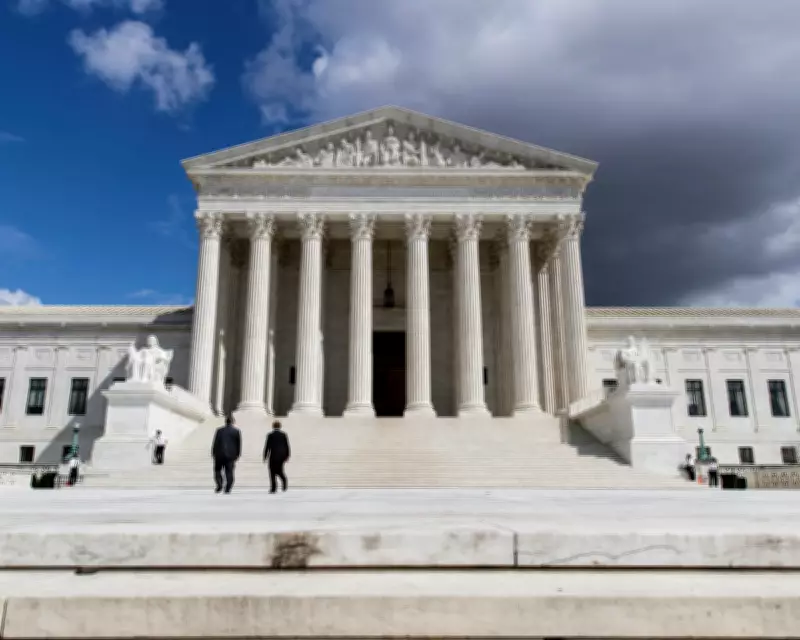
Supreme Court Delivers Victory to Republicans in New York Redistricting Battle
The United States Supreme Court has intervened in a contentious redistricting case, delivering a significant win for Republican interests in New York City. In a ruling issued on Monday, the court determined that the boundaries of the sole GOP-held congressional district in the city do not require redrawing for the upcoming 2026 elections.
Overturning State Court Decision on Voting Rights
This decision effectively halts a previous ruling from a New York state court that had ordered the state's independent redistricting commission to create new district lines. The state court had found that the current configuration of the district, represented by Republican Nicole Malliotakis and covering Staten Island along with a portion of Brooklyn, unfairly dilutes the voting power of Black and Hispanic residents.
The Supreme Court's intervention came at the request of New York Republicans and the Trump administration, creating a pivotal moment in the national redistricting landscape. With congressional qualification processes already underway in New York, the timing of this ruling carries substantial political weight.

National Implications for House Control
The outcome represents more than just a local victory for Republicans. This decision occurs within the broader context of a nationwide redistricting struggle that could ultimately determine control of the House of Representatives, where Republicans currently maintain a razor-thin majority.
"This ruling underscores the high-stakes nature of redistricting battles across the country," observed political analysts. "Every district boundary carries potential consequences for the balance of power in Washington."
Broader Redistricting Landscape
The New York dispute forms part of a larger redistricting conflict that gained momentum during Donald Trump's presidency, when he encouraged Republican legislators in Texas to redraw congressional districts for political advantage. Democrats responded with their own gerrymandering efforts in California, triggering similar actions in numerous other states.
Notably, the Supreme Court has permitted newly drawn maps in both California and Texas to proceed for this year's elections, even as legal challenges against those maps continue in lower courts. This pattern suggests a judicial tendency toward maintaining electoral stability during ongoing litigation.
Immediate and Future Consequences
The practical effect of Monday's ruling means Representative Nicole Malliotakis will likely campaign in 2026 within essentially the same district boundaries she currently represents. For Black and Hispanic communities in the affected areas, the decision represents a setback in their efforts to achieve what they view as fairer political representation.
As the 2026 midterm elections approach, this Supreme Court decision will undoubtedly influence campaign strategies, voter mobilization efforts, and legal challenges in New York and potentially other states facing similar redistricting controversies.