Stolen Generations Survivors Gather in Canberra 18 Years After National Apology
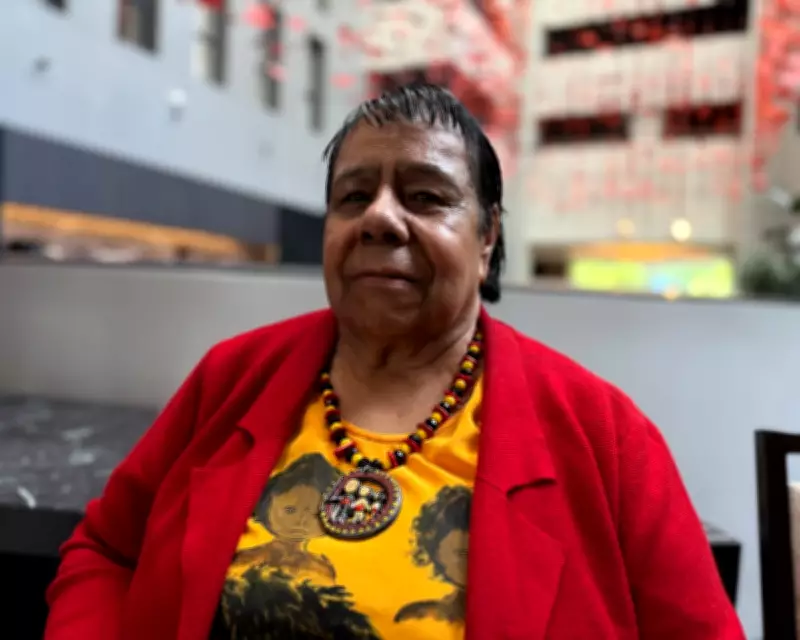
Valerie Wenberg vividly recalls the first time she saw her mother's face. It was not in person, but in a photograph hidden in a box of black and white pictures under her older brother's bed. "I said to my brother, 'who is that?'" she remembers. "He said: 'Don't you know? That's our mother.'"
Wenberg never had the opportunity to know her mother personally. She was forcibly removed by the state as a toddler, along with her siblings, under government policies that saw thousands of Aboriginal and Torres Strait Islander children taken from their families between 1910 and the early 1970s.
The Painful Journey of Separation and Loss
Valerie and her siblings were placed in different children's homes during Australia's Stolen Generations era. Tragically, two of her siblings did not survive their institutionalization. Her brother Johnny died at Kinchela Boys Home, while her baby sister Dorothy passed away at Bomaderry Infants Home.
After turning nine, Wenberg was transferred from Bomaderry to Cootamundra Aboriginal Girls Home, where she formed strong bonds with other girls and received training as a domestic servant. She was subsequently sent to work on nearby farms.
"I recall being sent out to work as a young teenager where I was raped by the station owner," Wenberg shares. "The man would beat me with fence wire posts, leaving blood running down my legs." Police eventually removed her from the farm, but she refused to return to Cootamundra and was instead sent to Parramatta Girls Home.
Commemorating the National Apology
This week, Wenberg gathered in Canberra with 100 other survivors of the Stolen Generations for an event hosted by the Healing Foundation. The gathering marked the 18th anniversary of the national apology delivered by then-Prime Minister Kevin Rudd in 2008.
"The apology hit me hard, really hard," Wenberg says. She wore a yellow blouse featuring an image of children stolen from their homes, painted by her sister before she died. This was the same blouse she wore when attending federal parliament on that historic day in 2008.
"When Kevin Rudd apologised, that went all through my body and through my heart," she explains. "It just brings back so much hurt and memory. He had the guts to do it, the others were cowards."
Another Survivor's Story
Also present at the Canberra gathering was Robert West, who was raised on a remote station in central Queensland before being taken, along with his mother and siblings, to Cherbourg Aboriginal Mission at age ten. There, he experienced strict discipline, beatings, and was repeatedly instructed never to speak to his mother and sister, who were housed in the women's dormitory.
For seven years, West was separated from his mother by a wire fence, seeing her only a handful of times. "I was brainy enough to keep away," he says. "I never spoke to my mum even if I got a glimpse of her. I wouldn't go anywhere close. I'd just vanish."
West was also in parliament on the day of the apology and was the only member of his immediate family who lived to hear it. "It was emotional hearing that apology," he reflects. "My parents, my brothers and sisters already passed away as well, so I'm the eldest in the family now."
The Ongoing Struggle for Reparations
Queensland remains the only Australian state not to have established a dedicated reparations scheme for Stolen Generations survivors, following Western Australia's announcement of a scheme last May.
"It's frustrating," West says. "In Cherbourg, they gave me four bob. But then when they sent us out to work they kept a lot of that money for themselves. They all settled very well on stolen ground, stolen wealth, and they don't want to even want to think about it."
Government Recognition and Support
In his speech marking the apology's anniversary, Prime Minister Anthony Albanese described the apology as "an honest reckoning with our history." He acknowledged that "children were torn from their families and from their culture, and that what was broken could not be easily put together."
The Healing Foundation, which supports and advocates for survivors, emphasizes that more work is needed to assist survivors, particularly in aged care. Chair Steve Larkin highlights the urgent need to support aging survivors, many of whom face chronic health conditions.
"The imperative is to get in place systemic reform to address a number of what are quite a significant range of acute and chronic issues that Stolen Generations survivors and descendants have," Larkin states.
New Funding Announcements
Minister for Indigenous Australians Malarndirri McCarthy announced $87 million in additional funding this week to improve support services. This includes resources for family tracing and reunification for affected families, along with assistance advocating for trauma-informed health and aged care services.
"Past government policies caused immeasurable harm to Stolen Generations survivors and their families," McCarthy said. "Sadly, for many of our people, the distress and hurt continues today. This is why understanding and supporting the needs of the Stolen Generations is so important."
The gathering in Canberra serves as a powerful reminder of the enduring impact of historical policies on Indigenous Australians, while highlighting the ongoing need for comprehensive support and recognition for survivors and their descendants.