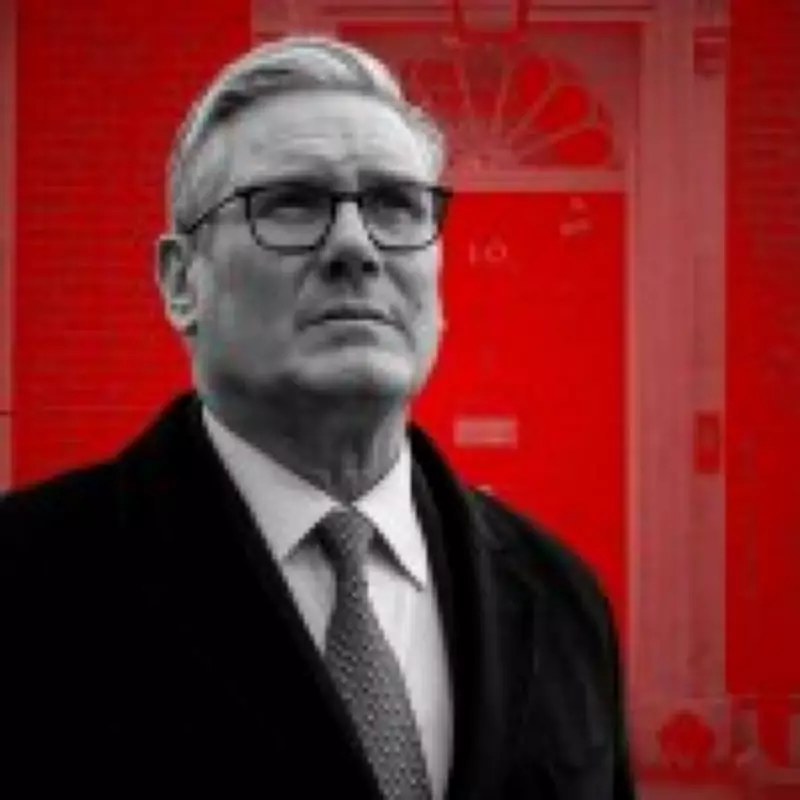
Starmer's Leadership Under Scrutiny: The Battle for Number Ten
This evening, Prime Minister Keir Starmer will address Labour MPs in a crucial attempt to secure his position as party leader and head of government. The former Director of Public Prosecutions, who rose from legal prominence to the summit of British politics, now faces perhaps the most challenging argument of his career. With his top aide Morgan McSweeney resigning over the Mandelson controversy and Scottish Labour leader Anas Sarwar reportedly preparing to publicly call for Starmer's resignation, the pressure on the Prime Minister is intensifying by the hour.
The Case for Keeping Starmer as Prime Minister
Opportunity for Genuine Renewal
While there have been numerous so-called 'resets' during Starmer's nineteen months in Downing Street, current circumstances present a genuine opportunity for substantial change. The departure of Morgan McSweeney, who faced criticism from MPs for fostering what some described as a 'boy's club' culture, has allowed Starmer to appoint two well-regarded women – Vidhya Alakeson and Jill Cuthbertson – as his acting chiefs of staff. This represents a significant shift in the Downing Street operation.

Furthermore, the Prime Minister's team plans to emphasise their commitment to eradicating sleaze from public life, with strengthened appointments processes and lobbying rules to be announced in coming days. Supporters argue that Starmer, with his background as a former Director of Public Prosecutions and commitment to public service values, is uniquely positioned to implement these crucial reforms.
Averting Return to Conservative Chaos
From the outset of the 2024 general election campaign, Starmer positioned Labour as the party of competent, stable government. While critics might question this claim, Labour has maintained the same leader for six years – a stark contrast to the Conservative Party's five leaders between 2016 and 2022. Pensions Secretary Pat McFadden reinforced this argument on Sky News yesterday, warning that another leadership change would damage Britain 'economically, politically and reputationally around the world'.
A leadership coup would signal to the public that political instability continues regardless of which party holds power, potentially undermining the government's authority and public confidence in political institutions.
Absence of Clear Successor
Though Downing Street won't articulate this argument publicly, there is no obvious candidate within the Parliamentary Labour Party who could immediately assume leadership if Starmer departed. The two most frequently mentioned potential successors – Angela Rayner and Wes Streeting – face significant challenges. Rayner's tax affairs remain under HMRC scrutiny, while Streeting faces questions about his connections to Lord Mandelson.
Moreover, these two figures represent opposing factions within Labour, meaning a leadership contest carries genuine risk of irrevocably splitting the party. Such internal conflict would distract from addressing the substantial issues facing the country during precious parliamentary time.
The Case Against Starmer's Continued Leadership
Persistent Unpopularity
Keir Starmer's approval ratings have reached historically low levels, placing him below Liz Truss after the mini-budget crisis, Boris Johnson during Partygate, and Tony Blair at the height of the Iraq War controversy. Crucially, his popularity has shown consistent decline since the election, creating what critics describe as a political 'helter skelter' rather than a temporary downturn.
This unpopularity has already manifested in poor local election and by-election results, with further potential disasters looming in upcoming contests in Gorton and Denton, plus Scottish, Welsh and local elections in May. Opponents question whether a fresh leader with stronger communication skills and less controversial baggage might fare better with the electorate.
Ultimate Responsibility for Controversial Decisions

While Morgan McSweeney resigned over the Mandelson appointment advice, the final decision rested with Keir Starmer himself. Critics argue this pattern extends beyond the Mandelson controversy to numerous painful decisions over the past nineteen months that have eroded public faith in Labour. As Prime Minister, Starmer bears ultimate responsibility for his government's actions.
This connects to broader concerns about perceived weakness in Starmer's leadership, with a reputation for U-turns that maximise political damage while delivering minimal policy benefits. The question of whether the Prime Minister demonstrates sufficient authority and consistency continues to trouble both opponents and some within his own party.
Lack of Clear Direction
A recurring criticism of Starmer's government centres on its failure to articulate a coherent narrative explaining how policies reflect core values. Instead of presenting an ideological framework, the Prime Minister has emphasised a pragmatic approach where problems are identified and solutions applied without extensive philosophical justification.
Critics suggest this vacuum has allowed more natural political storytellers like Nigel Farage of Reform and Zack Polanski of the Green Party to capture public attention. These concerns may intensify following McSweeney's departure, as he was widely regarded as the primary political strategist in Starmer's Downing Street operation. This week's developments will reveal how much the Prime Minister relied on his Chief of Staff for strategic direction.
The coming days will determine whether Keir Starmer can convince his parliamentary colleagues that he remains the right person to lead both the Labour Party and the country through challenging political waters.