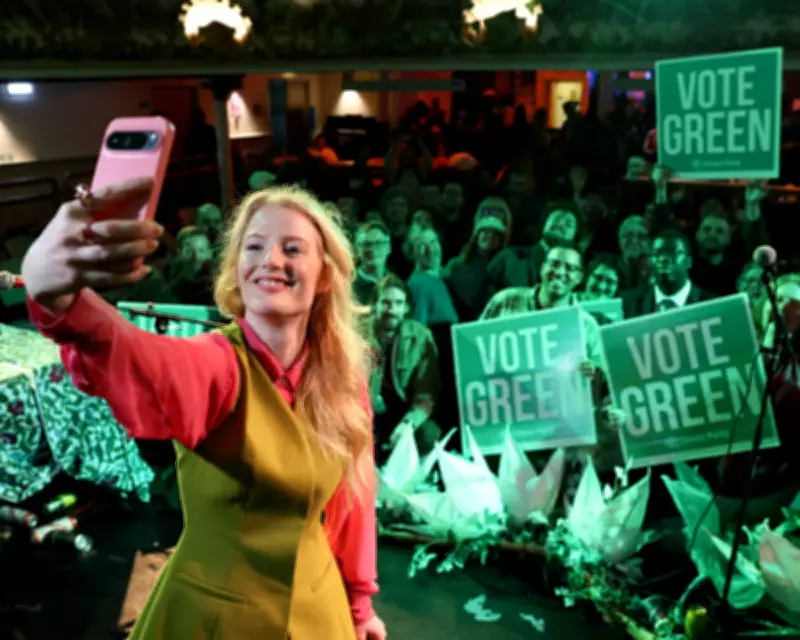
Green Party Secures Landmark Victory in Gorton and Denton Byelection
In a dramatic political upheaval, the Green Party candidate Hannah Spencer triumphed in the Gorton and Denton byelection on February 26, 2026, overturning decades of Labour dominance in this south-east Manchester constituency. Celebrating with supporters at the Niamos arts centre in Manchester, Spencer's victory represents a seismic shift in British politics, as the Greens captured one of Labour's safest seats with a campaign that fused voter anger with hope.
A Campaign That Defied Expectations
The scale of this win is staggering. Less than two years prior, the Greens placed third in the constituency with just over 13% of the vote, lacking a robust ground operation. Facing a well-established Labour machine that secured more than half the vote and a majority exceeding 13,000 in 2024, the Greens entered the contest with minimal data and local infrastructure. Yet, through a relentless focus on the cost of living crisis and the authentic appeal of candidate Hannah Spencer, a local plumber, the party galvanized thousands of activists to engage in extensive door-knocking efforts.
By polling day, the Greens had mobilized an unprecedented volunteer army, attracting defectors from lifelong Labour voters, including older working-class individuals often targeted by Reform UK. This grassroots surge, coupled with sharp social media strategies, enabled the party to build momentum that culminated in a decisive victory.

Strategic Leadership and Populist Appeal
This outcome vindicates the populist strategy championed by Green Party leader Zack Polanski since his leadership began in September. Moving away from perceived middle-class timidity, Polanski emphasized class politics, acknowledging voter anger while infusing it with hope. The campaign's success underscores a rejection of the traditional political consensus that has oscillated between fear and despair since the 2008 economic crash.
Labour's Disgrace and Reform's Setback
Labour's campaign was marked by miscalculation and deception, as it falsely claimed the race was solely between Labour and Reform UK, ignoring the Greens' rising influence. Accusations of misleading leaflets and attacks on Green policies, such as opposition to the failed war on drugs, further tarnished Labour's reputation. The loss in Gorton and Denton, ranked 127th on the Greens' target list, exposes Labour's vulnerability, suggesting no Labour MP can feel secure.
Reform UK, led by Nigel Farage, selected Matthew Goodwin as its candidate, betting on name recognition and a split progressive vote. However, with less than 29% support, its toxic migrant scapegoating failed to resonate widely, revealing brittleness in its momentum. Many working-class voters rejected Reform as a rebranded Tory party, challenging media stereotypes of widespread racism.
Broader Implications and Future Challenges
The Greens' victory reflects broader discontent, with Gaza policy playing a role due to Labour's complicity in supplying components for Israeli F-35 jets. Despite smears labeling the win as sectarian, Spencer emphasized common ground among diverse communities in her victory speech. The result signals a re-emergence of the left beyond Labour, threatening Starmer's project built on crushing internal dissent.
Looking ahead, Labour faces internal strife between Blairites advocating defiance and others urging a pivot to win back voters. However, with a parliamentary party filled with careerists, meaningful change seems unlikely. The Greens now brace for intensified smear campaigns from an alliance of Reform, Conservatives, Blairites, and media outlets, including racist attacks.
Ultimately, this byelection marks a pivotal moment where hope has replaced fear in politics, offering a blueprint for challenging established parties and fostering a more inclusive political landscape.