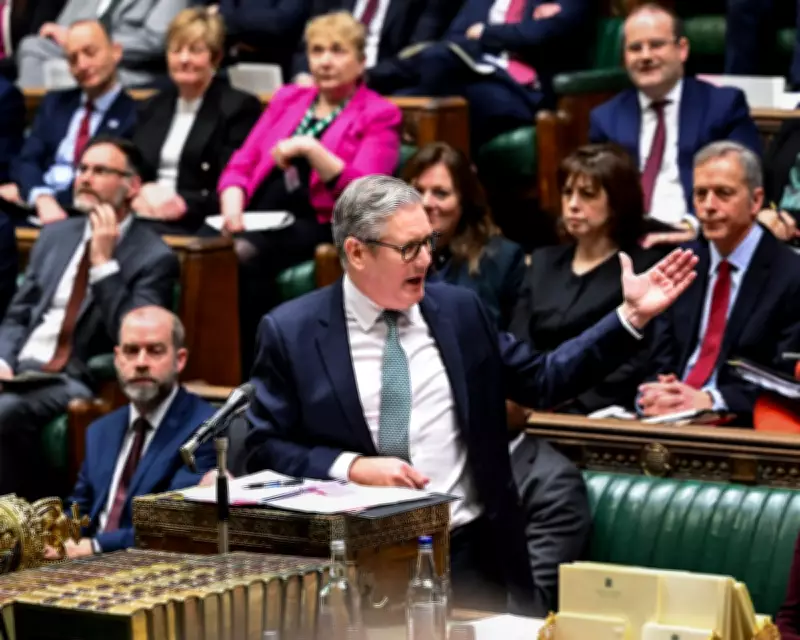
Starmer's Leadership Tested as Labour MPs Rally Amid Westminster Turmoil
After a tumultuous week in British politics, the parliamentary Labour party has decisively backed its leader, Sir Keir Starmer, during a heated session at Prime Minister's Questions on 11 February 2026. The Commons erupted with roars, stamps, and cheers as MPs rallied behind Starmer, demonstrating a constitutional commitment to supporting the elected government amidst internal strife.
The idea that Britain needs a Downing Street conflict is sheer madness, according to observers. Following what many described as an almighty storm in a teacup, the Commons managed to recover and steady the ship of state, a relief for those advocating political stability. The cliche of the country staring into the abyss and drawing back rings true, with Starmer earning praise for his performance in quieting the party mob and calming cabinet tensions.
The Root of the Prime Minister's Troubles
The prime minister's recent woes stem from the appointment of a figure with questionable associations to the Washington embassy, necessitating a swift removal. This incident is just one among Labour's numerous U-turns, including reversals on benefits for disabled people, winter fuel allowances for pensioners, inheritance tax, and pub policies. With Peter Mandelson's departure and ongoing police investigations, the story has captivated Britain's hot-house political scene.

This scandal involved a mix of a US president, British royalty, sexual abuse allegations, misogyny, and staggering wealth, providing fodder for the 24/7 media frenzy. Westminster's ability to transform disgrace into national scandal led to a loss of proportion, overshadowing mundane government affairs.
Starmer's Governance and Challenges
Having been in power for less than two years, Starmer has grappled with his central mission of stabilizing the nation's public finances. While he has not yet succeeded, he has also not failed outright. His tenure has seen several missteps:
- Appointing a politically inept chancellor who proposed a £40bn tax rise.
- Replacing his foreign secretary, home secretary, and top Downing Street team within a year.
- Managing the perils of a large Commons majority, which risks becoming uncontrollable.
These errors, proportionally more damaging than the Mandelson affair, have led some Labour MPs to question Starmer's suitability for the role. However, they chose him as leader, just as he chose Mandelson, and must acknowledge his limitations.
The Case for Stability Over Coup
The primary public interest currently lies in governmental stability. A coup against Starmer would only be justified if it introduced a regime that was stronger, more purposeful, and more appealing to voters. None of the potential successors—such as Wes Streeting, Angela Rayner, or Andy Burnham—currently meet this criterion. Streeting has yet to prove himself as an NHS reformer, Rayner lacks unifying appeal, and Burnham is not even in parliament.
History shows that many prime ministers have survived attempts to topple them, surrounded by rivals with Downing Street ambitions. Examples include Gordon Brown facing a challenge from James Purnell, John Major resigning mid-term to fight for re-election, and Margaret Thatcher enduring cabinet revolts. Britain has endured a decade of political chaos at its apex, with the economy requiring a steady hand rather than constant insecurity.
Looking Ahead: Elections and External Pressures
Abroad, turbulent events in Washington and elsewhere have dominated the past year, yet Starmer has maintained Britain's role as an intermediary between Europe and the US with dignity. His next challenges include the forthcoming Gorton and Denton byelection, May local elections, and the rise of the Greens and Reform UK. Many new Labour MPs fear for their seats, but unseating Starmer is unlikely to enhance their safety.
The 2024 election was seen as a relief after five prime ministers in a decade; gambling on a sixth makes little sense. The only beneficiaries of a coup would be populist parties on the right and left, along with nationalist fringe groups. As the political landscape evolves, the Labour party must weigh whether destabilizing its leadership aligns with its long-term goals.