Starmer's Impossible Position on Iran Exposes Britain's Geopolitical Vulnerability
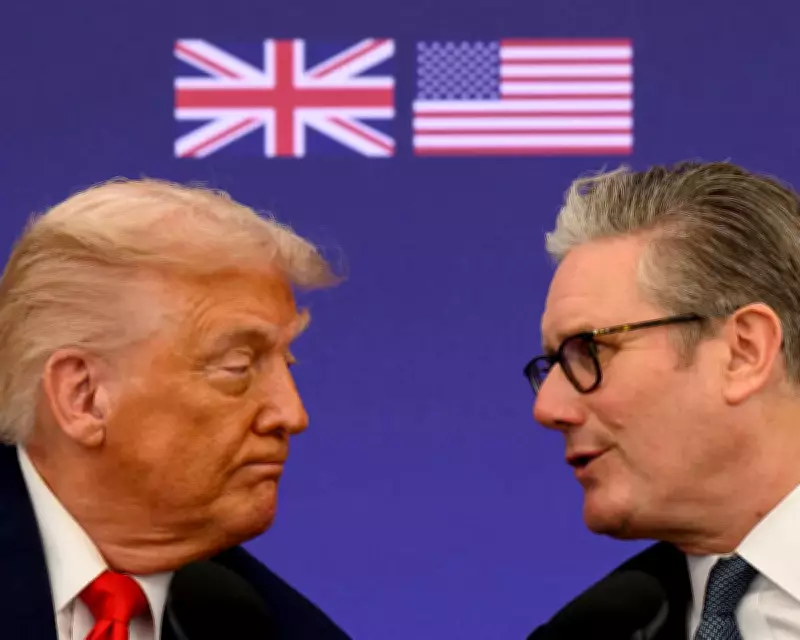
Meeting at Chequers in Buckinghamshire during September 2025, Donald Trump and Keir Starmer presented a study in contrasting leadership styles. The photograph by Leon Neal captures a moment that symbolizes Britain's precarious position in global affairs. Being Donald Trump's friend presents significant challenges, but becoming his enemy carries far greater dangers. The current Middle East conflict starkly reveals how few viable options remain for a British prime minister navigating these treacherous waters.
The Transactional Alliance Model
The American president approaches international relationships not as enduring partnerships built on shared values and mutual benefit, but as ongoing transactions following a mafia-like structure. In this model, protection comes at the price of tribute and unwavering loyalty. This fundamental shift creates profound difficulties for European democracies that have relied for generations on Western solidarity—a concept encompassing shared institutions, values, and legal frameworks that Trump openly dismisses.
For the United Kingdom, having voluntarily separated from the European Union while maintaining its cultural attachment to the "special relationship" with Washington, this represents nothing less than a crisis of geopolitical direction. The nation finds itself caught between continents, uncertain of its proper place in the new world order.

Starmer's Shifting Stance on Iran
Keir Starmer's evolving position regarding American military action against Iran perfectly illustrates this dilemma. Initially, the prime minister refused permission for United States forces to utilize British military bases, citing insufficient legal justification for warfare. The Tehran regime undoubtedly engages in brutal practices, with most victims being Iranian citizens. While the Islamic Republic maintains hostile intentions toward both the United States and Israel, no evidence suggests imminent action that would warrant preemptive strikes.
A more immediate motivation appears to be Trump seeking international excitement as his domestic political revolution loses momentum. Within days, Starmer reversed his position following Tehran's "scorched earth" retaliation—missile attacks targeting US-aligned nations throughout the region that placed British assets and civilians at risk.
The revised policy permitted RAF base involvement strictly for "collective self-defense" purposes, explicitly excluding participation in "offensive action." Starmer emphasized on Monday that lessons from the Iraq war would not be forgotten, attempting to navigate between conflicting domestic and international pressures through diplomatic and legal nuance.
The Political Crossfire
Despite these careful calibrations, satisfaction remains elusive across the political spectrum. Starmer's war stance demonstrates reluctance without outright opposition. He feels compelled to honor the technical requirements of the transatlantic alliance while lacking the combative enthusiasm demanded by Trump and his British political allies on the right.
Nigel Farage and Kemi Badenoch immediately endorsed the attacks against Iran without reservation. The Conservative leader accuses Starmer of using international law as mere pretext for inaction, suggesting his true concern involves appeasing "groups whose political loyalties regarding Middle East conflicts do not align with British interests." This implies that Labour MPs representing constituencies with substantial Muslim populations desperately want the government to avoid fighting alongside Israel.
While this consideration might influence certain areas, Badenoch's culture-warrior fervor overlooks a broader reality. Poorly conceived, open-ended military adventures—undertaken at the urging of an aggressive American president under questionable justification—prove unpopular across wide demographic segments of British voters.
The Opposition's Limited Alternatives
Expressing such wariness provides easy political victories for Zack Polanski and Ed Davey. Greens and Liberal Democrats correctly emphasize risks of escalating regional conflict, all troubling historical precedents, and the unlikely prospect of creating a less tyrannical Iran from smoldering ruins.

While their warnings serve as valuable reminders and their critiques remain relevant, their policy proposals lack depth. Davey urges Starmer to "get on the phone" with Trump and pressure him to plan a democratic transition for Iran. Polanski encourages the prime minister to condemn American actions outright.
These suggestions raise obvious questions about what would follow. The standard anti-war position asserts the superiority of negotiated settlements over military conquest—an approach Starmer initially preferred. However, the United States has already abandoned negotiations and assassinated Iran's supreme leader. The fantasy world where Trump responds to British prime ministerial phone calls or feels chastened by denunciations exists only in opposition imagination.
The Hard Realities of Power
In actual governance, Starmer must deploy his limited influence with the White House strategically. He must balance competing strategic objectives—including maintaining Trump's support regarding Ukraine. Furthermore, he must acknowledge that Britain's military and intelligence capabilities remain deeply integrated with Pentagon systems.
This reality surfaces whenever Starmer faces pressure to demonstrate policy differences with Trump, manifesting in his references to the "indispensable" nature of the defense partnership. Behind closed doors, ministers express themselves more bluntly. As one official states, Britain would become "massively exposed" should a capricious American administration decide it no longer desired British friendship.
The dangers of alienating Trump rarely receive public discussion because few have incentive to admit such monumental vulnerability. For Brexit supporters on the political right, the notion that European Union membership amplified British power remains ideologically unacceptable. Even less tolerable is viewing the EU relationship as insurance against overreliance on Washington.
The Strategic Autonomy Illusion
Having fought for liberation from imagined Brussels colonization, Reform UK and Conservative factions now advocate complete submission to Washington—vassals in trade matters, mercenaries in military conflicts. Meanwhile, the liberal left expresses frustration with dependence on a rogue superpower and desires realignment with Europe, yet demonstrates discomfort regarding the defense and security implications.
The necessary counterpart to foreign policy autonomy in a dangerous, volatile world involves developing hard-power capabilities that Europe neglected during decades of American protection. Polanski advocates reducing American dependency and speculates about leaving NATO for more Eurocentric alliances, yet fails to propose increased defense spending to replace capabilities lost through Washington rupture—capabilities already urgently needed to deter Russian aggression along Europe's eastern frontier.
The Cost of Independence
Strategic autonomy from a Trump-dominated United States represents a plausible ambition for Britain, but constitutes an expensive undertaking requiring difficult decisions that opposition leaders—particularly those with minimal chance of attaining power—can conveniently ignore.
Starmer lacks this luxury. He may not achieve perfect balance between European and American interests—between asserting independent foreign policy and preserving precious diplomatic capital in Washington—but unlike his critics, he confronts these agonizing dilemmas constantly. Political reality dictates he will ultimately suffer consequences for poor choices, yet history may recognize that better alternatives simply did not exist.