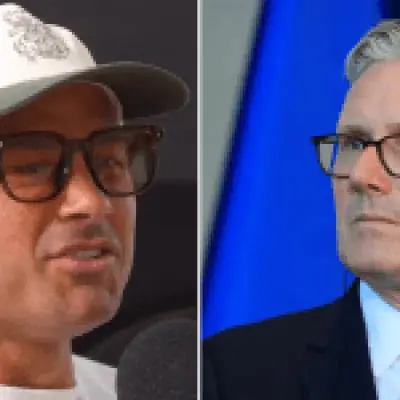
Prime Minister Keir Starmer faced intense backlash from within his own party on Monday after his government executed yet another significant policy reversal, abandoning controversial plans to postpone local council elections across thirty English authorities. The decision, which came just hours after Starmer defended his pragmatic approach to governance during a BBC interview, has ignited fury among Labour MPs while handing a substantial political opportunity to Nigel Farage's insurgent Reform UK party.
Chaos and Criticism from All Sides
The announcement triggered immediate condemnation from political opponents and internal critics alike. Conservative leader Kemi Badenoch denounced what she called "predictable chaos from a useless government that cannot make basic decisions," while Reform UK's Nigel Farage demanded the resignation of Local Government Secretary Steve Reed, declaring "The government tried to cancel democracy. They have been defeated."
Perhaps more damagingly, Labour MPs expressed profound frustration with their own leadership. One anonymous Labour parliamentarian accused the government of making "crap decisions," while another warned "You can't hide from the electorate." A third MP revealed the depth of internal anger, stating "Most of the colleagues I've spoken to are livid."

The Road to Reversal
The controversy originated in December 2024 when ministers first proposed simplifying local government structures, including eliminating smaller district councils and merging neighboring authorities. Initially, nine local authorities successfully applied to delay their elections while implementing reorganization plans, causing limited political concern.
However, the situation escalated dramatically last December when the government contacted affected local authorities about potentially postponing this year's elections. When thirty councils—including five that had already delayed by one year—expressed interest in further postponement, opposition parties and some Labour figures erupted in protest.
The political composition of these thirty councils proved particularly contentious: twenty-one are Labour-led, five Conservative, two Liberal Democrat, one independent, and one Green. This predominance of Labour-controlled authorities fueled accusations from opposition politicians, particularly Nigel Farage, that the government was attempting a political "stitch up" to prolong Labour's control beyond legitimate electoral mandates.
Legal Challenges Force Retreat
For weeks, ministers had staunchly defended the proposed delays, with Steve Reed telling Parliament last month that elections would "slow down making these vital reforms" to eliminate bureaucratic duplication. Government sources now reveal that while Reed had been warned about potential legal challenges, it only became clear the government would likely lose after Farage formally lodged a review.
The final decision to abandon the election delays was made by Housing Minister Matthew Pennycook, following standard procedure for legally sensitive reversals where a minister uninvolved in the original decision takes responsibility. Conservatives immediately questioned Reed's suitability to remain in his position, while Farage explicitly called for his dismissal.
Reform UK Seizes Political Opportunity
As all major political parties scramble to find candidates for areas where they hadn't anticipated elections, Reform UK believes it stands to gain the most from this political turmoil. Farage's party, already expecting significant gains at Conservative expense in May's elections, now sees expanded opportunities across England.
"You can look at Norfolk, Suffolk, East Sussex and West Sussex, and you can say, well, these are the Tory heartlands," Farage declared on Monday. "But I think there's going to be a degree of punishment voting going on when these elections happen. So I fancy our chances there."
Specific councils where Reform anticipates strong performance include Basildon Borough Council, Cannock Chase District Council, Harlow Borough Council, West Sussex Borough Council, and Thurrock Council. The party's strategists believe voter frustration with what they characterize as government incompetence could translate into substantial electoral gains.

Broader Implications for Starmer's Leadership
This latest reversal adds to a growing list of policy U-turns that have characterized Starmer's first two years in government, including retreats on winter fuel payment cuts, disability benefit reductions, and inheritance tax increases for farmers. While Starmer defended himself as "a pragmatist" and "a common-sense merchant" during his BBC interview, critics argue the constant policy shifts demonstrate fundamental governance weaknesses.
The local election controversy now presents Starmer with multiple challenges: managing internal party dissent, countering opposition attacks on government competence, and preventing Reform UK from capitalizing on voter dissatisfaction. With May's elections rapidly approaching, the political fallout from this decision continues to unfold, potentially reshaping England's local political landscape and testing Starmer's leadership like never before.