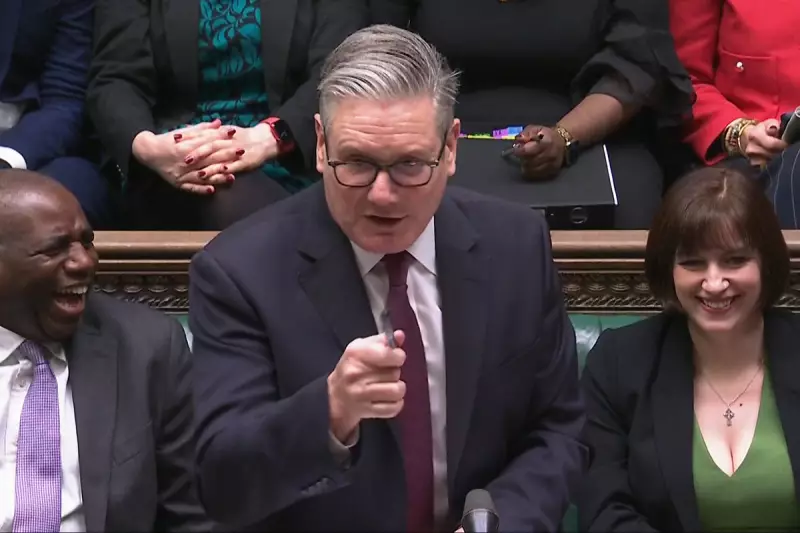
In a defiant display of political resolve, Prime Minister Keir Starmer has publicly declared he will not capitulate to pressure from US President Donald Trump regarding Britain's stance on Greenland's sovereignty. The confrontation emerged during a tense Prime Minister's Questions session in the House of Commons, where Starmer suggested Trump's unexpected criticism of the Chagos Islands agreement was a tactical manoeuvre designed to influence UK policy on Greenland.
Parliamentary Clash Over International Pressure
Responding to questioning from Conservative MP Kemi Badenoch about whether he would support Chagossians with the same vigour he has shown for Greenlanders, Starmer delivered a pointed analysis of Trump's shifting rhetoric. "President Trump deployed words on Chagos yesterday that were different to his previous words of welcome and support when I met him in the White House," Starmer stated firmly. "He deployed those words yesterday for the express purpose of putting pressure on me and Britain in relation to my values and principles on the future of Greenland."
The Prime Minister left no ambiguity about his position, adding emphatically: "He wants me to yield on my position, and I'm not going to do so." Starmer also criticised Badenoch for what he characterised as "jumping on the bandwagon" and potentially undermining the government's consistent message regarding the protection of Greenland's sovereignty.

Broader Political Reactions and International Context
The parliamentary exchanges revealed deepening fractures within British politics regarding how to manage the increasingly strained relationship with the Trump administration. Liberal Democrats leader Ed Davey faced Starmer's rebuttal after questioning why the government wasn't accelerating defence expenditure more rapidly. Meanwhile, Labour backbenchers seized on the controversy, with MP Steve Witherden labelling President Trump a "thug" and demanding the UK government commit to retaliatory tariffs against the United States.
Starmer firmly rejected such escalation, warning that a trade war would inevitably hit UK consumers and businesses with higher costs. This position was reinforced by Chancellor Rachel Reeves, who told broadcasters in Davos that the government would not be "buffeted around by global events" and distanced the UK from threats of imposing retaliatory tariffs on American goods.
International Diplomatic Alignments and Legislative Challenges
The Prime Minister's assertive stance in Parliament follows remarkable comments from international allies including Canadian Prime Minister Mark Carney and French President Emmanuel Macron, who have both signalled a desire for Western nations to collectively stand firm against Trump's pressure tactics. After dismissing tariff threats as "completely wrong," Starmer's increasingly bold position reflects the deteriorating relationship between the British government and the US administration.
Significant questions now loom over the Labour government's ability to navigate the Chagos Islands legislation through Parliament, particularly given Trump's apparent reversal on the agreement. Former Foreign Secretary David Lammy had previously indicated last year that the deal would "not go forward" if President Trump opposed it, creating additional complications for the current administration.
Government officials maintain that a signed treaty obligates Britain to proceed with the handover of the territory to Mauritius, alongside a 99-year lease arrangement for the military base on Diego Garcia island. This diplomatic commitment now faces unprecedented pressure from transatlantic tensions, testing Starmer's resolve and strategic positioning on the international stage.