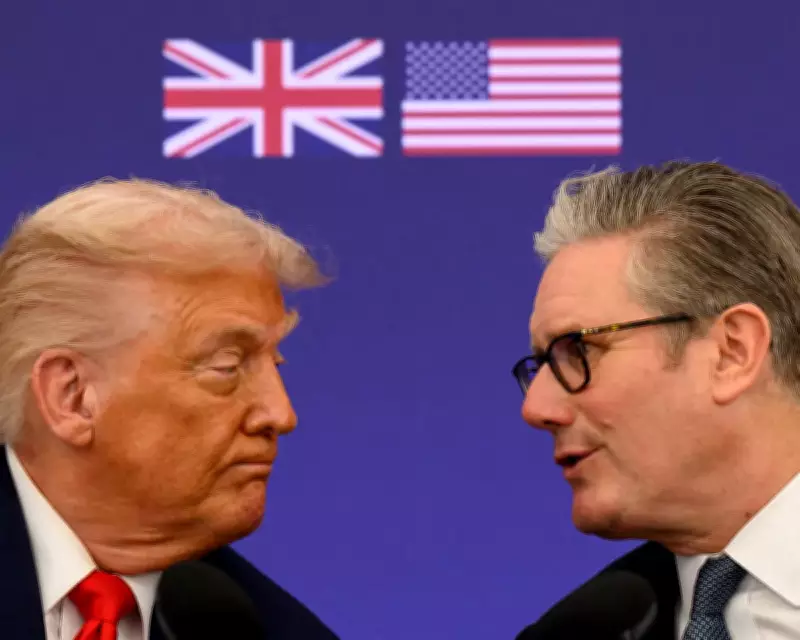
In a pointed exchange during Prime Minister's Questions on Wednesday, Keir Starmer delivered a firm rebuttal to Conservative MPs questioning his handling of Iran and its impact on Anglo-American ties. The Labour leader underscored that the true essence of the special relationship lies in tangible actions, not in fixating on the volatile commentary from the US president.
Trump's Volley of Insults and Starmer's Defiant Response
Over recent days, Donald Trump unleashed a series of critical remarks aimed at Starmer, capturing media attention and political discourse. In an interview with the Daily Telegraph on Monday, Trump accused the prime minister of delaying permission for US forces to utilize UK airbases. The following day, in comments to the Sun, he labeled Starmer as "not been helpful," and later told reporters dismissively, "This is not Winston Churchill that we're dealing with."
Historically, such concentrated criticism from a US president would have triggered intense scrutiny and anxiety within Downing Street and the Foreign Office, where the special relationship with Washington is traditionally cherished. However, Starmer appeared remarkably composed, if not entirely unfazed, during the parliamentary session.

Three Key Reasons for Starmer's Confidence
Analysts point to three interlinked factors explaining Starmer's assured stance in the face of Trump's barbs. Firstly, there is a widespread diplomatic acknowledgment that Trump's public statements are notoriously erratic and subject to rapid change. World leaders have grown accustomed to largely ignoring his rhetoric unless it translates into concrete policy actions. Starmer himself has previously expressed polite bemusement at Trump's past compliments, including praise for his political acumen and "beautiful" accent, recognizing the fleeting nature of such sentiments.
Secondly, internal polling from YouGov reveals that British public opinion aligns more closely with Starmer's cautious approach than with the Conservative opposition's calls for immediate alignment with US-Israeli military operations against Iran. The data indicates significant opposition to the overall US intervention and even slight resistance to allowing American aircraft to use British bases for attacks, bolstering the prime minister's domestic position.
Thirdly, sources within Number 10 express quiet frustration that Starmer's decisions regarding Iran are being framed predominantly through the lens of managing Trump, rather than as independent actions taken in the national interest. Insiders emphasize that the prime minister's primary focus is on protecting British citizens and advancing UK security, not merely navigating presidential whims.
A Coherent, If Unorthodox, Diplomatic Strategy
Despite the current tensions, Starmer has actively engaged in diplomatic overtures toward Trump, including delivering a letter from King Charles proposing an unprecedented second state visit during his initial White House meeting. This transactional approach aims to secure tangible benefits, such as avoiding punitive tariffs under Trump's trade policies. However, the UK government has not hesitated to draw red lines, condemning Trump's inaccurate criticisms of London Mayor Sadiq Khan and rebuking his "insulting and frankly appalling" remarks about British soldiers in Afghanistan earlier this year.
In essence, Starmer's strategy represents a pragmatic adaptation to the unpredictable dynamics of modern US-UK relations. While it may lack the traditional decorum of past eras, it reflects a shared reality among America's allies: no one has perfected the art of consistently appeasing Trump, making this a collective diplomatic challenge rather than a solitary burden.