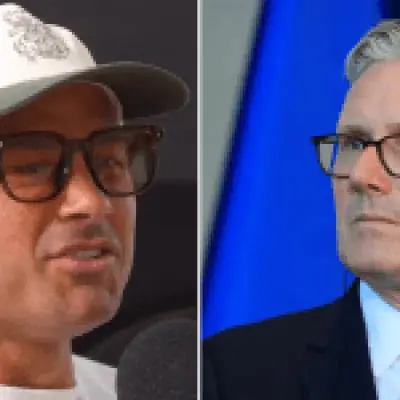
Starmer's Leadership in Peril as Key Ally Departs
Prime Minister Keir Starmer finds himself in an increasingly precarious position following the dramatic resignation of his closest political confidant, Morgan McSweeney. This development has left the Labour leader more isolated than at any point since taking office in 2024, raising serious questions about his political future.
The Resignation That Shook Westminster
McSweeney, who served as Starmer's chief of staff and principal strategist, stepped down on Sunday in a move that has sent shockwaves through British politics. His departure represents more than just another ministerial resignation – it removes Starmer's most trusted advisor, the architect behind Labour's landslide election victory and the man credited with identifying Starmer as a potential party leader years earlier.
The relationship between the two men was exceptionally close, with political observers comparing their partnership to iconic duos like Simon and Garfunkel or Starsky and Hutch. McSweeney's resignation statement made clear his sense of responsibility, stating: "The decision to appoint Peter Mandelson was wrong. When asked, I advised the prime minister to make that appointment and I take full responsibility for that advice."

The Epstein Connection That Triggered the Crisis
The catalyst for this political earthquake stems from the ongoing fallout from the Jeffrey Epstein files. Recent document releases have revealed that Peter Mandelson, who served as UK ambassador to the United States until September last year, maintained a far closer relationship with the convicted sex offender than previously acknowledged.
Emails and documents suggest that in 2008, while serving as a senior Labour government minister, Mandelson allegedly shared market-sensitive information with Epstein. What began as an embarrassing friendship has escalated into what historian Anthony Seldon describes as potentially "the UK's worst political scandal," with terms like "treason" and "betrayal" entering political discourse.
Political Herd Restless but Not Yet Moving
While the political consensus suggests Starmer's tenure may be approaching its conclusion, the herd instinct that former Prime Minister Boris Johnson described as sealing his fate has not yet turned decisively against the current Labour leader. On Monday, Scottish Labour leader Anas Sarwar became the first senior figure to publicly call for Starmer's departure, stating: "The distraction needs to end and the leadership in Downing Street has to change."
However, within hours, Starmer's cabinet colleagues mounted a coordinated defence, publicly declaring their support for the prime minister. This display of unity, while significant, cannot mask the underlying tensions and frustrations within the parliamentary party.
Personal Principles and Political Pressure
Adding a personal dimension to the crisis, Guardian political editor Pippa Crerar notes that Starmer has built much of his career – both as a lawyer and politician – on defending women against predatory men. The Epstein revelations, therefore, strike at the core of his personal principles and political identity, potentially causing significant personal anguish that could influence his decision-making.
Succession Questions and Electoral Tests
The absence of an obvious successor provides Starmer with some temporary protection. Potential candidates include former deputy prime minister Angela Rayner from the party's left wing, though her own political difficulties regarding unresolved tax affairs complicate her candidacy. From the right, Health Secretary Wes Streeting presents another possibility, though he remains a divisive figure within Labour ranks.
Starmer's immediate fate may hinge on upcoming electoral tests. May brings elections for the Scottish and Welsh parliaments, along with English council elections. Poor Labour performance in these contests could create intolerable pressure, potentially triggering the leadership challenge that has so far remained largely private.

A Government in Crisis Mode
McSweeney's resignation represents just the latest in a series of calamities that have beset Starmer's government over the past eighteen months. Supporters hope his departure might provide breathing space for a government reset, while critics argue that losing his last line of defence makes Starmer's own position increasingly untenable.
As Britain watches this political drama unfold, fundamental questions remain about whether any potential successor could unite a fractious Labour party or govern a nation weary of political scandals following years of Conservative turmoil. The coming weeks will determine whether Starmer can survive this crisis or whether, like his predecessor, he will fall victim to the powerful herd instinct of British politics.