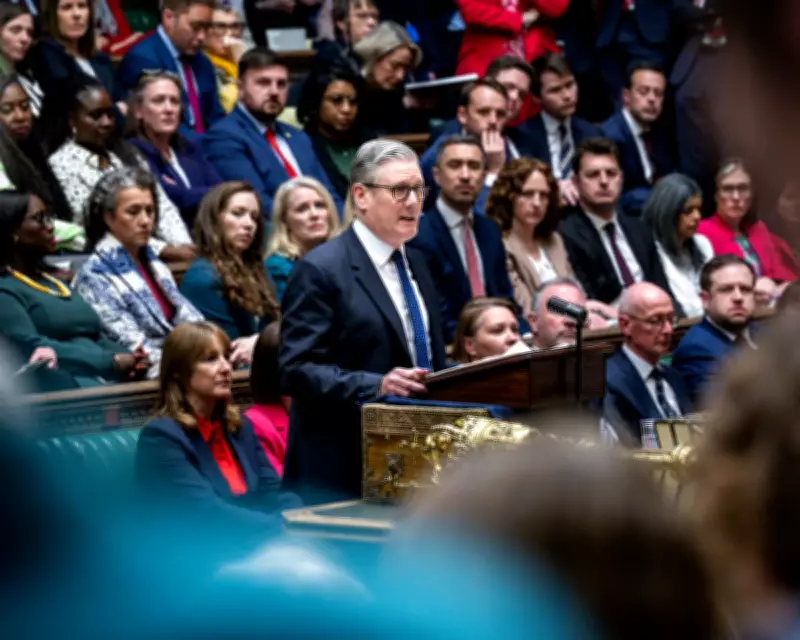
The Conservative Party has accused Prime Minister Keir Starmer of misleading the House of Commons by claiming that 'full due process' was followed in the appointment of Peter Mandelson as ambassador to Washington. The Commons speaker, Lindsay Hoyle, has granted a debate on Tuesday that could lead to a vote on referring Starmer to the privileges committee for investigation.
Background of the Controversy
The controversy stems from revelations by The Guardian that Mandelson was appointed despite vetting officials recommending against granting him security clearance. Starmer had stated in the Commons that 'full due process' was observed, but the Tories argue this was misleading. The prime minister's office contends that he was commenting based on the information available at the time.
Speaker's Decision
Speaker Hoyle informed the Commons on Monday that he had received letters from 'numerous' MPs across parties, including Labour, regarding the matter. He stated, 'My role is to decide whether an MP has made a case which the House itself should be able to consider, not to decide whether someone is likely to have committed a contempt. I've decided to allow the House to come to a view on whether the committee of privileges should look at the matter.'

Potential Consequences
Knowingly misleading Parliament is considered a resigning offence for ministers. A previous privileges committee investigation in 2023 led to Boris Johnson's resignation as an MP. However, Downing Street argues that Starmer's comments were accurate given the facts at the time. The government is expected to whip Labour MPs to vote against the investigation, but some Labour MPs may side with the opposition, reflecting internal discontent.
Additional Allegations
The Conservatives have also accused Starmer of misleading MPs by claiming there was 'no pressure whatsoever' on the Foreign Office. Olly Robbins, the top official sacked over the affair, stated last week that there was pressure. Downing Street clarifies that Starmer's comment referred specifically to the security vetting process, not the broader appointment.
Deputy Prime Minister David Lammy admitted in a Guardian interview that there were 'some time pressures' on the Foreign Office last January to confirm Mandelson before Donald Trump's inauguration. 'There was a feeling that obviously Trump had won the election in November, he was moving into the White House, and it would be good if we had an ambassador. So there were some time pressures around that I recall at the time,' Lammy said.
Political Implications
The vote is seen as a test of Starmer's authority, which has been damaged by the Mandelson affair. While such referrals to the privileges committee are rare, Boris Johnson was forced to allow his own referral during the partygate scandal. The outcome of Tuesday's debate and vote will indicate the level of support for the prime minister within his own party and the opposition.