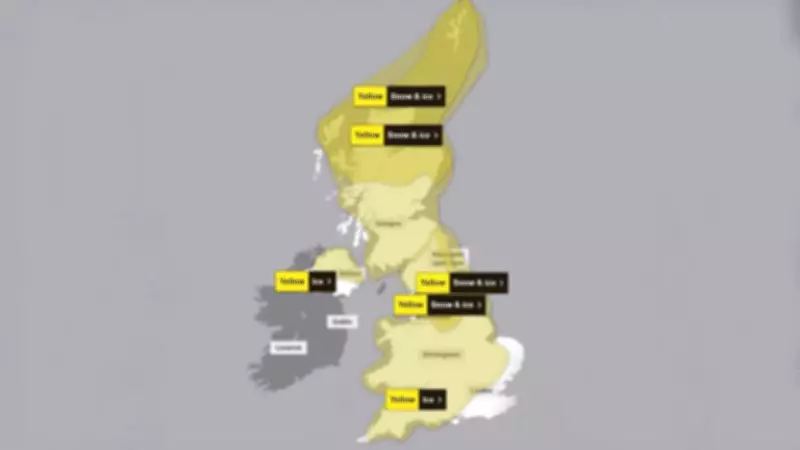
Met Office Issues Snow and Ice Warnings Across UK This Weekend
The Met Office has issued snow and ice warnings for large parts of the United Kingdom, with alerts set to impact northern regions and beyond. These warnings come into effect from 4pm this afternoon, extending until 8pm this evening and continuing into Saturday.
Specific Alert Details and Coverage Areas
A snow and ice warning is currently in force for parts of northern England and Scotland. Simultaneously, a separate ice warning covers the rest of England, including southern and South West England, as well as Wales. An additional snow and ice warning for northern parts of England and Scotland will activate at 9pm on Saturday, remaining in place until Sunday morning.
Residents are advised to check local weather forecasts for updates, as conditions may vary. For instance, the A66 at Bowes in County Durham was already blanketed with snow this morning, highlighting the immediate impacts.

Cold Health Alert and Potential Risks
Accompanying the weather warnings, a cold health alert from the UK Health Security Agency (UKHSA) began today and will run until 8am on Monday. This alert covers central and northern areas of England, warning that vulnerable individuals could face greater health risks.
The UKHSA also notes potential minor impacts on health services due to increased demand during this period. This underscores the importance of preparedness and caution for those in affected regions.
Weather Patterns and Historical Context
The Met Office attributes the colder conditions to an Arctic maritime air mass that has moved into the region. Looking ahead, a weather front is expected to sweep in from the west on Sunday, bringing more rain, strong winds, and additional snow to northern areas.
This weather event follows a gloomy start to 2026, with the Met Office reporting a blocking pattern that led to 26 weather stations setting new monthly records for January. Northern Ireland experienced its wettest January in 149 years, while Aberdeen endured its longest sunless spell since 1957, with 21 consecutive days of zero sunshine before breaking the spell earlier this week.
As the situation develops, staying informed through official sources like the Met Office and UKHSA is crucial for safety and planning.