
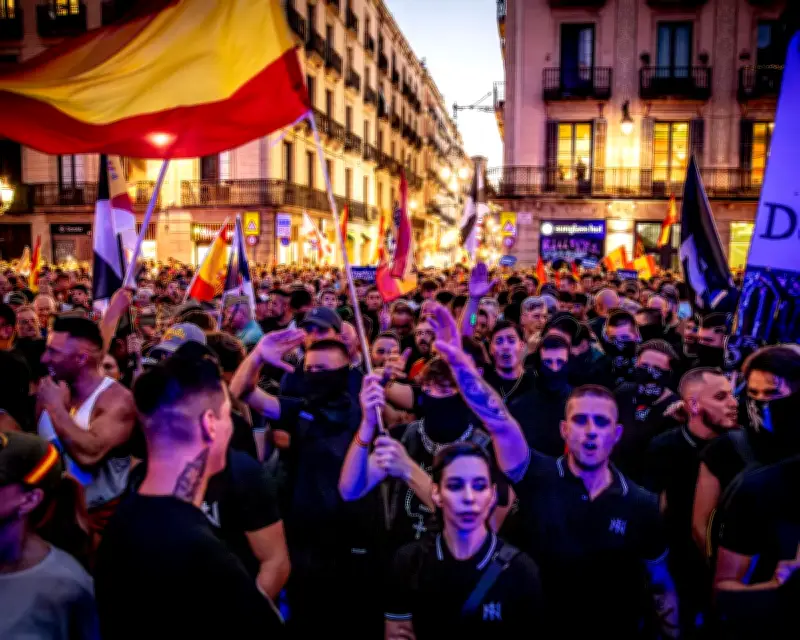
Spanish prime minister Pedro Sánchez faces a tricky parliamentary session this morning, as he faces lawmakers to discuss last month’s migration crisis in the north African territory of Ceuta. His appearance in the Congress comes after tens of thousands of people took to the streets last night to show their solidarity with the territory and protest against the government’s migration policy after over 70,000 irregular migrants crossed into Ceuta from Morocco.
Protests and Police Report Fuel Tensions
In Madrid, tens of thousands of people gathered in front of the city hall, at the Cibeles Palace, to denounce Pedro Sánchez's policy, during the national mobilization day 'All of Spain for Ceuta.' The protests were officially organised by the nonpartisan Spanish Federation of Municipalities and Provinces, but with strong support from two opposition parties, the Partido Popular and Vox.
A leaked police report claimed that Moroccan security forces played a role in the Ceuta crisis with 'total permissiveness' to irregular border crossings, contradicting the Spanish government’s diplomatic line on the incident and sparking further fury from the public.
Humanitarian Situation in Ceuta
While the Spanish government argued that the vast majority of irregular migrants were returned to Morocco within the first 24 hours, some 5,000 are believed to still remain in Ceuta, including minors, contributing to a continuing humanitarian crisis. The ongoing presence of these migrants has heightened concerns about the welfare of vulnerable groups, particularly children, and has put additional strain on local resources.
The parliamentary session is expected to be a key test for Sánchez, as he faces questions from opposition lawmakers over his handling of the crisis and the government's migration policy. The leaked police report has further complicated the government's position, as it appears to undermine official statements that Morocco was not involved in facilitating the crossings.
Political Repercussions and Next Steps
The protests and the political fallout from the leaked report indicate a significant challenge to Sánchez's administration. The opposition parties, Partido Popular and Vox, have used the crisis to criticise the government's approach, and the public demonstrations show widespread discontent with the handling of the situation.
As Sánchez addresses the Congress, he will need to address these criticisms and outline a clear strategy for managing the ongoing humanitarian and diplomatic issues. The situation in Ceuta remains unresolved, with thousands of migrants still in the territory and questions lingering about the role of Moroccan security forces. The outcome of this parliamentary session could shape the government's next moves in addressing this complex crisis.




