Ancient Christian Village Under Siege as Settler Attacks Escalate
The Palestinian Christian village of Taybeh, nestled in the hills northeast of Ramallah in the occupied West Bank, represents one of the world's oldest continuous Christian communities. This historic town, which has survived crusaders, empires, and multiple wars over centuries, now faces what residents describe as an existential threat from increasing attacks by Israeli settlers.
A Community Fighting for Survival
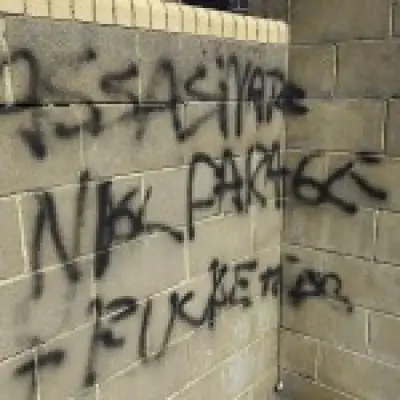
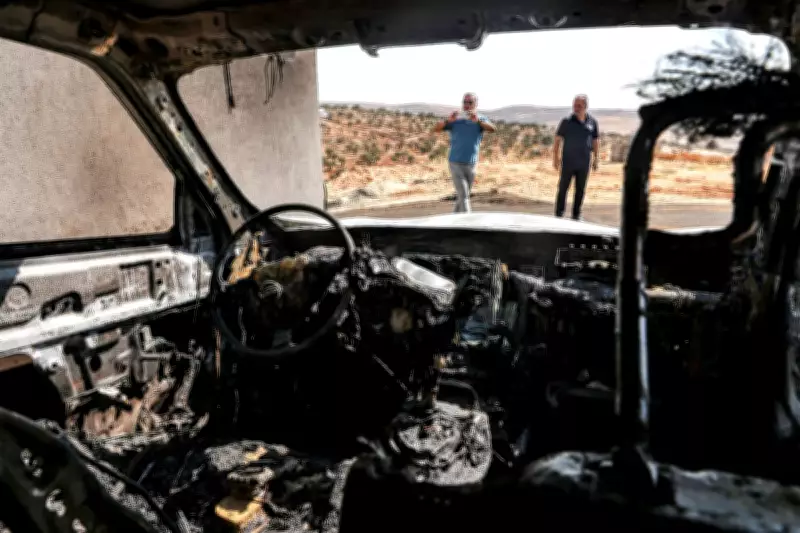
According to local accounts and photographic evidence, settlers have repeatedly targeted Taybeh with violent incidents throughout 2025. These attacks have included arson attacks on vehicles, vandalism of property, and even an assault on the grounds of the fifth-century St. Peter's Church in July 2025. The community, which traces its Christian heritage back to biblical times when Jesus reportedly hid there with his disciples, now finds itself in a daily struggle for survival.
Father Bashar Fawadleh, parish priest of Christ the Redeemer church, described the systematic nature of the pressure: "First they kicked the Bedouin out in the last three years and put up their caravans and bring their cows and sheep. They are using the land without any permission from the owners and from ourselves."

Pattern of Intimidation and Land Grabs
The situation in Taybeh reflects a broader pattern occurring throughout the West Bank. Four substantial Israeli settlements surround the town, with numerous unofficial outposts established by messianic Jews who deploy "hilltop youth" to harass Palestinian residents. This campaign has been described by United Nations officials as ethnic cleansing and is supported by hardline members of Israel's ruling coalition.
In March 2025, approximately thirty settlers took over a concrete factory and stone quarry on Taybeh's edge, raising the Israeli flag and holding prayers in what locals interpreted as a statement of intent to begin taking over parts of the town itself. This incident followed months of escalating violence, including four separate raids by settler groups who set fire to cars, slashed tires, and smashed windows.
International Response and Political Context
The international community has shown limited response to the crisis. Following the July 2025 church attack, U.S. Ambassador Mike Huckabee visited Taybeh to condemn what he called "an act of terror" and called for prosecutions. However, no prosecutions have been reported, and Huckabee has not spoken out about subsequent attacks. The ambassador, a Southern Baptist minister and fervent supporter of Israel's territorial claims, has faced criticism from American Christians for his stance.
Meanwhile, the Israeli government has pursued policies that facilitate settlement expansion. In February 2025, the security cabinet approved measures allowing Israelis to purchase property in the occupied West Bank, representing a significant step toward annexation. Prime Minister Benjamin Netanyahu has claimed that "Israel is the only country in the Middle East and one of the few countries in the world that stands up for Christians," but critics argue this support is conditional on political loyalty.
Demographic Decline and Broader Implications
The Christian population in the West Bank has experienced dramatic decline, shrinking from 5% of the total population in 1967 to approximately 1% today—about 45,000 people. Taybeh itself has lost fifteen families in the past two years, reducing its population to around 1,100 residents. The community's unique identity as an entirely Christian town brings some international attention and occasional protection from diplomatic visits, but also makes residents more vulnerable as Western countries often show greater willingness to accept Palestinian Christian refugees.
Jad Isaac, director general of the Applied Research Institute-Jerusalem, which tracks Israeli land acquisition in the West Bank, stated that in Palestinian Christian communities, "the strategy is to make life intolerable." This pattern extends beyond Taybeh to other Christian areas, including Beit Sahour near Bethlehem, where a new settlement called Yatziv was rapidly legalized in January 2026 despite local opposition.

Religious Tensions and Future Prospects
While much attention has focused on tensions between Israelis and Palestinian Muslims, anti-Christian incidents have been rising. The Religious Freedom Data Center, an Israeli-run organization, documented a 65% increase in harassment cases in Jerusalem, many involving spitting on Christians. The organization's director, Yisca Harani, noted a connection between "the national mood, the prevailing tensions, and the government's backing which together foster a sense of superiority among Jews—a factor contributing to the rise in attacks against non-Jews."
Community activist Rifat Kassis, a member of Beit Sahour's Lutheran congregation, expressed profound concern about the future: "We kept our existence and presence for the past 2,000 years uninterrupted, despite all the turmoil, one empire after another, invasion after invasion and war and another war. But since the occupation the pressure imposed on us comes from all sides ... Israel has managed to create an atmosphere where there is no hope."
According to United Nations figures, settler attacks reached alarming levels in 2025, with 1,828 incidents recorded across 270 Palestinian communities—averaging five attacks per day. As these patterns continue, ancient Christian communities that have endured for millennia now face unprecedented challenges to their continued existence in their ancestral lands.