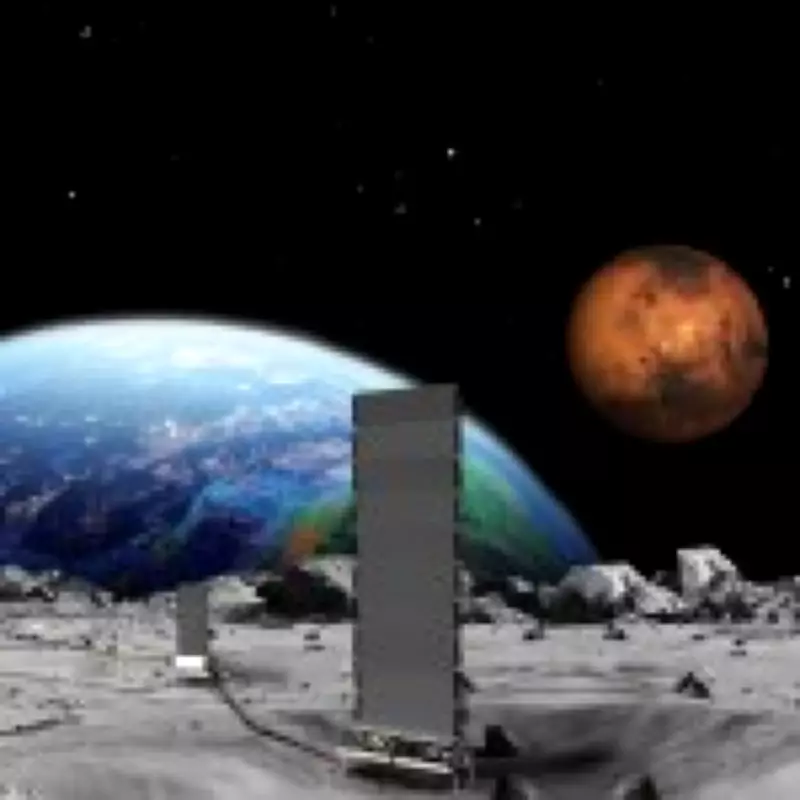
NASA Announces $20 Billion Strategy for Permanent Lunar Base
NASA has revealed comprehensive plans to establish a permanent base on the Moon, with an estimated cost of $20 billion, equivalent to approximately £15 billion. The agency's chief, Jared Isaacman, outlined this ambitious strategy during an event in Washington DC last week, marking the first time a clear timeline and roadmap have been presented for constructing a lunar outpost.
Urgency in the Modern Space Race
Isaacman emphasized the critical urgency of advancing in the contemporary space competition, particularly as China aims to achieve a moon landing by 2030. He stated, 'NASA is committed to achieving the near-impossible once again, to return to the Moon before the end of President Trump’s term, build a Moon base, establish an enduring presence, and do the other things needed to ensure American leadership in space.' He added that success or failure in this great-power competition will be measured in months, not years, highlighting the intense pressure to accelerate progress.
Revised Artemis Program and Infrastructure Shifts
The new plans build upon NASA's existing Artemis program, which aims to return astronauts to the Moon. Key updates include the cancellation of the Gateway lunar space station in its current form, with components redirected to support the surface base over the next seven years. Instead, NASA will prioritize infrastructure designed for sustained operations on the lunar surface, enabling a continuous human presence.

Recent adjustments to the program involve standardizing the configuration of the Space Launch System (SLS) rocket and adding an additional mission in 2027. Under the revised approach, Artemis III, scheduled for 2027, will focus on testing integrated systems and operational capabilities in Earth orbit. This will precede the Artemis IV mission, which is expected to carry out a lunar landing.
Phased Construction and Future Missions
A central element of the strategy is a phased plan to construct the permanent base. NASA aims to conduct at least one lunar landing annually, with initial targets set for landings every six months. The agency plans to increasingly rely on commercially procured and reusable hardware to support more frequent crewed missions as technology evolves.
Looking ahead, NASA envisions this base as a stepping stone for future deep space exploration, including missions to Mars. Amit Kshatriya, the agency's associate administrator, also revealed plans to send a nuclear-powered spacecraft, Space Reactor-1 Freedom, to Mars, underscoring the broader ambitions of the space program.
Historical Context and Competitive Landscape
It has been over 50 years since the United States engaged in a hard-fought space race with the Soviet Union. Today, a new competition has emerged, with China as the primary challenger. NASA's renewed focus on lunar dominance reflects the strategic importance of maintaining leadership in space exploration amid global technological advancements.
By concentrating resources, removing obstacles, and leveraging national and partner industrial capabilities, NASA believes that returning to the Moon and building a base will pave the way for even greater accomplishments in the years to come.