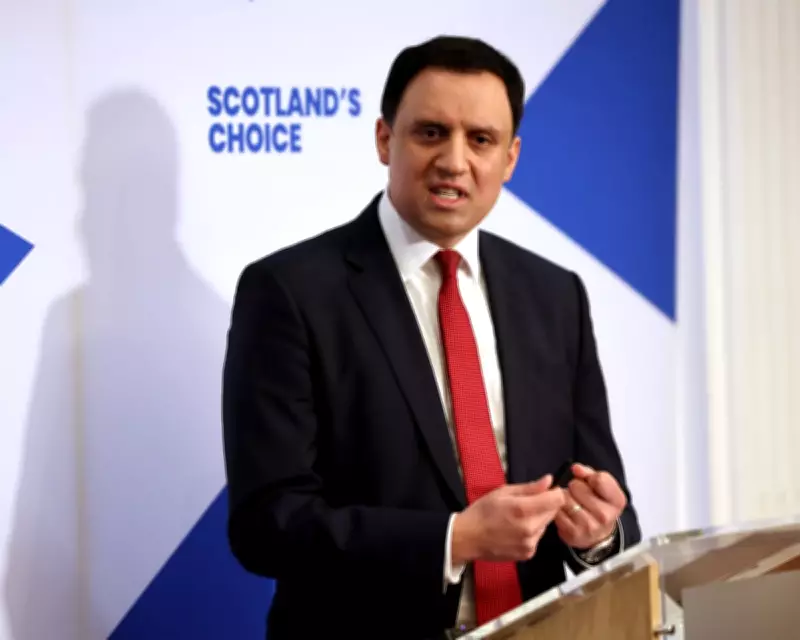
Scottish Labour Leader Takes Drastic Stance Against Starmer
In a dramatic escalation of internal Labour tensions, Scottish Labour leader Anas Sarwar has publicly called for Keir Starmer to stand down as UK party leader and prime minister. This move marks a significant rupture from Sarwar's previous position as one of Starmer's most vocal supporters and allies within the party hierarchy.
A Strategic Gamble Amid Plummeting Polls
Sarwar and his advisory team have witnessed Scottish Labour's polling figures collapse dramatically in recent months. This decline has coincided with the deepening disarray within the UK government, which has escalated from chaos to full-blown crisis. The Scottish Labour leader now sits at a critical juncture, with his party's support dropping to just 18% in current polls.
This represents a devastating reversal from Labour's performance in the 2024 general election, when Sarwar delivered what was arguably the party's strongest national-level result. During that campaign, Scottish Labour achieved 35.3% of the vote, outperforming the UK-wide Labour figure of 33.7% and effectively doubling their support in a remarkably short timeframe.

The Calculus Behind the Controversial Move
Despite facing criticism from colleagues who have described his demand for Starmer's resignation as "idiotic, immature and self-defeating," Sarwar has proceeded with what appears to be a deliberately calculated political strategy. His decision follows intensive crisis talks among Scottish Labour's leadership, prompted by the escalating scandal surrounding Peter Mandelson's connections to Jeffrey Epstein.
Sarwar's political calculation appears brutally pragmatic. He believes the risk of publicly calling for Starmer's resignation is justified by the potential rewards, particularly with crucial Scottish elections approaching in May. The Scottish Labour leader has framed his intervention as an act of service to the national interest, declaring that his "first priority and first loyalty" remains with Scotland.
Navigating Multiple Political Risks
This bold maneuver carries substantial political dangers for Sarwar personally and for Labour collectively. The strategy relies on several precarious assumptions:
- Starmer must resign promptly and gracefully
- A leadership contest must produce candidates capable of winning back voters who have defected to Reform or the Greens
- Scottish voters must respond positively to Sarwar's declaration of loyalty to Scotland
Sarwar has emphasized that "We cannot allow the failures at the heart of Downing Street to mean the failures continue here in Scotland" and that the upcoming election must focus exclusively on Scottish issues. However, this approach presents numerous vulnerabilities that opponents are likely to exploit.
The Potential Fallout and Electoral Consequences
If Starmer continues as leader through the Scottish election campaign or if Labour descends into internal conflict, Sarwar's failure to deliver a decisive blow could be weaponized against him. Opponents may portray him as either weak or irrelevant, while the broader Labour party risks being depicted as fundamentally unstable.
Sarwar's allies appear to be gambling that a leadership contest might revitalize Labour's appeal and address what they perceive as the toxic legacy of Starmer's premiership. Yet this strategy depends entirely on developments in London, where decisions about the UK party leadership ultimately rest with the cabinet and the broader parliamentary party.
The Scottish Labour leader now faces the challenge of repeating his loyalty-to-Scotland message consistently across interviews, campaign literature, and televised debates. However, voters may interpret his sudden ruthlessness toward a former ally as precisely the kind of political betrayal they typically condemn. For those already disillusioned with Labour, Sarwar's intervention may simply reinforce their indifference toward the party.
This high-stakes political gamble represents one of the most significant internal challenges to Starmer's leadership to date, with potentially far-reaching consequences for Labour's fortunes both in Scotland and across the United Kingdom.