Schröder's Political Revival: A Misguided Longing in Germany's SPD
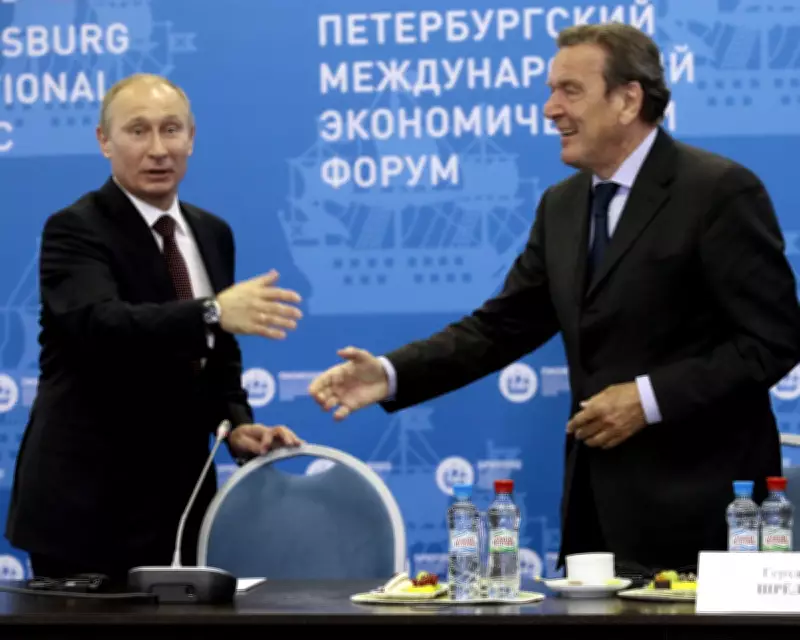
Gerhard Schröder, the former German chancellor, is experiencing a curious political resurgence. Not long ago, his reputation appeared shattered due to his close ties with Russia and personal friendship with Vladimir Putin, especially following the full-scale invasion of Ukraine. Fellow Social Democrats (SPD) attempted to expel him from the party, and the government recently defunded his ex-chancellor's office. Yet, a wave of Schröder nostalgia is now permeating German political discourse, driven less by a reevaluation of his tenure and more by a desperate identity crisis on the centre-left.
The Nostalgia Wave and Its Triggers
Schröder's name has become ubiquitous in recent discussions. The latest catalyst emerged when Lars Klingbeil, the current German vice-chancellor and SPD co-chair, proposed an ambitious reform package to "modernise" the country. This included economically liberal measures, such as reducing state subsidies and incentivising more work, reminiscent of Schröder's controversial "Agenda 2010" reforms. Media outlets quickly drew parallels, with headlines like "Klingbeil does a Schröder" and reports of a "Schröder moment." Even Schröder himself endorsed the analogy, stating that Germany needs a new Agenda policy. Klingbeil's political career began in Schröder's constituency office 25 years ago, adding to the alignment.
What stands out is the positive tone of this coverage. Last year, Schröder, now 81, lost a court battle to retain his publicly funded office, seemingly fading from public memory. Unlike revered elder statesmen like Helmut Schmidt, Schröder became a pariah for his unrepentant stance on Russia. In office, he championed the Nord Stream pipelines, linking Germany's energy supply to Moscow. After his chancellorship, he took roles in Russian companies like Gazprom and Rosneft, facing intense pressure after the 2022 invasion. A 2022 poll showed three-quarters of Germans wanted him expelled from the SPD, with 79% of SPD voters agreeing.

The SPD's Desperate Search for Popularity
Today, some in the SPD express a longing for Schröder, not for his policies but for his popularity. He won elections in 1998 and 2002 with 41% and 39% of the vote, respectively. In contrast, the SPD garnered just 16% in last year's federal elections, its worst result since the 19th century. Recent state elections have been disastrous, with Klingbeil's SPD polling at 15% or below, trailing behind the CDU and AfD. The party is fighting for survival, making Schröder's charisma appealing. He connected with voters authentically, as seen during the 2002 floods when he consoled victims in wellies, a move widely credited with securing his reelection.
Schröder's background as the son of a single mother in impoverished circumstances gave him a grounded appeal, resonating especially in East Germany. Today, nearly 90% of SPD MPs hold university degrees, and the far-right AfD has gained popularity among working-class Germans. Klingbeil hopes that emulating Agenda 2010 reforms might save the SPD. These reforms, introduced in 2003, aimed to revive Germany's economy through welfare cuts and flexible labour policies, but they also created a low-wage sector and increased income inequality.
The Grave Mistakes and Misguided Focus
However, focusing on Schröder is misguided. He lost the 2005 election, and many in the SPD now believe Agenda 2010 contributed to the party's decline by harming its core voters. Moreover, his legacy includes two critical errors: deepening Germany's dependence on Russian fossil fuels and reducing defence spending to below 1.3% of GDP. These decisions have haunted the country, particularly in light of recent geopolitical events. The SPD's willingness to forgive and forget reflects an identity crisis rather than a constructive learning process.

The SPD should concentrate on present-day solutions. When Schröder was chancellor, the AfD did not exist, migration was less contentious, Russia had not invaded Ukraine, and the US was a steadfast ally. Klingbeil, who is not even chancellor, must navigate this new reality, drawing only selectively from the past. While the SPD can learn from Schröder's ability to connect with voters on a human level, his grave mistakes preclude a restoration of his status in Germany's postwar history. Klingbeil should not aim to be Schröder but instead forge a path that addresses contemporary challenges with fresh perspectives.