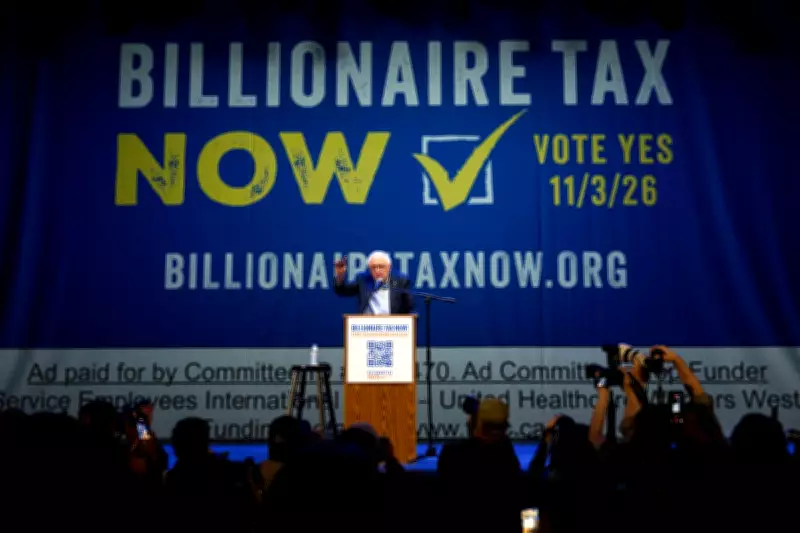
Sanders and Khanna Unveil Bill to Tax Billionaires at 5% Annually
Senator Bernie Sanders, an independent from Vermont, and Representative Ro Khanna, a Democrat from California, have introduced groundbreaking legislation aimed at imposing a 5% annual wealth tax on individuals in the United States with a net worth of $1 billion or more. This proposal, titled the "Make Billionaires Pay Their Fair Share Act," targets an estimated 938 billionaires, according to Sanders's office, and seeks to address economic inequality through substantial revenue generation.
Revenue Estimates and Proposed Uses
An analysis by economists at the University of California, Berkeley, projects that this wealth tax would raise approximately $4.4 trillion over the next decade. The lawmakers have outlined a comprehensive plan to utilize these funds to improve the lives of American citizens. In the first year alone, the bill would provide a $3,000 direct payment to every man, woman, and child in households earning $150,000 or less, equating to $12,000 for a family of four.
Additionally, the revenue would be allocated to expand Medicare coverage to include dental, vision, and hearing services for millions of seniors. The bill also aims to build, rehabilitate, and preserve over 7 million affordable homes, addressing the ongoing housing crisis. Sanders and Khanna emphasized that these measures are designed to tackle the most pressing issues facing working families across the nation.

Impact on High-Profile Billionaires
The legislation highlights specific examples of how the tax would affect some of America's wealthiest individuals. For instance, Elon Musk, with an estimated net worth, would owe around $42 billion in taxes under this bill, leaving him with approximately $792 billion. Similarly, Mark Zuckerberg, valued at $220 billion, would owe $11 billion, and Jeff Bezos, with a net worth of $218 billion, would also face an $11 billion tax liability. These figures underscore the significant financial implications for billionaires if the bill were to become law.
Political Context and Challenges
Despite the ambitious goals, the legislation faces considerable hurdles in the current political landscape, where Republicans control Congress, making its passage unlikely. However, the Washington Post reports that this proposal could shape the Democratic party's 2028 presidential primary, serving as a litmus test for candidates on economic policy. Meanwhile, in California, a separate ballot measure is being considered to impose a one-time 5% tax on assets for residents with a net worth exceeding $1.1 billion, with revenue directed toward healthcare, education, and food assistance.
Supporters of the California measure must gather nearly 900,000 signatures to qualify it for the November ballot. Governor Gavin Newsom, a prominent Democratic figure and potential 2028 contender, has expressed opposition to state-level wealth taxes, arguing they could lead to a "race to the bottom." In contrast, Khanna, who has not ruled out a 2028 bid, supports the federal bill and has advocated for provisions to allow startup founders to defer taxes until liquidity events, with adjustments based on valuation changes.
This legislative effort reflects ongoing debates over wealth distribution and tax fairness in the United States, highlighting the divide between progressive initiatives and political realities.