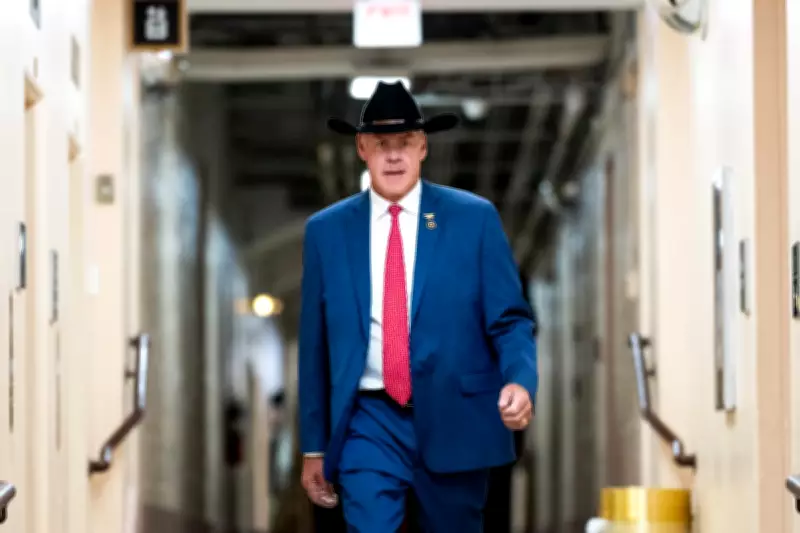
Republican Congressman Ryan Zinke Steps Down, Citing Health Challenges
Republican Ryan Zinke, a prominent figure from Montana who served as interior secretary during Donald Trump's first term, has announced he will not seek re-election to a fifth term in the U.S. House of Representatives. In a letter to his constituents, Zinke cited ongoing health problems as the primary reason for his decision, stemming from injuries sustained during his time as a Navy Seal.
Health Issues and Political Implications
Zinke revealed that he has undergone multiple surgeries in recent years and faces additional medical procedures due to his military injuries. While he emphasized that his condition is not life-threatening, it requires significant recovery time, which he believes would hinder his ability to serve effectively in Congress. "My judgement and experience tell me it is better for Montana and America to have full-time representation in Congress than run the risk of uncertain absence and missed votes," Zinke wrote in his letter.
This retirement opens up a potential opportunity for Democrats to gain a House seat in Montana, a state that has shifted politically to the right over the past decade. Several Democratic candidates, including former gubernatorial candidate Ryan Busse and union organizer Sam Forstag, had already positioned themselves to challenge Zinke in the upcoming November election.

Zinke's Political Career and Legacy
Ryan Zinke's political journey includes four years in the Montana legislature before being elected to the U.S. House in 2014. He was appointed as Trump's interior secretary in 2017 but resigned in 2018 amid numerous ethics investigations. Despite this setback, Zinke made a comeback in 2022, narrowly winning a newly created congressional district in western Montana, and secured re-election in 2024 by a comfortable margin.
During his tenure at the interior department, Zinke was a key advocate for Trump's "drill, baby, drill" agenda, pushing for increased oil and gas extraction on government lands. However, he also demonstrated a commitment to conservation, notably leading efforts last year to prevent the sale of public lands in a Republican budget proposal, which put him at odds with some members of his own party.
Reactions and Future Outlook
Montana Governor Greg Gianforte praised Zinke as a "champion for Montana," highlighting his service both as a Navy Seal and in political roles. Gianforte himself won a special House election to fill Zinke's seat after Zinke joined Trump's cabinet. As Zinke steps down, the focus shifts to the upcoming election, where Democrats see a chance to capitalize on this vacancy in a competitive district.
The retirement underscores the personal toll that public service can take, especially for veterans like Zinke, and sets the stage for a heated political battle in Montana. With health concerns taking precedence, Zinke's departure marks the end of a significant chapter in Montana's political landscape, leaving voters and candidates to navigate the implications for the state's representation in Washington.