Reform UK and Conservatives Escalate 'Family Voting' Allegations to Electoral Commission
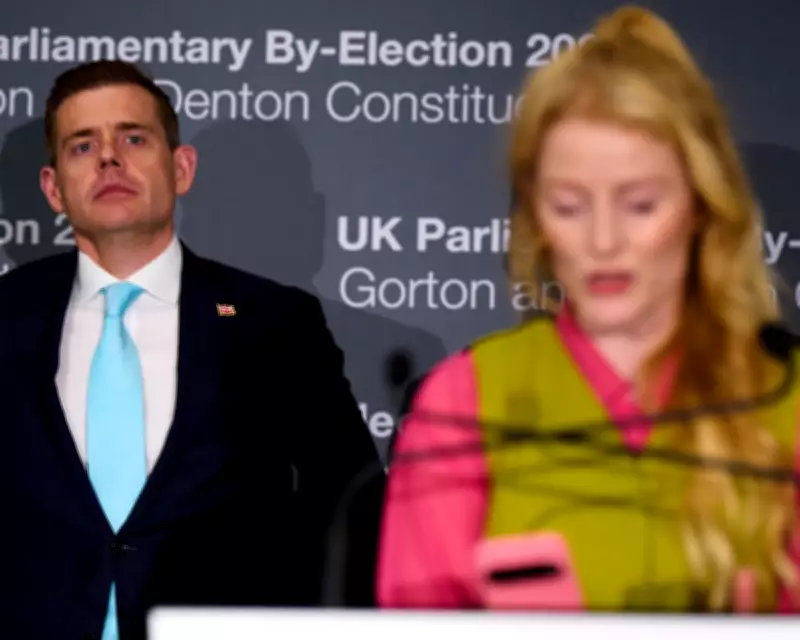
Reform UK and the Conservative party have formally requested the Electoral Commission to investigate allegations of corrupt voting practices in the recent Gorton and Denton by-election in Manchester. Nigel Farage, leader of Reform UK, has publicly asserted that his party was a victim of "cheating," echoing claims of electoral misconduct, although concrete evidence remains sparse.
Observers Report High Levels of 'Family Voting'
The controversy stems from a report by the election observers group, Democracy Volunteers, which documented "concerningly high levels" of so-called family voting. This practice involves one family member influencing or dictating how others in the household cast their ballots. The group's findings, released immediately after polls closed on Thursday night, have fueled accusations from defeated parties, with Farage drawing parallels to Donald Trump's allegations of stolen elections.
In a video statement, Farage intensified his rhetoric, labeling the election outcome "a victory for cheating in elections" and suggesting that the integrity of the democratic process in predominantly Muslim areas is at stake. He further speculated about potential coercion with postal votes, heightening concerns over electoral fairness.

Political Reactions and Counterclaims
James Cleverly, the Conservatives' shadow communities secretary, has also reported the allegations to authorities, citing the Democracy Volunteers report as "clear evidence" of electoral offences. He accused officials of turning a blind eye to corruption and criminal activity, amplifying the political fallout.
In contrast, Kemi Badenoch, the Tory party leader, attributed the Conservative party's poor performance—finishing fourth with just over 700 votes—to "grievance politics" propagated by Labour, the Greens, and Reform UK. She criticized these parties for exploiting divisions based on religion or race, warning that such tactics undermine Britain's culture of tolerance.
Council and Electoral Commission Responses
Manchester City Council has dismissed the allegations, stating that no issues were reported during the by-election and expressing disappointment that Democracy Volunteers delayed their claims until after voting concluded. The Electoral Commission emphasized that observers are expected to report irregularities immediately, rather than post-election.
John Ault, director of Democracy Volunteers, defended the group's timing, noting that it is standard international practice to withhold comments until polls close. However, a former observer for the group highlighted ambiguities in defining family voting, citing an example where assistance was given to an elderly relative, which blurs the line between help and coercion.
Methodological Questions and Broader Implications
The debate centers on the methodology behind Democracy Volunteers' claim that 12% of observed voters engaged in family voting. Critics argue that without clear criteria, such statistics may be misleading. This incident raises broader questions about electoral integrity and the role of observer groups in UK politics, potentially influencing future by-elections and public trust in democratic processes.