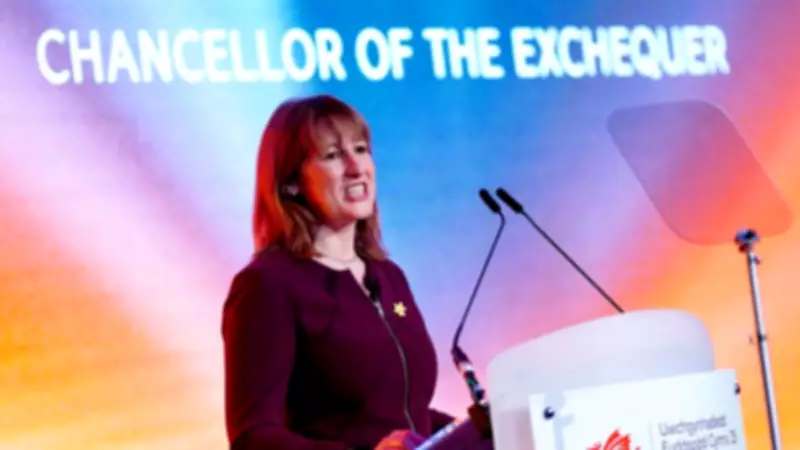
Chancellor Rachel Reeves to Present Spring Economic Forecast to Parliament
Chancellor Rachel Reeves is scheduled to deliver her spring economic forecast to the House of Commons today, where she will assert that the United Kingdom now possesses "a stronger and more secure economy" as a direct result of her government's strategic decisions. The speech, set for Tuesday, March 3, 2026, will focus on maintaining fiscal stability during increasingly uncertain global conditions.
Focus on Stability Amid Global Challenges
During her address to Members of Parliament, the Chancellor will outline the critical importance of ensuring "stability in public finances" as the international landscape grows "yet more uncertain." She will specifically highlight how the ongoing situation in the Middle East is poised to significantly impact the global economic environment, creating additional challenges for domestic economic management.
Unlike previous major fiscal announcements, today's appearance at the despatch box is anticipated to be a relatively low-key affair, with the Chancellor's statement expected to last approximately twenty minutes. This follows her autumn budget presentation last year, which was preceded by extensive speculation about potential policy announcements.

No New Fiscal Measures Announced
The government has committed to limiting itself to one primary "fiscal event" annually when outlining major policy directions. Accordingly, ministers have confirmed that today's midday speech will contain no new announcements regarding taxation or spending initiatives. Instead, Chancellor Reeves will present the government's formal response to the latest economic forecasting data released by the Office for Budget Responsibility (OBR).
In her prepared remarks, Ms. Reeves will emphasize her administration's commitment to "stability in the public finances, investment in infrastructure and reform to our economy." This statement comes just weeks after the Bank of England revised downward its growth projections for the UK economy, creating additional pressure on the government's economic narrative.
Economic Context and Political Response
At the beginning of February, the Bank of England downgraded its gross domestic product (GDP) forecasts for 2026 from 1.2% to 0.9%, while also reducing its 2027 projections from 1.6% to 1.5%. Despite these downward revisions, the Chancellor plans to highlight falling inflation rates and recent interest rate cuts as evidence of successful economic management under Labour leadership.
"Because of the decisions we have already taken, we have a stronger and more secure economy, inflation and interest rates falling, and in every part of Britain working people are better off," Ms. Reeves will tell Parliament according to advance excerpts of her speech.
Opposition Parties Demand More Substantive Action
Opposition parties have expressed dissatisfaction with what they perceive as insufficient action from the Chancellor. The Liberal Democrats have called on Ms. Reeves to use today's address to announce the cancellation of a planned fuel duty increase scheduled for later this year. The party's Treasury spokesperson, Daisy Cooper, has also urged the government to prioritize "a better trade and defence deal with the EU" during what she describes as "a critical time for our national and economic security."
Cooper further warned that "Trump's illegal actions in Iran will be felt in people's pockets here with the cost of fuel and food set to rise," connecting international developments directly to domestic economic pressures.
Conservative shadow chancellor Sir Mel Stride has also criticized the Chancellor's approach, writing on social media platforms that "We're getting poorer. Unemployment is at pandemic levels and rising. We have the highest borrowing costs in the G7." He added that "Britain deserves honesty - and a plan to fix our economy. But if the briefings are to be believed, Reeves will come to parliament on Tuesday and take no action whatsoever."
The spring forecast presentation represents a key moment in the government's economic communications strategy, occurring against a backdrop of both domestic economic challenges and significant international uncertainty that continues to shape fiscal policy decisions.