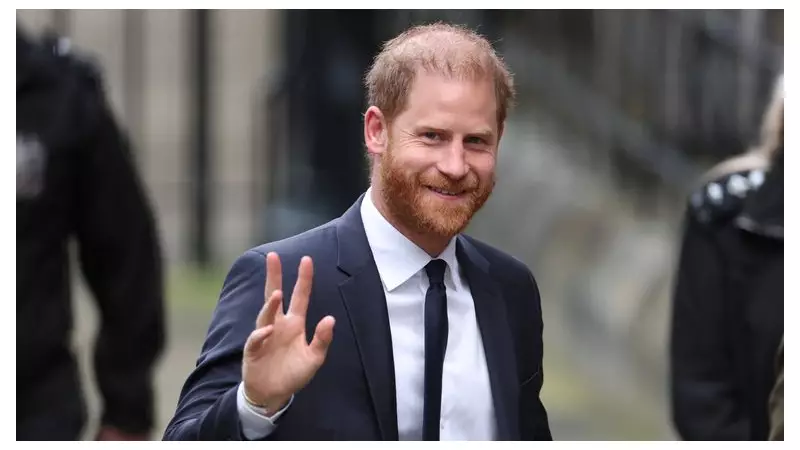
In a dramatic High Court confrontation, lawyers for the publisher of the Daily Mail have dismissed Prince Harry's privacy case as "threadbare" while vigorously defending their journalists' reporting methods as entirely legitimate. Anthony White KC, representing Associated Newspapers Limited (ANL), opened the defence by asserting that articles published by the Daily Mail and Mail On Sunday were sourced through proper journalistic channels.
Defence Claims Legitimate Sourcing Patterns
White told the court that journalists working for the publisher provide what he described as "a compelling account of a pattern of legitimate sourcing of articles." He emphasised that multiple witnesses would demonstrate this throughout the trial, specifically addressing more than fifty articles that claimants allege resulted from unlawful information gathering.
"We don't pretend that that account is perfect and covers every detail," White acknowledged, "but we do say that, overall, it provides a compelling account of a pattern of legitimate sourcing of articles." The barrister argued that the claims accuse numerous journalists of using unlawful methods to obtain information, suggesting they cannot all be lying when they deny these allegations.

Celebrity Claimants and Their Social Circles
In his written opening argument, White suggested that the high-profile claimants - including Prince Harry, Sir Elton John, Elizabeth Hurley, and others - operated within what he termed "leaky" social circles. He maintained that information published about them came from various legitimate sources including official spokespeople, previous reporting, and other conventional journalistic channels.
Addressing specific allegations about payments to private investigators, White dismissed these as "examples of clutching at straws in the wind and seeking to bind them together in a way that has no proper analytical foundation."
Timing of Claims Questioned
Beyond denying any wrongdoing, the defence also argued that the privacy claims have been brought too late. White pointed to legal requirements that privacy claims should typically be brought within six years, while the current legal action was launched in 2022.
David Sherborne, representing the claimants, countered this argument by describing it as "a potential life raft in a sea of unlawful information gathering," suggesting the publisher might not "be able to climb aboard." Sherborne maintained that all seven claimants only discovered they had "worthwhile" claims after 2016.
Emotional Impact Alleged
Referencing Prince Harry's specific claims, Sherborne told the court that the duke had suffered significant "distress" and "paranoia" due to alleged unlawful information gathering. "Given what we've seen, is it any wonder that he feels that way?" Sherborne asked rhetorically before adding that Harry "feels he has endured a sustained campaign of attacks against him for having had the temerity to stand up to Associated in the way that he has so publicly done."
ANL has strongly denied that any unlawful information gathering, including voicemail interception, was directed at Prince Harry or his named associates.
Courtroom Developments and Witness Schedule
The second day of the trial saw Prince Harry, Elizabeth Hurley, and Sir Simon Hughes present in court initially. However, both Harry and Hurley left during the lunch break after Sherborne concluded his opening arguments, not remaining to hear the ANL defence presentation.
Due to a much briefer than expected opening argument by White - which the judge noted was permitted because full details were included in written submissions - Prince Harry's expected testimony schedule accelerated. Originally scheduled to enter the witness box on Thursday, he may now begin giving evidence as early as Wednesday.
Multiple Associated journalists and editors, both past and present, are expected to give evidence at the High Court throughout the trial, including former Daily Mail editor Paul Dacre. The case continues with both sides presenting fundamentally opposing narratives about journalistic practices and privacy rights in modern Britain.