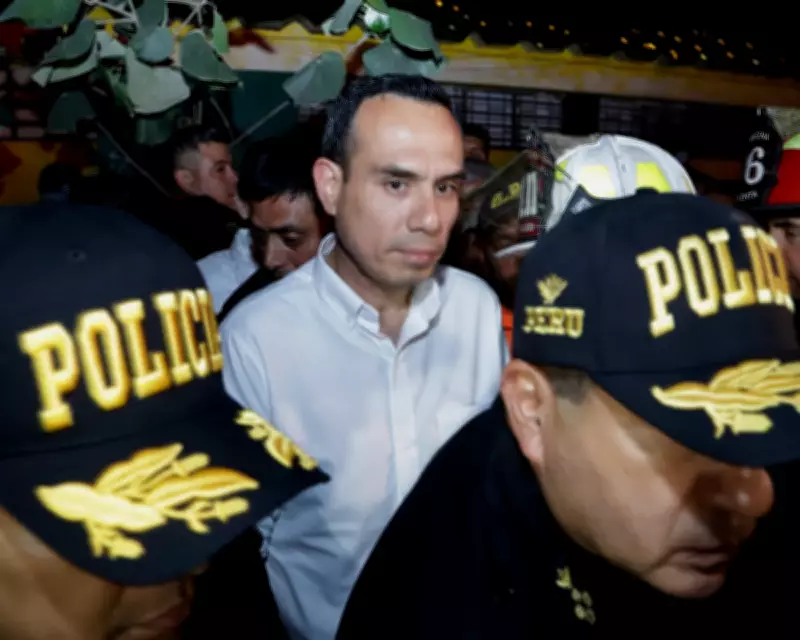
Peru's Interim President Removed in Rapid 'Express Impeachment' Vote
Peru's interim president, José Jerí, has been ousted from office in a swift congressional vote dubbed an "express impeachment." This dramatic political move comes after a mere four months in power, driven by a mounting scandal over his clandestine meetings with Chinese businessmen.
Congressional Vote Seals Jerí's Fate Amid Growing Controversy
Lawmakers decisively voted 75 to 24 to proceed with the impeachment of Jerí, who had been serving as the country's interim leader. The 39-year-old president became embroiled in what has been termed the "Chifagate" scandal after security camera footage surfaced showing him in secretive encounters with Chinese businessmen outside his official schedule.
In one particularly controversial incident, Jerí appeared to attempt concealing his identity by wearing a hooded top during a meeting. These revelations triggered a rapid collapse in his approval ratings and prompted political parties that had initially supported him to demand his resignation as election campaigning intensified.

Multiple Investigations and Additional Scandals Emerge
Prosecutors have launched a preliminary investigation into alleged influence-peddling connected to Jerí's meetings with Yang Zhizua, known as "Johnny," a well-connected Chinese businessman with decades of residence in Peru. Another individual present at these meetings, Ji Wu Xiaodong, faces accusations of belonging to an illegal timber-trafficking network called Los Hostiles de la Amazonia and had previously been placed under house arrest for two years.
Further scrutiny surrounds Jerí's alleged hiring of unqualified young women for government positions following late-night meetings at the presidential palace, as documented in official entry-and-exit logs. Several of these appointees reportedly accompanied Jerí on multiple official trips aboard the presidential plane. Jerí has consistently denied any wrongdoing, maintaining that all appointments were legally conducted.
Broader Geopolitical Tensions and Political Instability
This political upheaval occurs against a backdrop of escalating tensions between the United States and China regarding Peruvian affairs. The newly appointed U.S. ambassador to Peru, Bernardo Navarro, recently criticized what he termed "cheap Chinese money" in a social media post, suggesting that sovereignty could be compromised—a remark widely interpreted as referencing the Chinese-majority-owned port of Chancay.
Located approximately 50 miles north of Lima, the fully automated deepwater port has raised concerns among U.S. officials about potential naval uses, which Peruvian authorities have denied. In response, China's foreign ministry condemned the U.S. for what it called "false accusations and disinformation" regarding Sino-Peruvian cooperation.
Peru's foreign ministry subsequently posted a photograph on social media showing its minister shaking hands with China's ambassador, Song Yang, during lunar new year celebrations, praising Chinese investments and bilateral trade relations in an apparent effort to mitigate diplomatic friction.
Historical Context and Immediate Aftermath
Jerí's removal marks him as Peru's seventh president in a decade, highlighting an unprecedented period of political instability characterized by oustings, resignations, and interim terms. The acting speaker of Peru's congress, Fernando Rospigliosi, announced that lawmakers will vote to determine Jerí's replacement, with this transition occurring just months before the country's presidential elections scheduled for April.
This rapid impeachment underscores the volatile nature of Peruvian politics and the significant impact of corruption allegations on governmental stability. As investigations continue and geopolitical tensions persist, Peru faces critical decisions about its leadership and international relationships in the coming months.