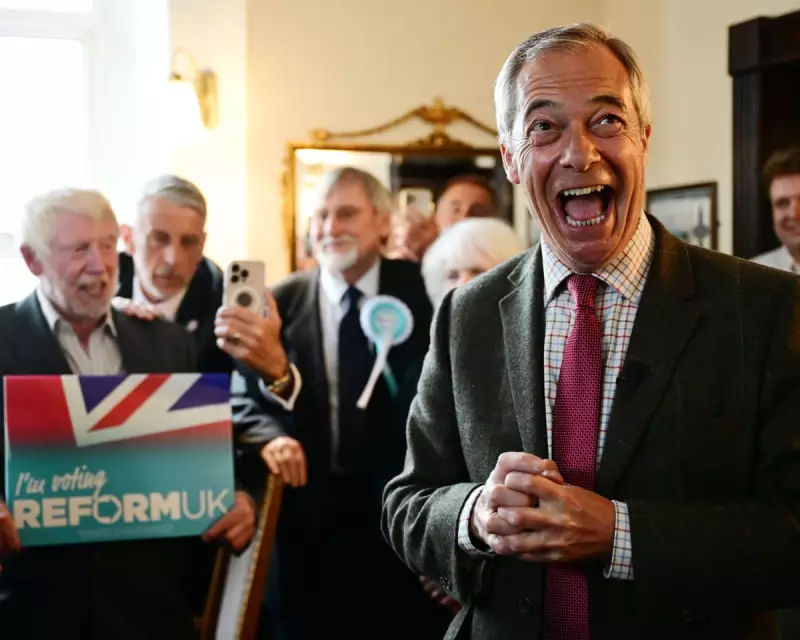
As Nigel Farage campaigns in Fleetwood, Lancashire, his words resonate with a disillusioned electorate: 'Nobody believes a word politicians say because there is no way of holding them to account when they break their pledges.' This sentiment underpins a critical debate about the future of British democracy, with experts arguing that constitutional safeguards alone cannot protect against populism without active citizen engagement.
The Limits of Constitutional Safeguards
Timothy Garton Ash recently proposed a comprehensive list of democratic safeguards against extremism, but correspondents to the Guardian argue these measures have fundamental limitations. Peter Loschi from Oldham contends that even the most carefully designed systems fail when public engagement wanes.
'The finest minds of the Enlightenment devised the checks and balances of the US constitution, and an authoritarian like Donald Trump brushed them aside in two minutes,' Loschi observes. He argues that laws guaranteeing good government only function effectively when citizens actively demand their enforcement.

Proposals for Radical Reform
Several correspondents propose substantial reforms to Britain's political architecture. Roger Heppleston from Farnham Common argues that the British democratic system is 'no longer fit for its task,' having been designed for a slower-moving, simpler age.
He points to concerning global developments: 'While China was staking strategic steps towards global dominance and America was flexing its muscles, the UK and the rest of Europe have drifted rudderless to an uncertain destination.' According to analysis of books by Ian Dunt and Sam Freedman, the system suffers from short-term thinking, lack of expertise, and failure to delegate effectively.
Practical Solutions for Democratic Renewal
Multiple solutions emerge from the correspondence. Peter Loschi suggests replacing the House of Lords with a citizens' assembly comprising a randomly chosen cross-section of the public, with membership changing every six months. This would require any extremist government seeking to abolish judicial independence to gain approval from three successive assembly sessions.
Peter Buckman from Little Tew proposes establishing a truly independent office of accountability with real teeth to assess electoral promises and monitor their delivery. 'If we started treating manifesto promises as a contract that involved penalties for non-performance, maybe the promises themselves might be more realistic,' he argues.
Rob Hunter from Leicester emphasizes cultural change through education, suggesting that schools should involve pupils in meaningful decision-making to teach concepts like equity, power, fairness, and democratic limits in practical contexts.
Dr Piers Brendon from Cambridge adds historical perspective, noting that constitutional monarchy isn't necessarily a democratic bulwark, citing examples of monarchs supporting authoritarian figures including Mussolini, Primo de Rivera, and Hitler.
The consensus suggests that without fundamental reform and active citizen participation, Britain's democratic institutions remain vulnerable to populist challenges and declining public trust.