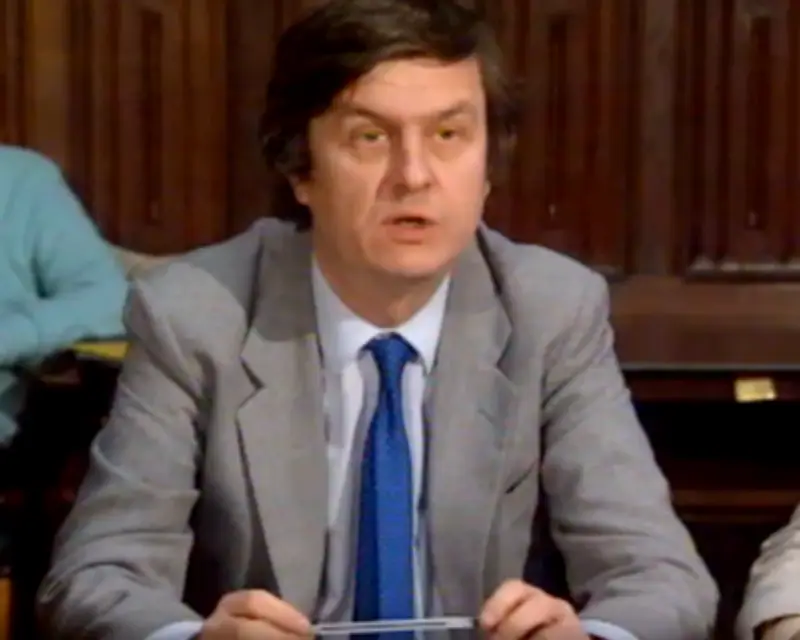
Paul May, who chaired the Birmingham Six campaign and played a pivotal role in securing their release after 17 years in prison, has died aged 74 of a pulmonary embolism. His relentless work helped overturn one of the worst miscarriages of justice in British history.
Early Life and Career
Born in Stepney, East London, on 12 August 1951, Paul grew up in Manchester, the son of John May, a painter and decorator, and Mary Treacey, who ran an off-licence. After leaving Xaverian College at 16, he worked in a fruit market and later for Manchester Corporation. In the early 1970s, he moved to London and joined Islington Council's housing department, eventually becoming assistant director of housing before retiring in 2000.
The Birmingham Six Campaign
In 1985, May became chair of the Birmingham Six campaign. The six men—Billy Power, Paddy Hill, Johnnie Walker, Richard McIlkenny, Gerry Hunter, and Hughie Callaghan—had been convicted for the 1974 Birmingham pub bombings. Working from a small backroom in the Camden Irish Centre, May expanded the campaign into a vast network of supporters. He produced pamphlets summarizing the evidence, allowing people to draw their own conclusions. He briefed politicians and journalists, recruited celebrities, and organized fundraising events, culminating in a 1990 concert at Wembley Conference Centre featuring Christy Moore and Peggy Seeger. In 1991, the Court of Appeal quashed the convictions.

Impact on the Irish Community
May's work gave confidence to Irish people in Britain amid widespread anti-Irish racism. Signs reading "No Blacks. No Dogs. No Irish" were common in the 1950s and 1960s. The campaign helped vindicate the Irish community and fostered a sense of pride and energy.
Other Miscarriage of Justice Cases
May collaborated on numerous other campaigns, including the Guildford Four, Maguire Seven, Tottenham Three, Bridgewater Four, and Judy Ward. He was instrumental in the East Ham Two case, where two Tamil men were wrongly convicted of murder; the convictions were quashed in 1994. He also campaigned for Danny McNamee, Eddie Gilfoyle, Sam Hallam, and for 15 years led the campaign for Colin Norris, a nurse convicted of murdering patients, who lost his appeal in 2025.
Broader Activism
May worked on political issues such as involving prisoners in the Good Friday Agreement and extraditing Augusto Pinochet. He fought for changes to disability legislation affecting prisoners and pension contributions for long-serving prisoners released. He later worked for the disability charity Scope.
Personal Life
In 2000, May met Jane Mair while studying law part-time at Birkbeck, University of London; both graduated with first-class honours. They married in 2004. He is survived by Jane and two sisters. Paul Brian May died on 9 May 2026.