
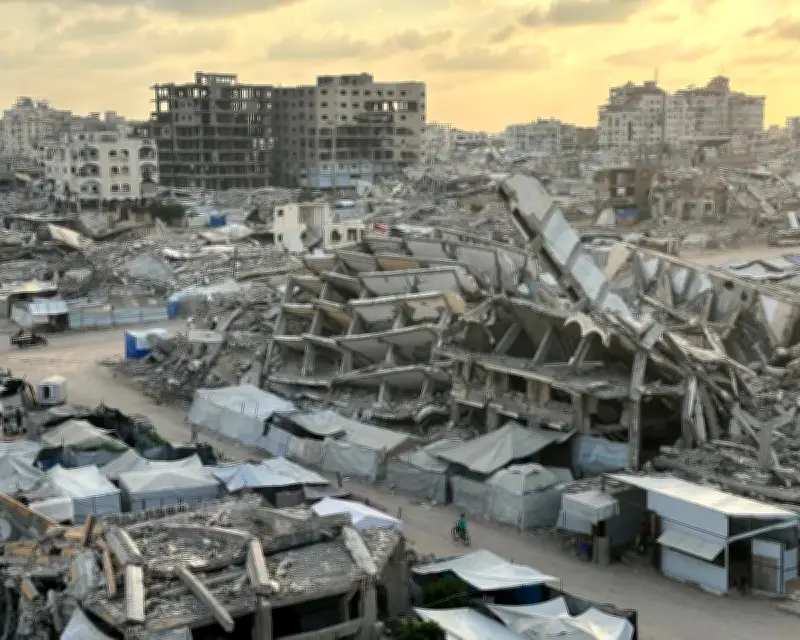
Israeli Prime Minister Benjamin Netanyahu told Jared Kushner, President Trump's son-in-law and envoy, that there can be no progress on the stalled Gaza ceasefire deal or an Israeli withdrawal from the coastal strip until Hamas first disarms. An Israeli official said there was no breakthrough in the meeting, with Netanyahu making clear the IDF would not withdraw and would continue operations in Gaza.
Meeting Details and Stated Positions
The three-hour meeting on Monday in Israel came after Netanyahu had forcefully rejected the US-backed 15-point roadmap a week earlier. In the meeting, Netanyahu insisted there could be no Israeli withdrawal or reconstruction without full Hamas disarmament, and he requested that a US general supervise the group's handover of weapons. A statement from Netanyahu's office said: “The prime minister and Board of Peace had deep and constructive discussions. It was agreed to establish two working groups, one on disarmament and demilitarisation of Gaza, which both Israel and the Board of Peace are determined should be prompt and completed before any reconstruction happens in Gaza.”
In a separate statement, a Board of Peace official said the meeting was “lengthy, in depth and very productive.” They said: “We agreed with the PM on a path forward. The Israelis are going to give this a chance. Now it's up to Hamas to show if it truly intends to comply.” The meeting also included Tony Blair and Nickolay Mladenov, who sit on Trump's Board of Peace.
Hamas's Stance and Prior Talks
A day earlier, Kushner met Hamas's political chief, Khalil al-Hayya, in Egypt, where Hamas insisted Israel must first withdraw its troops from the 60% of Gaza that Israel occupies. The Hamas official said the group was committed and waiting for mediators to start the 14-day negotiation period to work out a timetable for implementation. That period requires all parties' approval of the roadmap to begin. The Hamas official also said the Hamas leader demanded that Israel halt its attacks on Gaza and withdraw to the so-called “yellow line” dividing the territory before beginning implementation. The yellow line was never precisely defined, and Israeli forces have moved beyond it.
According to the Haaretz newspaper, the meeting ended with the US agreeing that Israel could continue striking Gaza, apparently contradicting a statement from Trump earlier on Monday that Israel “should not be striking in Gaza.” While Hamas says it has agreed to the roadmap, which includes disarmament, the group is urging mediators and the Board of Peace to compel Israel to sign on. Officials from the mediating countries Egypt, Qatar, and Turkey were also present.
Impact and Regional Reactions
Israel, which under the roadmap must gradually withdraw from Gaza, insists Hamas must fully disarm before any Israeli withdrawal, a sequence representing a long-term impasse. Instead, Israeli troops continue to occupy about 60% of the strip, and Netanyahu has previously threatened to take over more. At stake are the lives of about 2 million people in Gaza and reconstruction of the crowded territory now largely controlled by Israeli forces, more than 10 months since the ceasefire ended major military operations.
Several regional powers, including Saudi Arabia and the United Arab Emirates, issued a joint statement condemning Israel's rejection of the roadmap, saying: “Israel now bears responsibility for obstructing the efforts to bring peace in Gaza.” Other signers included Jordan, Pakistan, Indonesia, and the ceasefire mediators. The foreign ministers' statement called on the Board of Peace and the US to take “immediate and concrete measures” to keep any party from obstructing the plan's implementation.
In May, Netanyahu said the next step was to move to 70% control of Gaza, with Israel “tightening the grip” on Hamas “from every direction.” Israel has killed more than 1,200 Palestinians in Gaza and wounded more than 4,100 since agreeing to the ceasefire on 10 October 2025, according to Gaza's health ministry.




