A neo-Nazi group, which aims to establish a political party and was recently banned as a hate group, has initiated legal proceedings against the Commonwealth, testing the constitutional validity of the prohibition. The federal government outlawed the National Socialist Network (NSN), also known as White Australia, on Friday, designating it as a prohibited hate group under legislation enacted after the Bondi beach terror attack in December.
Background of the Ban
The group had announced its dissolution hours before the legislation was introduced during a special parliamentary session in January. However, Home Affairs Minister Tony Burke stated on Friday that the group had instead "phoenixed," with members continuing to organize. Burke revealed that the Australian Security Intelligence Organisation (ASIO) had recommended in April that the government consider listing White Australia. That same month, the group applied to the Australian Electoral Commission to register as a political party.
Legal Challenge Filed
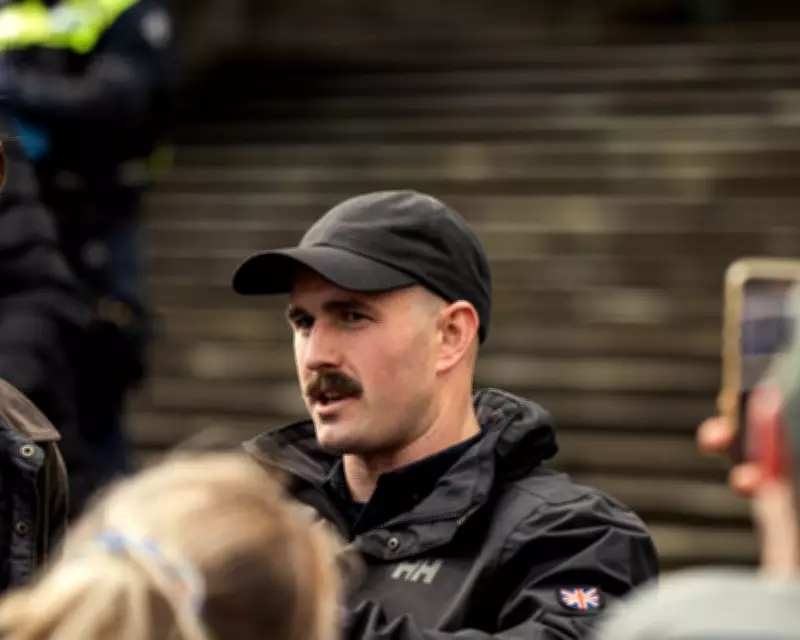
Solicitor Matthew Hopkins, who has previously represented NSN leader Thomas Sewell, filed a legal challenge in the High Court of Australia on Friday against the Commonwealth regarding the law used to enforce the ban. Hopkins acted on behalf of Sewell and the group's proposed political party, the White Australia Party. Court documents state that on January 13, the NSN and the Australian European Movement, "some of whose former members assisted in the formation" of the White Australia Party, "disbanded voluntarily." However, the documents note that the party did not dissolve and that Sewell remains its president.

Constitutional Arguments
The neo-Nazi group argues that the law used to ban it is invalid because it "burdens the freedom of governmental and political communication" and violates the Constitution by granting punitive power to the government without judicial review. The group contends that the Commonwealth lacks the authority to proscribe a political party, citing the 1951 High Court decision in Australian Communist Party v Commonwealth, which ruled that the Menzies government's attempt to outlaw the Communist party exceeded parliamentary power.
"The challenged provisions, in short, operates as a doorway to tyranny, by empowering the executive to name, suppress and criminalise political opponents and opposing views," Sewell and the White Australia Party state in the court documents. The group has also submitted a separate application requesting that the court issue an order restraining the Commonwealth from using the law until a determination is made.
Implications of the Ban
The listing of NSN and White Australia as hate groups means that activities such as supporting, funding, training, recruiting, and joining the group constitute criminal offenses, punishable by up to 15 years in prison. The group is the second to be listed by the government, following the Islamist group Hizb ut-Tahrir. Burke and ASIO head Mike Burgess have stated that these groups previously operated in a "lawful but awful" manner, skirting the higher threshold required for designation as a terror organization.
Burke remarked on Friday when announcing the ban: "None of this will stop bigoted people from having horrific ideologies, but it does prevent this group from organising, from meeting, and prevents some of the sorts of horrific bigoted rallies that we’ve seen around our country."