Nationals' Mass Walkout Sparks Coalition Crisis in Australian Politics
The Australian political landscape has been plunged into its most significant crisis in decades following the dramatic resignation of the entire Nationals shadow cabinet. This mass walkout represents not just a temporary disruption but the latest chapter in the chaotic decline of the junior coalition partner, threatening to unravel the longstanding Liberal-National partnership completely.
The Trigger: Defiance on the Floor
The current crisis has been building for months, with the first warning signs appearing nearly six months ago when Nationals senators Bridget McKenzie and Ross Cadell initially defied their colleagues. During a late-night parliamentary session in September, the pair voted with Pauline Hanson's One Nation on a migration motion, ignoring pleas from Coalition colleagues including Liberal senator Anne Ruston not to cross the floor.
While that initial rebellion passed with little consequence, this week's events proved far more significant. During a rushed special sitting to debate Labor's proposed hate speech laws, McKenzie and Cadell crossed the floor once more, this time joined by fellow frontbencher Susan McDonald. Their collective defiance essentially dared opposition leader Sussan Ley to take disciplinary action against them.

Littleproud's Ultimatum and the Aftermath
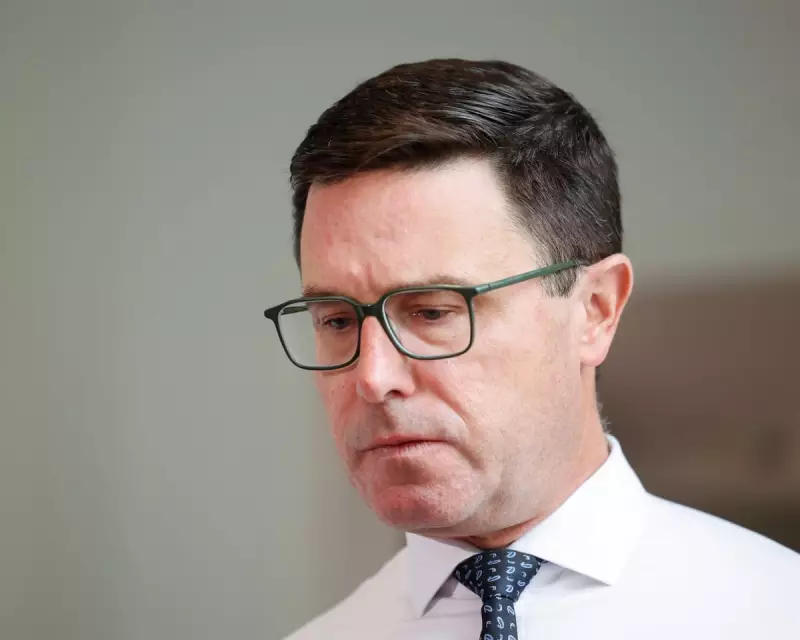
Nationals leader David Littleproud delivered a stark warning to Ley through a leaked letter on Wednesday morning, stating clearly that accepting the resignations of the three defiant MPs would trigger a mass walkout by all Nationals parliamentarians. This would decimate the opposition ministry and potentially shatter the Coalition agreement that has governed conservative politics in Australia for generations.
Littleproud followed through on his threat, helping orchestrate what has become the most substantial crisis on the right of Australian politics in recent memory. All eight remaining Nationals frontbenchers submitted their resignations, with Littleproud himself announcing he would step down as party leader. The self-immolation occurred over Labor's plans to target hate preachers and extremist organisations, revealing just how tenuous the Nationals' partnership with the Liberals had become.
Root Causes: Ego Over Policy
What makes this crisis particularly damaging is that it stems not from principled policy differences but from ego, ideology, and arrogance. The spark was Nationals senators demanding the right to freelance on parliamentary votes, ignoring the long-established convention of cabinet solidarity that has traditionally governed Coalition behaviour.
This represents the second major split with the Liberals since last year's federal election, driven by many of the same individuals and forces. The Nationals have increasingly swerved away from representing regional Australia effectively, particularly since Barnaby Joyce's erratic tenure as leader and deputy prime minister. The party has:
- Held back meaningful efforts to address climate change
- Thumbed its nose at transparency and accountability
- Pitched increasingly to Sky News audiences
- Moved further from the voters the Coalition needs to win back
Leadership Vacuum and Political Consequences
The fundamental problem plaguing both the Liberals and Nationals is the lack of authority that Ley and Littleproud command within their respective party rooms. Neither leader possessed sufficient political heft to control events this week, with Ley's decision to try to put matters on hold likely buying only temporary respite.
Nationals backbencher Matt Canavan, who has long controlled policy decisions and political strategy within the Nationals partyroom, will continue to push around his colleagues with little regard for the electoral consequences. This internal dysfunction leaves Labor as the clear beneficiary of the Coalition's chaos.
While Prime Minister Anthony Albanese has faced challenges in his response to recent events including the Bondi terror attacks, he begins the political year significantly strengthened by the opposition's disarray. The question of who will face him during the first parliamentary question time in coming weeks remains completely uncertain.

Broader Implications for Australian Politics
This crisis raises fundamental questions about the future of the Coalition itself. Many observers now question whether the Liberals and Nationals might be better served by going their separate ways, as almost nothing could prove worse than their current dysfunctional partnership.
The Nationals' chaotic decline has been years in the making, but this week's events have accelerated the process dramatically. As the dust settles, Australian politics faces a period of significant uncertainty, with traditional conservative alliances appearing more fragile than at any point in recent memory.