Merz's Confident Rhetoric Creates Domestic Discomfort, European Opportunity
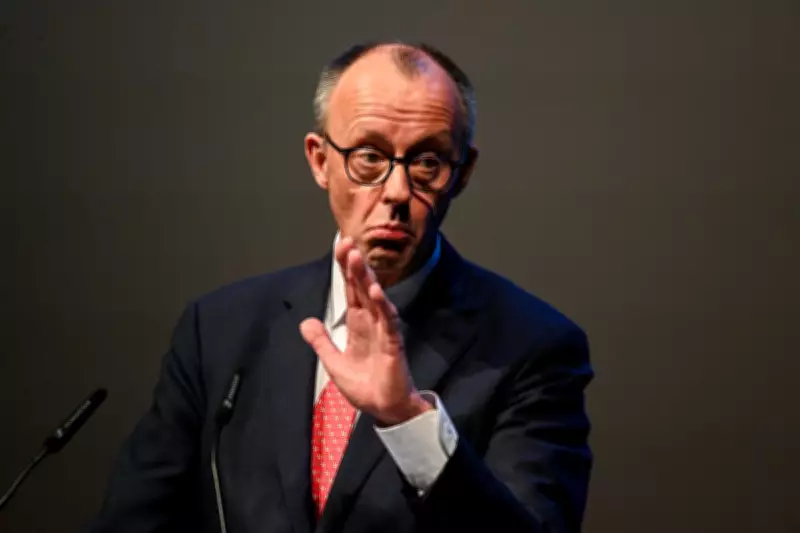
Friedrich Merz, the current Chancellor of Germany, presents a striking departure from the nation's traditional political communication style during a Christian Democratic Union rally in Trier on February 18, 2026. Unlike his predecessors who embraced measured silence, Merz projects unwavering certainty even when factual accuracy falters, creating what observers term "Merzsplaining" – a tendency toward overconfident, sometimes inaccurate explanations that has become his political signature.
A Sharp Break from Germany's Political Communication Traditions
Germany's political culture has long valued the maxim "Talk is silver, but silence is golden," attributed to 18th-century philosopher Johann Gottfried Herder. This philosophy defined the leadership styles of both Angela Merkel and Olaf Scholz. Merkel, shaped by East Germany's communist dictatorship, developed a cautious, clinical speaking style where every word served deliberate purpose. Scholz continued this tradition, earning nicknames like "Scholzomat" and "coma chancellor" for his economical, wooden communication.
Merz represents a complete reversal of this tradition. The trained lawyer possesses a sharp tongue and visibly enjoys his own vocal delivery, resembling French President Emmanuel Macron in his verbose style. Like Macron, Merz frequently positions himself as a know-all, rarely missing opportunities to demonstrate his intellectual prowess to audiences.

Domestic Backlash Against Overconfidence
This communication approach has proven unpopular with German voters, who traditionally prefer politicians who are affable but not overly slick. Merz's approval ratings, particularly among women, remain dismal as his tendency toward unsolicited commentary on incompletely mastered subjects creates regular embarrassment.
During a recent interview on Germany's leading political podcast Machtwechsel, Merz delivered multiple inaccurate statements that triggered widespread Fremdschämen – the German concept of vicarious embarrassment or cringe. Despite his background as a finance executive at BlackRock, Merz incorrectly claimed Germany was "the only country in all of Europe with a triple-A rating" for sovereign debt, ignoring that Denmark, the Netherlands, Sweden, and Luxembourg within the EU alone also hold top ratings.
More seriously, Merz displayed contradictory positions on defence policy during the same interview. He declared readiness to reconsider Germany's commitment to the Franco-German fighter jet programme FCAS, arguing Germany's future jets wouldn't require nuclear capability. Minutes earlier, however, he had insisted on exploring a European nuclear deterrent with France and suggested German jets should carry French nuclear weapons.
Belgium's Defence Minister Theo Francken responded sharply on social media: "Regarding nuclear deterrence, I really don't understand why European leaders are so loose lipped. Not wise. Please keep your mouth shut." This criticism highlights how Merz's verbal missteps in defence policy carry serious risks beyond mere embarrassment.
European Leadership Potential Amid Global Uncertainty
Despite domestic criticism, Merz's confidence and willingness to take risks could benefit Europe during this volatile geopolitical era. On his election victory night in February 2025, he called for European independence from the United States. At the recent Munich Security Conference, he urged the EU to operationalize its mutual defence clause, declaring: "Germany is at the centre of Europe. If Europe is torn apart, we are torn apart."
Such bold rhetoric matters significantly for Germany, where pacifist reflexes run deep and the far-right Alternative für Deutschland panders to anti-EU, pro-Russia sentiments. To secure German political backing for stronger European defence, Merz must lead public opinion rather than follow it – a task potentially suited to his confident communication style.

Merz has articulated a vision of Germany no longer hiding behind economic might and strategic ambiguity, instead actively building a more sovereign Europe through speeches studded with historical references and big-picture analysis. Polls suggest most Europeans agree with his assessment of global threats, potentially making him an effective European leader despite domestic unpopularity.
The Ultimate Test: Turning Words into Action
The critical challenge for Merz lies in converting rhetoric into deliverable plans. His recent approach to international law raises concerns, as he failed to condemn joint US-Israel air strikes against Iran, arguing it wasn't the moment to "lecture" allies about international law. For Europe's collection of smaller nations, international law represents not an abstraction but the essential framework for security and cooperation.
Merz faces the same criticism often directed at Emmanuel Macron: being astute in diagnosis and expansive in ambition but struggling to transform fine rhetoric into tangible change. As Merz travels to Washington this week, his ability to navigate complex international relationships while maintaining coherent policy positions will be tested.
If Merz can successfully translate his confident vision into actionable strategies benefiting Europe, he may overcome domestic criticism and establish meaningful leadership. However, if he fails this conversion from words to deeds, he risks joining Macron as another European "thinktanker-in-chief" – strong on diagnosis but weak on implementation. As Herder's maxim reminds us: if speech is silver, action is truly golden.