Tuesday 28 April 2026 1:24 pm
Sir Keir Starmer's former chief of staff, Morgan McSweeney, who advocated for Lord Mandelson's appointment as US ambassador, has described further revelations about the disgraced peer's connections to Jeffrey Epstein as a 'knife through my soul'.
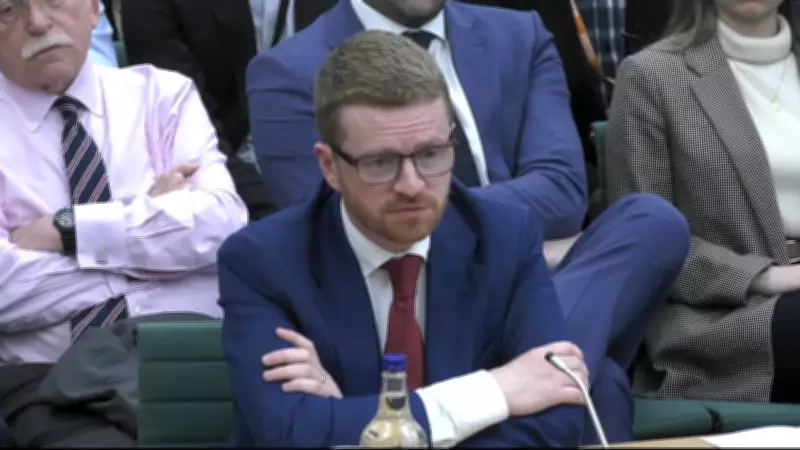
In a dramatic appearance before the Foreign Affairs Committee, McSweeney apologised for urging the Prime Minister to appoint Mandelson to the Washington DC post, believing it would help secure a trade deal with the Trump administration. He stated that he trusted Mandelson when he claimed he did not have a 'close friendship' with Epstein and wished he had instructed an ethics team to probe the former Labour veteran's personal relationships more thoroughly.

McSweeney, who resigned over the Mandelson affair in mid-February, insisted he did not instruct Foreign Office officials to clear the former ambassador 'at all costs'. The hearing followed a separate session with former Foreign Office permanent secretary Sir Philip Barton, who preceded Sir Olly Robbins as the department's top civil servant. The Mandelson appointment process occurred during a transition between these two officials' leadership.
Last week, a Cabinet Office official revealed she discovered risks flagged in Mandelson's security vetting over a year after his appointment and months after his sacking over Epstein links. These parliamentary hearings have exposed failings across Whitehall and brought a full-throated conflict between ministers and officials into public view, raising questions over Starmer's leadership and government effectiveness. They are also expected to deepen scrutiny of Mandelson's vetting and government pressure, with Barton refusing to comment on whether Starmer was correct to tell parliament that 'due process' was followed.
McSweeney's Public Apology
McSweeney opened his session by apologising to Epstein's victims, admitting he was 'wrong' to advise the Prime Minister on the appointment. However, he stressed that Starmer would have taken advice from multiple government members across his team and Whitehall. McSweeney said: 'As I said in my resignation statement, I resigned because I believe responsibility should rest with those who make serious mistakes. Accountability in public life cannot apply only when it is convenient. The Prime Minister relied on my advice, and I got it wrong.'
He added: 'What I did do was make a recommendation based on my judgment that Mandelson's experience, relationships and political skills could serve the national interest in Washington at an important moment. That judgment was a mistake. What I did not do was oversee national security vetting, ask officials to ignore procedures, request that steps should be skipped, or communicate explicitly or implicitly that checks should be cleared at all costs. I would never have considered that acceptable.'
McSweeney described seeing pictures and emails that exposed the closeness of Mandelson's relationship with Epstein after his 2008 conviction as 'like a knife through my soul'. He denied swearing at officials over the process, contrary to a Sky News report, and Barton confirmed he did not recall McSweeney swearing at him. The former Downing Street operator criticised Westminster rumours as 'corrosive' and emphasised a 'real difference between asking people to act at pace and asking people to lower standards'. 'We never did that. We never asked people to skip steps,' he said.
Jaw-Dropping Revelations
McSweeney also revealed that former Tory Chancellor George Osborne was on a final two-man shortlist for the ambassadorial role and that others had advised Starmer to make a political appointment to the US post. He disclosed that Jonathan Powell was appointed as national security adviser before receiving security clearance, and Mandelson was in Downing Street on the day of last year's reshuffle when Angela Rayner resigned as deputy prime minister and housing secretary.

The former Labour electoral mastermind stated he left the process to the Foreign Office and admitted it would have been a 'political embarrassment' if Mandelson failed security vetting, though Starmer would have 'withdrawn the ambassadorship'. He said: 'The Prime Minister did not have enough information because Mandelson did not share the necessary information with him. He had ample opportunity to do so and did not.' McSweeney also noted that former foreign secretary David Lammy was not told about a possible appointment for Lord Matthew Doyle after his departure as Number 10 director of communications due to 'delicate HR issues'. 'If someone leaves your job, you don't want everyone to know about it,' he added.
Ex-Foreign Office Mandarin Adds Twist
Barton appeared before MPs shortly before McSweeney. During his session, he said he was not involved in the decision-making for Mandelson's appointment. He noted that the Cabinet Office suggested Mandelson did not need security vetting due to his position in the House of Lords, which he thought was 'odd'. 'I knew very well to do the job effectively, you have to be party to some of the deepest secrets that the UK Government holds. But I also recognise that the situation was unusual, and I therefore asked for advice, although it was pretty clear in my mind from the FCDO security team. They came back to me after discussions with the Cabinet Office, and said that their advice was that he should have developed vetting, and I absolutely agreed with that.'
Barton said it would have been 'very odd' to stop Mandelson from seeing highly classified documents before completing full vetting as he moved into Washington DC. However, in awkward comments for Starmer and his team, he added that he was told to 'get on' with the appointment. 'There was no space for dialogue,' Barton told MPs. 'I had a concern that a man who demonstrably from the public record at the time – and it was clearly much bigger than we all knew – had a link to Epstein, and that Epstein through both the presidential election campaign in the US and more generally in US politics, had been and was a controversial figure, and I was worried that this could become a problem in future. That is a very candid account of probably what I was thinking at the time, but there was no space or avenue or mechanism for me to put that on the table. A decision had been taken. It was a political decision.' When asked whether due process had been followed, the ex-Foreign Office chief replied: 'I'm going to dodge.'