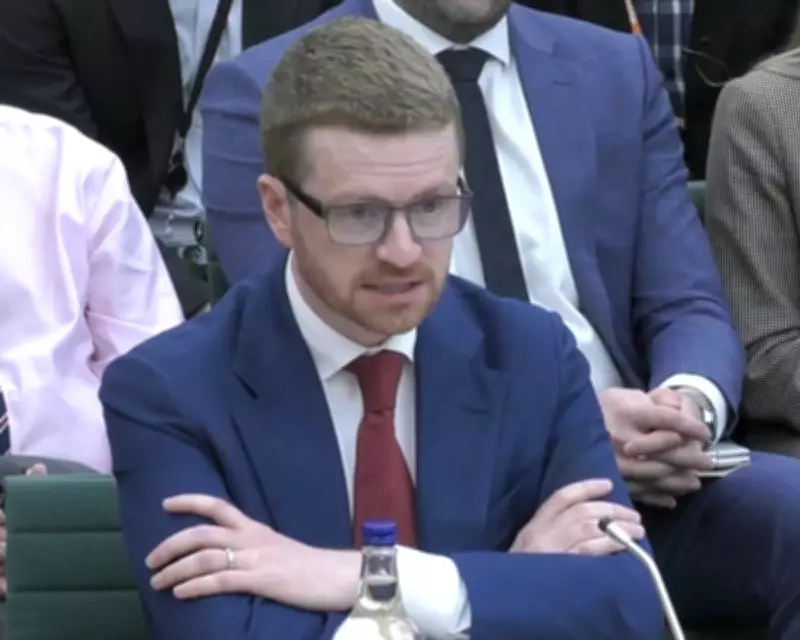
Morgan McSweeney, the former chief of staff to Prime Minister Keir Starmer, appeared before the Foreign Affairs Select Committee on Tuesday to answer questions about the appointment of Peter Mandelson as US ambassador. Throughout his opening statement, McSweeney kept his arms tightly crossed, a clear sign of discomfort as he was forced into the public eye.
A Reluctant Appearance
McSweeney, often described as a shadowy figure in Labour politics, looked far from happy as he entered the committee room. He avoided eye contact with the public and kept his head down, seemingly unaccustomed to the daylight. His voice was barely above a whisper, and his left eye occasionally twitched, betraying his nerves. For someone reputed to have left many political bodies in his wake, he appeared surprisingly diffident.
Thornberry's Relentless Probing
The committee chair, Emily Thornberry, wasted no time in launching a venomous attack on McSweeney. The two have a well-known history of animosity, and Thornberry was clearly seeking revenge for being denied a cabinet position after the 2024 election, a decision McSweeney had recommended. For 15 minutes, she probed McSweeney, attempting to paint him as a mere puppet of Peter Mandelson, a man without independent thought or judgment.

McSweeney, however, denied any close relationship with Mandelson, claiming he hardly knew him. He insisted that it was Mandelson himself who first suggested his own name for the ambassador role, and that McSweeney only recommended him over two other candidates: George Osborne and Bear Grylls. The selection panel's decision to include such dubious candidates raised eyebrows, but McSweeney deflected responsibility.
Defending Starmer
Throughout the two-and-a-half-hour session, McSweeney largely stuck to the party line, avoiding any direct criticism of Starmer. He even claimed that the prime minister possessed free will and acted independently, a statement that stretched credulity. However, he struggled to explain why he thought it appropriate to recommend a friend who was known to associate with convicted sex offender Jeffrey Epstein. McSweeney described the revelation of Mandelson's friendship with Epstein as "a knife to the heart," but offered little further justification.
A Man of the People?
McSweeney attempted to portray himself as a decent, trusting individual dedicated to public service. He admitted that his only fault was being too trusting, assuming that if there were serious issues with Mandelson, they would have been caught during vetting. He also revealed that he had recommended Matthew Doyle for an ambassador role out of a sense of duty after Doyle was sacked. This, he suggested, was how things worked in Number 10.
Other Witnesses
Earlier in the day, the committee heard from Philip Barton, the former permanent secretary at the Foreign Office. Barton, a firm believer in the principles of the TV show Yes Minister, spoke in a language only senior officials could understand, often avoiding direct answers. His most interesting revelation was that a good permanent secretary would never tell a minister anything, as information is on a need-to-know basis. He argued that keeping foreign secretaries away from classified information prevents unnecessary conflicts.
Finally, Conservative leader Kemi Badenoch led a debate to refer Starmer to the privileges committee, accusing him of misleading parliament. However, her claim was widely seen as a stunt, and she failed to gain traction. The prime minister's judgment, not his honesty, remains the central issue.
In the end, McSweeney's testimony did no lasting damage to Starmer, but the Mandelson saga continues to cast a shadow over the government.