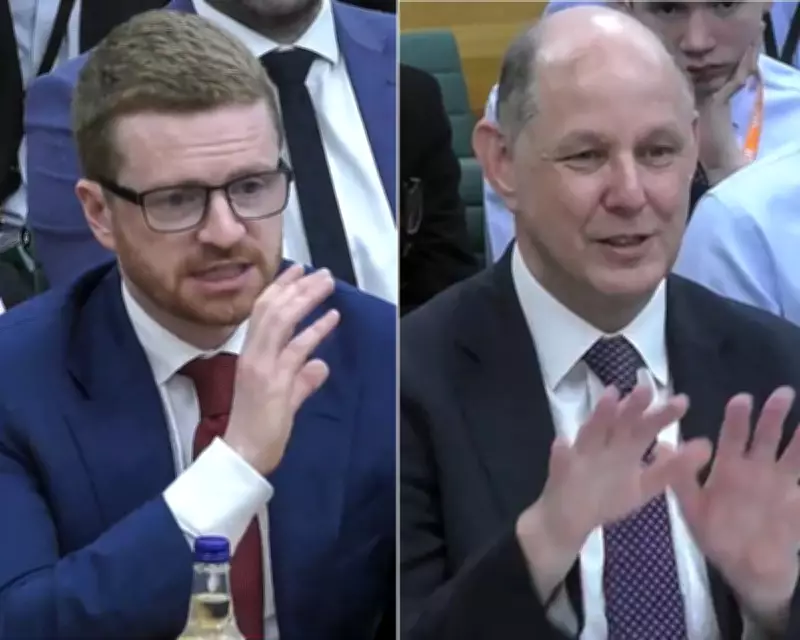
Two former senior officials testified before parliament on Tuesday regarding the appointment of Peter Mandelson as US ambassador, offering headline-grabbing quotes but also raising questions about the integrity of the security clearance process.
Key Testimony from Barton and McSweeney
Philip Barton, former top civil servant at the Foreign Office, described Mandelson's links with Jeffrey Epstein as a "toxic hot potato," while Morgan McSweeney, the prime minister's former chief adviser, said discovering the true nature of Mandelson's relationship with the convicted sex offender felt like "a knife through my soul."
Pressure Without Influence?
Both witnesses agreed that Downing Street exerted pressure on the Foreign Office to expedite Mandelson's security vetting. However, they maintained that this pressure did not affect the final decision to grant clearance in late January 2025. This narrative—pressure without impact—has become the unifying consensus among government branches, but skeptics find it implausible.

Barton told the foreign affairs select committee that when he was informed in mid-December 2024 of the decision to send Mandelson to Washington, it was a fait accompli. "At no point did anyone ask or consult me," he said. "I was presented with a decision and told to get on with it."
Contradictions in Evidence
Last week, Olly Robbins, the permanent secretary who oversaw the vetting process, spoke of "constant pressure" from Downing Street, describing an atmosphere of not just "Please get this done quickly" but also "Get it done." Yet he insisted this pressure did not sway his decision to grant clearance against UK Security Vetting (UKSV) advice.
Prime Minister Keir Starmer initially denied any pressure, then clarified there were "different types of pressure," distinguishing between urgency to complete processes and any directive to disregard security concerns. Ian Collard, the Foreign Office security official, echoed this in a letter, stating he "felt pressure to deliver a rapid outcome" but that it did not influence his "professional judgment."
Missing Red Flags
Committee chair Emily Thornberry highlighted that both Robbins and Collard did not personally see Mandelson's vetting file, which contained two red boxes indicating "high" overall concern and recommending "Clearance denied." They relied on briefings describing the case as "borderline." Thornberry questioned whether the pressure caused them to miss these "red lights."
Barton, while acknowledging pressure, said he was "not aware" of any over the substance of the vetting and expressed belief in his colleagues' accounts. McSweeney used a metaphor to differentiate pressure types: "There is a world of difference between saying to a taxi driver, 'I am late for a plane,' to, 'Can you break all the red lights and go speeding?'"
The testimony leaves lingering doubts about whether political expediency compromised security protocols in Mandelson's appointment.