Nicolás Maduro Returns to New York Federal Court in High-Profile Narco-Terrorism Case
The deposed Venezuelan president, Nicolás Maduro, is set to appear once again in a Manhattan federal court on Thursday, facing serious narco-terrorism charges. This court appearance follows his dramatic capture by US military forces earlier this year, a move that has sparked international controversy and legal debates.
Capture and Initial Legal Proceedings
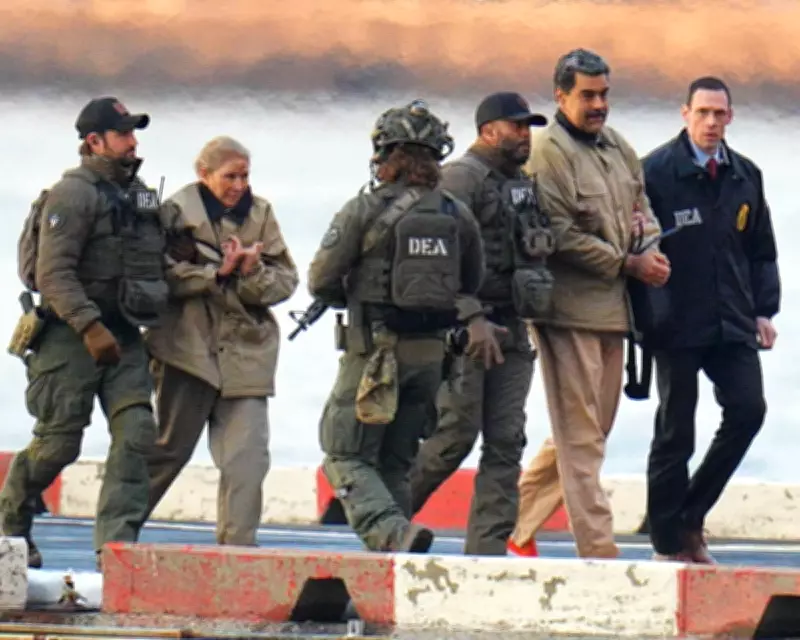
In a bold and contentious operation, US special forces captured Maduro and his wife, Cilia Flores, on January 3rd. The pre-dawn raid in Caracas resulted in significant casualties, with reports indicating approximately 100 deaths. Both Maduro and Flores pleaded not guilty during their arraignment on January 5th, setting the stage for a complex legal battle.
Charging documents allege that Maduro led a corrupt and illegitimate government that actively promoted illegal activities, including large-scale drug trafficking. These allegations form the core of the narco-terrorism case against him, which US prosecutors are vigorously pursuing.

Political Fallout and Conditions in Detention
Back in Venezuela, Maduro's political influence is rapidly diminishing under the leadership of his successor, acting president Delcy Rodríguez. In less than three months, Rodríguez has purged nearly half of Maduro's cabinet, removing key allies such as the long-serving defence minister and the attorney general. Despite government propaganda calling for Maduro's return, Rodríguez has focused on attracting foreign investment, claiming Venezuela is on the brink of an economic resurgence.
Meanwhile, experts report that conditions at the New York detention centre where Maduro is held are dire, raising concerns about his well-being. His son, Nicolás Maduro Guerra, has publicly stated that his father remains in high spirits and maintains an athletic routine, but these claims are contested by observers familiar with the facility's harsh environment.
Legal Battles Over Defense Funding
A significant point of contention in Maduro's case revolves around funding for his legal defense. Maduro's lawyers have argued that US authorities are unlawfully preventing the Venezuelan government from paying his legal fees, violating his constitutional right to counsel of his choice. Initially, the US Treasury Department's Office of Foreign Assets Control (OFAC) granted a waiver on January 9th, allowing Maduro to accept funds from the sanctioned Venezuelan government. However, this waiver was abruptly reversed just three hours later, which Maduro's legal team claims was an administrative error.
In court papers filed in late February, Maduro's lawyers warned that if this interference persists, they may be forced to withdraw from the case. This could lead to court-appointed counsel at taxpayer expense and potentially undermine the constitutional integrity of any verdict. Prosecutors, in response, have argued that it would be highly unusual to grant such a waiver to a sanctioned government, and they are opposing Maduro's push for dismissal of the case.
Broader Implications and International Relations
The capture of Maduro has reshaped US-Venezuela relations, with the US embassy in Caracas reopening for the first time since 2019. High-level US officials, including the energy minister and CIA head, have visited, signaling a shift in diplomatic engagement. Former US President Donald Trump had warned Rodríguez to cooperate with US demands, hinting at severe consequences if she did not comply.
This case highlights ongoing tensions between the US and Venezuela, with legal experts questioning the legality of the military actions that led to Maduro's capture. Some have compared the assaults on purported narco boats to potential war crimes, adding another layer of complexity to an already fraught situation.
As Maduro's court date approaches, the world watches closely, with outcomes likely to influence not only his personal fate but also the future of Venezuelan politics and international law enforcement strategies.