
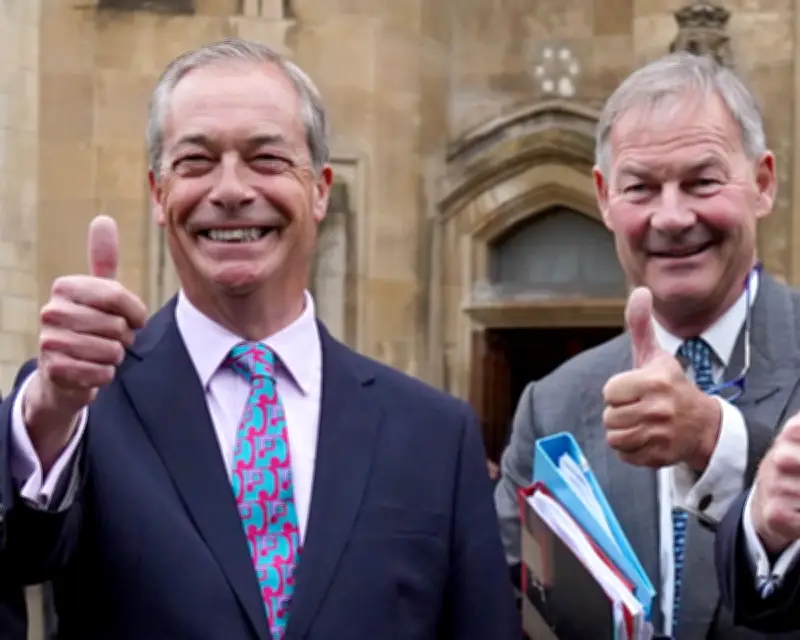
Rupert Lowe's attempt to extend an olive branch to Nigel Farage has rapidly devolved into fresh accusations, highlighting the deepening rift on Britain's political right and the mounting pressure on the Reform UK leader. In a 12-minute video posted on Sunday, Lowe, who leads the Restore Britain party, addressed Farage directly, proposing to set aside their differences for the national good. However, Farage responded dismissively during a Monday press conference, questioning Lowe's motives and recalling past confrontations.
Rapid Escalation of Hostilities
Within hours of Farage's remarks, Lowe publicly accused him of lying about recent communication, posting a screenshot of a terse message from Farage that read "will call later." This exchange underscores the fragility of any potential alliance between the two right-wing factions. Lowe was suspended by Reform in March 2025 and subsequently founded Restore, which has quickly become a thorn in Reform's side.
The dispute unfolded against the backdrop of Restore's surprisingly strong electoral performances. In the Greater Manchester mayoral election, Restore finished fourth, ahead of both the Liberal Democrats and the Conservatives—a notable achievement for a party only months old. Additionally, in the Makerfield byelection, Restore secured third place, marking the strongest Westminster showing since at least 2010 for a party with explicitly far-right positions and ties to far-right activists.
Policy Divides and Electoral Impact
Restore's platform, which includes a referendum on the death penalty, bans on halal and kosher slaughter, and ethnonationalist deportation policies, makes any formal alliance with Reform highly problematic. Reform, aiming to broaden its appeal, would find it difficult to embrace such stances without alienating moderate voters. Furthermore, Lowe has demanded that former Tory ministers like Robert Jenrick be excluded from any Reform government, adding another layer of contention.
Despite these obstacles, Lowe's popularity among a segment of right-wing voters forces Farage to acknowledge his rival's overtures. In the Manchester and Makerfield contests, Restore captured 8.7% and 6.8% of the vote respectively. While these figures indicate Restore is far from winning seats, they could split the right-wing vote in a general election, potentially costing Reform numerous constituencies.
Mixed Reactions and Strategic Calculations
Farage's sharp rebuke contrasts with the more conciliatory tone from some Reform MPs. Andrew Rosindell told GB News that "a lot of what he [Lowe] says will resonate with Reform voters and with British people," urging unity on the centre-right. At the grassroots level, relationships are complex, with Restore attracting disillusioned Reform councillors in several local authorities, sometimes cooperating with other parties to thwart their former colleagues. Yet, canvassers often encounter voters who admire both leaders and parties.
Analysts view Lowe's move as a calculated strategy. Joe Mulhall, director of research at Hope not Hate, noted that "what Lowe's move does for his own base, and Restore-curious types, is to negate the charge that he is splitting the vote on the right." He added that the offer, given their apparent animosity, appears generous but is likely one Farage would never accept, as his path to power depends on courting centre-right voters. Aligning with ethnonationalists would invite endless questioning.
Future Prospects and Conference Looming
With negotiations seemingly relegated to social media and GB News, the prospect of a unified hard right remains distant. Reform's annual conference is just a month away, an event where Lowe once enjoyed significant support among activists. Lingering questions about both parties' futures could cast a shadow over what is intended to be a pivotal rallying point on Reform's journey toward power.




