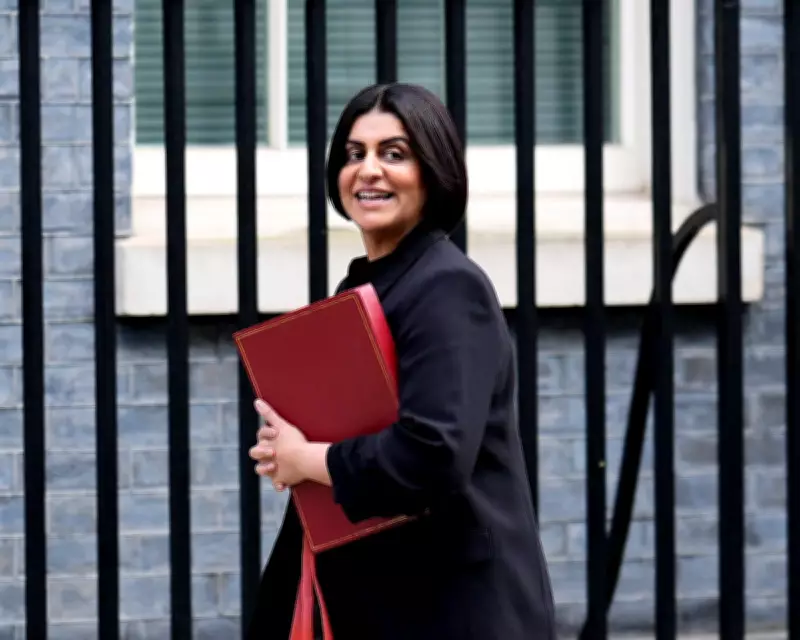
In a significant move to maintain public order, Home Secretary Shabana Mahmood has officially sanctioned a request from the Metropolitan Police to prohibit the annual Al Quds Day march scheduled for this Sunday in London. The decision, announced on Friday, marks the first time a protest march has been banned by the Met since 2012, underscoring the gravity of the situation.
Police Request and Rationale for the Ban
The Metropolitan Police sought the prohibition after assessing that the demonstration, planned as a pro-Palestinian event, posed a substantial risk of inciting serious public disorder. Authorities cited the anticipated scale of the protest, coupled with multiple counter-protests that had been organized for the same day, as primary factors in their evaluation. The context of the ongoing conflict in the Middle East further heightened concerns about potential tensions and violence.
Home Secretary's Statement on the Decision
Announcing her approval, Shabana Mahmood emphasized that she was "satisfied doing so is necessary to prevent serious public disorder." She elaborated, "Due to the scale of the protest and multiple counter-protests, in the context of the ongoing conflict in the Middle East, this ban is a precautionary measure to safeguard public safety."

Mahmood added a stern warning regarding any alternative gatherings, stating, "Should a stationary demonstration proceed, the police will be able to apply strict conditions. I expect to see the full force of the law applied to anyone spreading hatred and division instead of exercising their right to peaceful protest." This statement reinforces the government's commitment to upholding law and order while distinguishing between lawful protest and activities that could escalate into violence.
Background on the Al Quds Day March
The Al Quds Day march, an annual event in London, has recently drawn criticism and scrutiny. Organizers of the march expressed support for the late Ayatollah Ali Khamenei, leading to accusations of apparent backing for the Iranian regime. This association has fueled political debate and contributed to the calls for its prohibition.
In the weeks leading up to the decision, both Labour and Conservative MPs had publicly urged for the march to be banned, citing similar concerns over public safety and the potential for disorder. The convergence of political pressure and police assessment ultimately influenced the Home Secretary's ruling.
Implications and Historical Context
This ban represents a notable escalation in the government's approach to protest management in the capital. The last instance of such a prohibition occurred over a decade ago, highlighting the exceptional circumstances perceived by authorities. The move underscores the delicate balance between protecting the right to peaceful assembly and preventing incidents that could threaten public harmony.
As London prepares for the weekend, the Metropolitan Police are expected to deploy additional resources to monitor any unauthorized gatherings and enforce the ban rigorously. The decision sets a precedent for how future large-scale demonstrations in sensitive geopolitical contexts might be handled, with a clear focus on preemptive action to mitigate risks.