Liberal Senator Issues Stark Warning on Racist Rhetoric Within Party Ranks
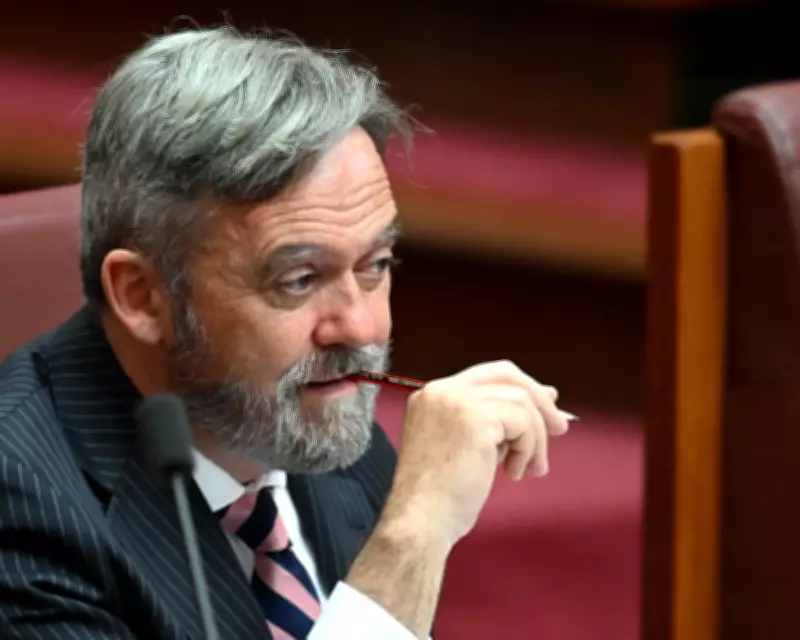
Liberal Senator Andrew McLachlan has delivered a powerful rebuke to racist rhetoric emerging within his own party, declaring that such language distorts the Liberal party's moral compass and threatens its ability to govern effectively for all Australians. In a significant intervention, McLachlan argues that eliminating racist discourse from political life represents both a conservative and progressive act of moral leadership.
The Dangerous Path of Cultural Superiority Claims
McLachlan specifically criticized recent comments from conservative commentators including former Prime Minister Tony Abbott, who expressed "serious concerns" about multiculturalism while praising Australia's immigration policies during the White Australia era of the 1950s through 1970s. Abbott's assertion that Australia's character remains "essentially Anglo-Celtic and Judaeo-Christian" drew particular concern from the senator.
The senator also addressed the new Liberal leadership's emphasis on "Australian values" for migrants, noting that while requiring newcomers to accept fundamental national principles is reasonable, this approach becomes problematic when it implies migrants must adopt a specific "way of life" reminiscent of 1950s Australia. McLachlan expressed alarm at the inevitable destination of such thinking, which he believes leads to viewing entire communities like Australian Muslims with unwarranted suspicion.

From Personal Experience to Political Principle
Drawing from his military service in Afghanistan and subsequent relationships with Afghan refugees who now contribute significantly to Australian society, McLachlan finds recent anti-multiculturalism rhetoric particularly difficult to accept. He notes that his own Scottish ancestors arrived seeking better opportunities, much like contemporary migrants, making claims about "Anglo-Celtic" superiority personally bemusing.
"My experience and that of my ancestors is in many ways similar to the many who find themselves on our shores today," McLachlan writes, challenging the notion that any single cultural heritage defines modern Australia.
The Responsibility of Political Leadership
In an era dominated by noisy populism, McLachlan argues that political leaders must shape public opinion rather than merely follow popular sentiment. He calls for unequivocal condemnation of racist rhetoric and warns against indulging groups that create fear around migration for political advantage.
The senator emphasizes that while requiring mutual respect from all residents is uncontroversial, demanding perpetual adherence to narrowly defined "Australian values" from naturalized citizens represents a dangerous overreach. He advocates instead for drawing wisdom from all cultures to collectively imagine Australia's future.
A Path Forward for the Liberal Party
McLachlan contends that for the Liberal party to regain public favor, it must demonstrate an ability to govern for all Australians rather than "surfing populist opinion." He reminds his colleagues that the party was founded to both cherish conservative virtues and apply them progressively.
"To cut racist rhetoric from the body politic is both conservative and a progressive act," McLachlan asserts. "But it is so much more than that. It is moral leadership."
The senator concludes that Australia flourishes not through cultural uniformity but through valuing justice, decency, and the collective aspirations of its diverse population. He warns that making nostalgia for a selective past the nation's guiding principle would mean tragically forsaking a better path forward built on mutual obligations and shared aspirations.