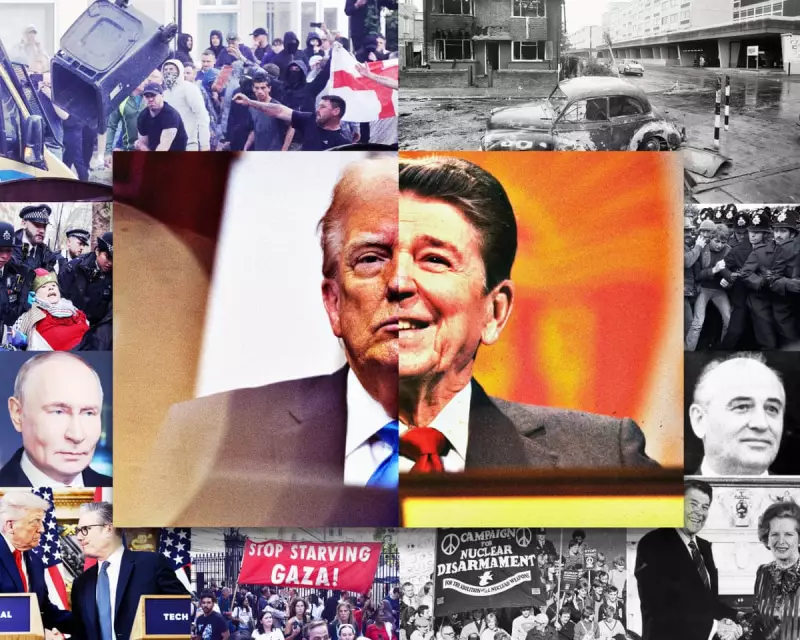
In his final regular column for the Guardian, veteran journalist Martin Kettle casts his eye over a contemporary Britain that feels fractured and dispirited. He observes a nation where faith in politics and media is low, and the once-binding Churchillian spirit of common purpose appears dangerously thin.
A Stark Parallel: The Britain of the 1980s and Today
Kettle identifies a powerful historical echo. The current national mood of crisis and uncertainty, he argues, bears a striking resemblance to the atmosphere of the mid-1980s. That was a decade where Britain also felt like a broken nation in a troubled world.
The specific fractures were different, of course. The 1980s witnessed the painful collapse of great industries, soaring unemployment, and double-digit inflation. It was an era of political upheaval, overmighty trade unions, and a stark revolt against the post-war consensus. The shadow of the Cold War loomed large, with a divided Europe and dependence on a maverick US president, Ronald Reagan. Terrorism from the IRA was a constant, real threat, even coming close to assassinating the prime minister.

The crucial lesson, however, is that those dark moods did not last forever. Imperfectly and at a cost, the country found a path forward. Kettle's central question is whether Britain can muster the same tough judgment and effort to navigate its way out of the current malaise of the mid-2020s.
The Path Out of Division: Lessons in Political Cooperation
Kettle warns against nostalgia or seeking a mythical golden age. The solutions of the 1980s were imperfect and left bitter legacies. Instead, he points to a critical lesson learned in the aftermath of that divisive decade: the imperative of cooperation.
He highlights a historical warning from 1930s Germany, where communists, social democrats, and liberals failed to unite against the fascists, perishing together as a result. The principle, he argues, applies to less apocalyptic times too.
In the UK, the 1980s split between the labour/socialist and liberal/social democratic traditions led to a divided electorate and sustained Conservative majorities. The catalyst for change was a painful reconciliation with electoral reality. This began with Neil Kinnock moderating Labour's offer and evolved into Tony Blair's New Labour, which forged a tacit alliance with Paddy Ashdown's Liberal Democrats.
While far from perfect—Kettle criticises New Labour's soft touch on market regulation and self-interest on constitutional reform—it represented a pragmatic path that secured three consecutive election victories. It succeeded because it was willing to learn, change, and cooperate.
The Arena, Not the Grandstand: A Call for Engagement
Looking to the present, Kettle suggests that today's political parties might need to consider similarly radical cooperation, perhaps even cross-party work on political reform. He concedes the circumstances are different, but insists that change remains the bottom line.
He concludes with a rallying cry, quoting Theodore Roosevelt's famous 1910 speech about the man in the arena, whose face is "marred by dust and sweat and blood." The credit, Roosevelt said, belongs to those who strive valiantly, even while falling short.
"The arena matters more than the grandstand," Kettle writes. "We should rally behind politics, not turn away from it." He expresses a final hope that the sheer necessity of the moment will drive UK politics towards a new, unifying process, just as it eventually did after the trials of the 1980s.