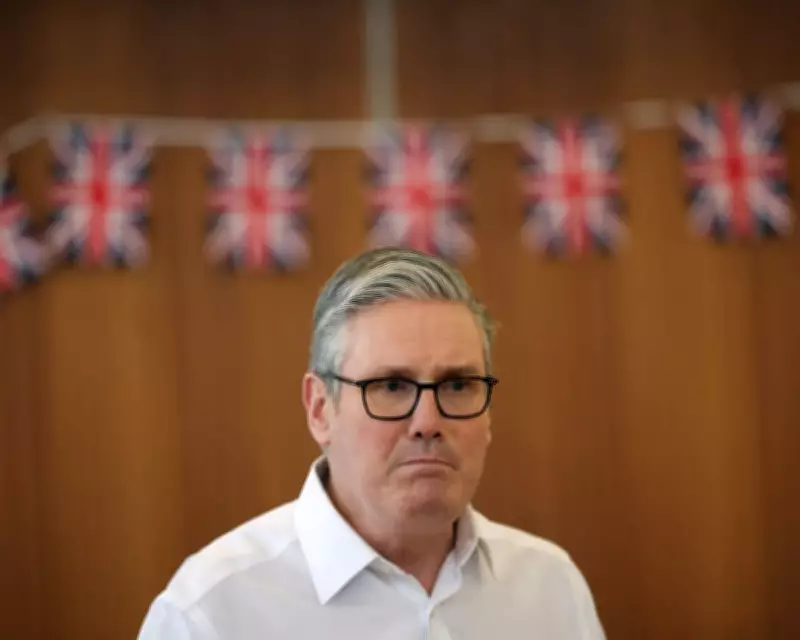
Labour's Leadership Quandary: The Starmer Conundrum
Keir Starmer has become an uncomfortable fixture for the Labour Party, a leader whose presence is tolerated not out of confidence but from a deep-seated fear of what might follow his departure. After just eighteen months in government, the Prime Minister's tenure is already marked by a sense of premature ageing, with the regime appearing worn down by scandals, resignations, and policy U-turns that echo the turbulent final years of the previous Conservative administration.
A Familiar Sound of Disarray
To the average voter, the current political climate around Downing Street bears an unsettling resemblance to past eras of dysfunction. The recent outcry over Peter Mandelson's appointment as ambassador to Washington has particularly stirred memories of bygone ministerial controversies, casting a shadow that makes Starmer's relatively short parliamentary career feel burdened by decades of accumulated political baggage.
This explains the remarkable depth of the Prime Minister's unpopularity. Even Labour MPs who acknowledge his catastrophic misjudgments maintain that Starmer is fundamentally decent and honourable in his civic duty. They understand public disappointment but are taken aback by the sheer venom expressed by constituents on doorsteps across the country.

The Status Quo Incarnation
The core problem extends beyond mere slow delivery of promised change. Starmer has become reviled by significant portions of the electorate as the archetypal status-quo politician—precisely what voters believed they were rejecting at the last election. This perception has created what many see as an irreversible situation, with MPs privately acknowledging for weeks that recovery seems increasingly unlikely.
The situation reached a new threshold when Anas Sarwar, Labour's leader in Scotland, became the most senior figure to publicly call for Starmer's resignation. Rather than triggering immediate change, this intervention prompted a defensive circling of wagons around the Prime Minister, with supportive cabinet statements and a warm reception at a parliamentary party meeting temporarily sweeping the crisis under the rug.
Electoral Calculations and Paralysis
Most English Labour MPs actually share Sarwar's analysis, recognising their leader as an electoral liability unlikely to transform into a beloved visionary. The difference lies in electoral timing—Scottish Labour faces imminent Holyrood elections with diminishing prospects of ending nineteen years of SNP rule, making desperate measures seem necessary.
At Westminster, MPs will inevitably reach similar conclusions when their own seats come under threat. Some have already done so, expressing frustration at what they perceive as colleagues' cowardice and denial. They argue that every day without leadership change extends the party's journey back toward electoral viability.
The Succession Dilemma
The prevailing counterargument maintains that change for its own sake merely replaces one problem with multiple others. Removing a Prime Minister so soon after an election victory would confirm voters' worst suspicions about Labour's competence and stability. A leadership contest could exacerbate factional divisions rather than heal them, while the winner would still face the same intractable policy dilemmas that have defeated Starmer.
Furthermore, the fiscal constraints established for the 2024 election manifesto would remain binding, presenting significant political hazards for any attempt to abandon them. MPs who raise these concerns rarely believe Starmer should lead the party into the next general election; more often, they simply feel the timing doesn't suit their preferred replacement.
Contenders in Waiting
The succession landscape reveals further complications. Andy Burnham's path back to Parliament remains blocked after his candidacy for the Gorton and Denton by-election was rejected. Wes Streeting, initially positioned to benefit from Burnham's exclusion, now faces contamination from association with the Mandelson scandal despite his protests and published WhatsApp evidence.

Angela Rayner cannot mount a challenge while her tax affairs remain under investigation. Should both Burnham and Rayner remain unavailable, their combined supporters would struggle to unite behind a single "stop Streeting" candidate. This leaves the best-organised contenders holding fire, creating a vacuum that sends Labour's speculative gaze wandering across the cabinet table without finding inspiration.
The Fantasy of Replacement
The proliferation of potential names reflects panic within paralysis. It can simultaneously be true that Starmer cannot lead Labour out of trouble and that replacing him might worsen the situation. The absence of an obvious successor who could unite the party and restore its national standing makes a leadership contest particularly dangerous.
As long as Starmer remains in office, the fantasy of an ideal replacement persists. His departure would trigger difficult questions about the nature and timing of his failure, the wrong turns taken on Labour's journey back to power after fourteen years in opposition, and which policies should be preserved. These inquiries would probe delicate scar tissue covering Labour's deepest wounds—the painful defeats and compromises required to regain government.
Starmer originally offered the party deferral of existential pain through intellectual anaesthesia in 2020, when Labour was demoralised, exhausted from factional fighting, and weary of losing. He serves a similar function today, with MPs enduring rising bitter angst while sticking with a broken leader because they cannot secure another quick fix for their political predicament.