Labour's Energy Crisis Dilemma: Vouchers Versus Vision
In the face of a mounting energy-price storm rattling British households, the Labour government finds itself at a critical crossroads. The danger is clear: if Labour fails to present a radical, comprehensive solution to the energy crisis, other political forces will eagerly fill the void with their own agendas.
The Theatre of Political Response
Across the political landscape, a curious performance unfolds. On social media platforms like TikTok, Energy Secretary Ed Miliband patiently explains to his followers the government's measures: energy bills decreasing in April, a £50 million heating oil fund for vulnerable households, a fuel duty freeze until September, and vague promises about advancing clean power plans. Meanwhile, Labour's cost-of-living tsar, Richard Walker—executive chair of Iceland supermarkets and inheritor of a family fortune—warns against radical proposals like the Green party's energy price cap, suggesting it could lead to disastrous rationing.
The common thread through these responses is what might be called "the performance of concern." Shadow ministers like Steve Reed claim to be "monitoring this hour by hour," while Keir Starmer insists the cost of living is "always top of my mind." This creates an impression of intense focus, yet critics argue it masks an absence of substantive, transformative policy.

The Three Fallacies of Piecemeal Solutions
Analysts identify three interconnected fallacies in the government's approach. First is the notion that any medium-sized state can effectively micromanage household bills amid global economic shocks and geopolitical turmoil. Even if energy bills receive temporary relief, how does government address cascading effects on food prices, mortgage rates, travel costs, and technology expenses tied to complex global supply chains?
Second is the assumption that fragmented measures will register with a skeptical, distracted public. The £3 billion fuel duty freeze is designed to be invisible—people won't notice what they're not paying. The heating oil support, while helpful to some, has been dismissed as a "slap in the face" in Northern Ireland, where two-thirds of households rely on this fuel source.
Third is the political reality that government rarely receives credit for what does work. When Nigel Farage recently promised to pay energy bills for one British street for a year, he earned glowing media coverage. Had Starmer proposed something similar, headlines would likely have focused on the streets excluded from the scheme.
The Missing Vision: Great British Energy and Beyond
Perhaps most puzzling is Labour's failure to champion its own signature energy policy. Great British Energy—the clean energy investment vehicle that was the centerpiece of Starmer's 2022 conference speech—remains largely unmentioned despite polling spectacularly well when people are asked about it. At a moment when energy security dominates public discourse, this flagship initiative has faded from view like so many temporary political trends.
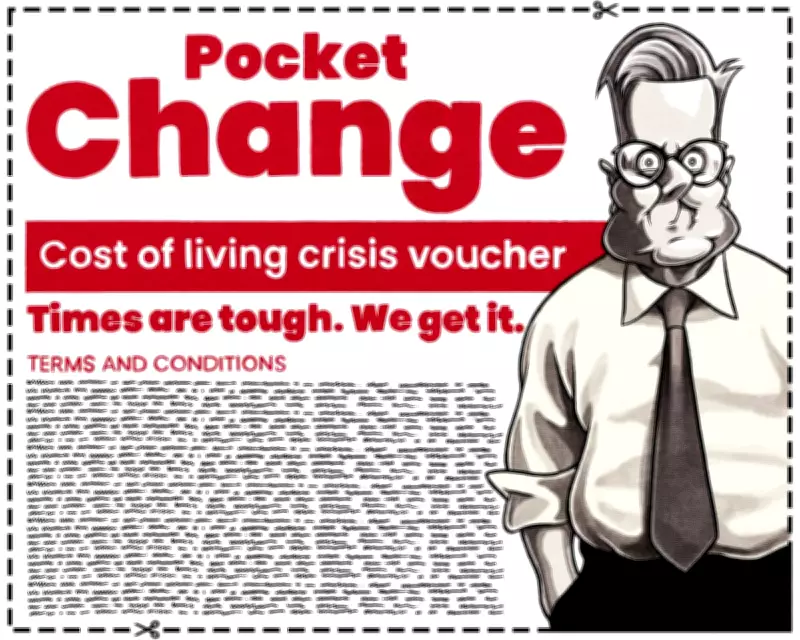
Instead, the government appears to be operating in what critics call "Asda-pocket mode": distributing money-off vouchers, advising pubs to switch off refrigerators at night, and shaking weary fists at energy companies. This approach treats the household budget crisis as exactly that—a household problem—rather than recognizing it as the consequence of a toxic economic settlement requiring systemic reform.
The Radical Alternatives: From Spain to Reform UK
Meanwhile, alternative visions are emerging. Spain offers a compelling model, with energy prices 32% below the European average thanks to unprecedented investment in wind and solar power. Think tanks like Common Wealth propose decoupling electricity prices from volatile wholesale gas markets. More radical suggestions include wealth taxes and framing net zero skeptics as national security threats.
On the political fringes, Reform UK is capitalizing on the crisis with dramatically different proposals. The party promises aggressive new oil and gas exploitation in the North Sea, immediate abandonment of net zero targets, and lifting the ban on fracking. Deputy leader Richard Tice, who attributes climate change to "the power of the sun" and "volcanoes," represents a starkly different approach to energy policy.

The Political Stakes: Who Will Define Britain's Energy Future?
The fundamental danger for Labour is not merely that its coupon-book approach provides inadequate relief, but that it perpetuates a dangerous fallacy: that household expenditure is a lever politicians can pull rather than an imperfect function of a larger economy. This ties every government to the tyranny of monthly bills while avoiding necessary systemic changes.
As the energy crisis deepens, the political landscape grows increasingly polarized between incremental solutions and radical alternatives. Labour's current path risks leaving the field open for others to define Britain's energy future—whether through aggressive fossil fuel expansion or genuinely transformative renewable investment. The question remains: will Labour find its radical vision before others define the terms of debate?