Louisiana v Callais: The Supreme Court's Pivotal Voting Rights Decision
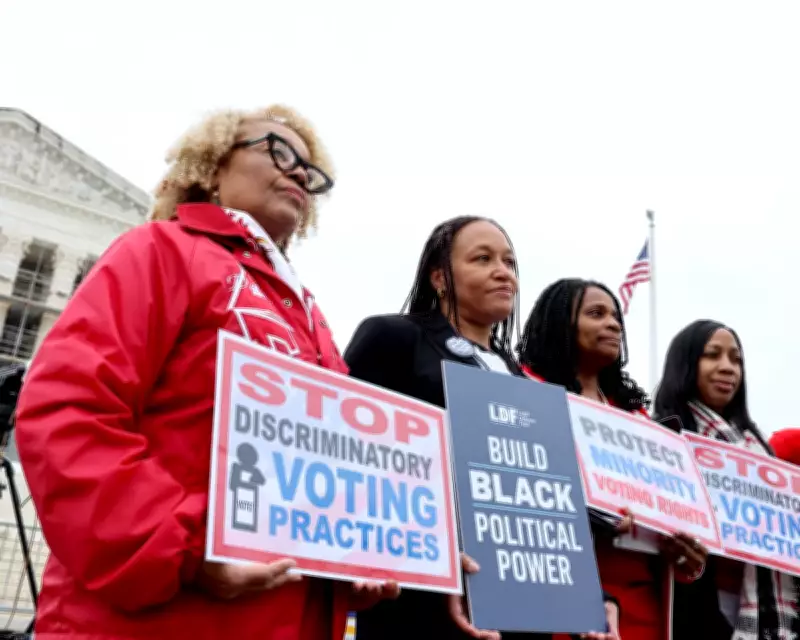
The forthcoming Supreme Court ruling in Louisiana v Callais represents far more than just another legal decision in America's complex voting rights landscape. This case directly challenges whether the Voting Rights Act (VRA) can still mandate states to create electoral maps that provide Black voters with a genuine opportunity to elect their preferred representatives. The outcome could determine the future of minority political representation across the United States.
The Historical Context of Voting Rights Erosion
This legal challenge represents the latest development in a systematic, decade-long campaign to undermine Black voting power. Following the Civil War, Reconstruction briefly opened doors to multiracial democracy, with Black Americans registering, voting, and holding office in unprecedented numbers. However, this progress was met with violent resistance and the implementation of Jim Crow laws that effectively disenfranchised Black communities for nearly a century through poll taxes, literacy tests, and other bureaucratic barriers.
The modern civil rights movement forced America to confront this discriminatory history, culminating in the Voting Rights Act of 1965—the most powerful civil rights legislation ever enacted. The VRA prevented discriminatory laws from taking effect and protected communities that had historically faced immense barriers to ballot access. The results were transformative: Black voter registration surged, political representation expanded, and the South underwent significant demographic and political changes.

The Systematic Dismantling of Voting Protections
This very success made the Voting Rights Act a target. The Supreme Court's 2013 decision in Shelby County v Holder gutted the heart of the VRA, providing states with documented histories of discrimination with renewed freedom to implement restrictive voting measures. The consequences were immediate and severe: polling places closed disproportionately in Black communities, while voter ID requirements were tailored to documents that African Americans were less likely to possess.
The assault intensified following the 2020 election, when Black voters overcame both systemic barriers and pandemic-related challenges to help flip Georgia and unseat former President Donald Trump. Between the Shelby County decision and June 2023, eleven states with long records of voting discrimination passed twenty-nine restrictive voting laws, many based on unfounded claims of election fraud.
The Coordinated Modern Strategy
Election conspiracy theorists flooded state legislatures with fraud allegations and audit demands after 2020. National organizations including ALEC and the Heritage Foundation helped convert these narratives into model legislation, exported from Washington and replicated in statehouses nationwide. Six years later, Trump and his allies continue to obsess over the 2020 election results, using these claims to create doubt, justify intervention, and challenge unfavorable outcomes.
This pattern extends beyond state legislatures. There have been unprecedented raids on local election offices, expansive Department of Justice requests for voter roll data, and reports of intimidation tactics targeting minority communities. This represents a coordinated theory of power: centralizing control, discrediting local election administration, purging voter rolls, and narrowing participation.
The Save Act and Modern Barriers
The so-called Save Act exemplifies this approach—a voter purge bill disguised as security legislation that would force millions of eligible Americans to navigate new documentation hurdles simply to register. This disproportionately affects women who changed their names, seniors born at home without formal documentation, naturalized citizens, and working-class voters without ready access to passports. These consequences are not accidental but rather intentional design features.

When considered together—the erosion of the Voting Rights Act, the surge of restrictive state laws, congressional inaction, intimidation tactics, voter roll data requests, and calls to seize election administration control—a clear picture emerges: the systematic rebuilding of Jim Crow in modern form through statutes, court opinions, and procedural barriers that fall hardest on Black communities.
The Southern Testing Ground and Path Forward
Once again, the South serves as the testing ground for democracy's future. Sixty-one years after Americans marched and bled for voting rights on Selma's Edmund Pettus Bridge—a fight that helped deliver the Voting Rights Act—similar mobilization, organization, and energy are required today. State-level Voting Rights Acts have become crucial firewalls, attempting to reconstruct at the state level the protections the federal government has abandoned.
Jim Crow was always a political project designed to preserve racial hierarchy through law and supporting power structures. When we witness coordinated efforts to purge voters, centralize election control, dismantle the Voting Rights Act, and dilute Black political power, we must recognize these actions for what they represent. Brick by brick, opponents have been constructing barriers to exclude Black and brown voters from full democratic participation. Yet American history teaches that some walls are meant to be torn down, and the South once again stands as the proving ground for whether America will pick up the hammer to strike a decisive blow for democracy.